

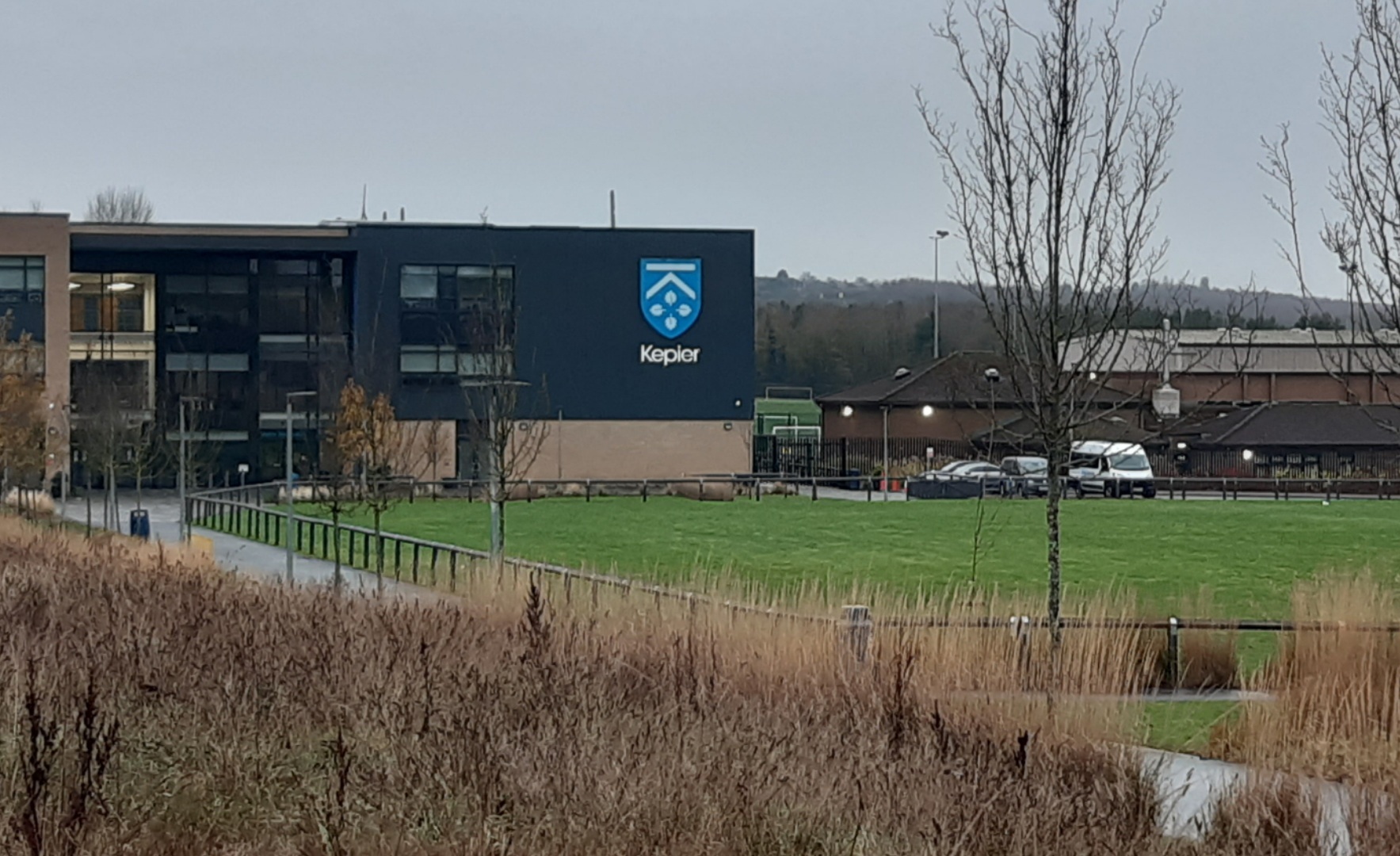
A supporting design and access statement submitted with the planning application last year (2025), noted the proposals aim to “expand and enhance the existing school facilities to accommodate the growing demand for pupil places and improve the overall learning environment.”
Proposed floor plans in supporting planning documents showed a range of teaching spaces planned across the three-storey extension, including standard classrooms, a “graphics room” and a “science lecture theatre”, along with office spaces and toilets.
The design and access statement submitted with the planning application for the three-storey extension said it would include “classrooms, offices, workrooms and toilets” and had been “carefully designed to match the height of the existing school buildings”, providing “visual continuity across the site”.
It was also noted that the proposed block’s “massing” had been “arranged to preserve open spaces around it and maintain a sense of balance with surrounding buildings” and that “new external dining areas are proposed to increase dining capacity as required and provide flexible, alternative spaces for pupils to gather and socialise during breaks and lunchtimes.”
During a council public consultation exercise on the plans there were no neighbour responses received, council planning documents confirm.
Sunderland City Council’s planning department, in a report published ahead of a decision-making Planning and Highways Committee this week, had recommended the school redevelopment plan for approval.
Council planners, in the committee report, said the proposed extension “will allow up to 150 additional pupils / students of which 31 will be SEND learners”, along with “up to 21 additional staff members” and “a further 20 parking spaces on site”.
The council report said the proposed development is acceptable in terms of “residential and visual amenity, highway safety, flooding and drainage, ecology and land contamination […] subject to the draft conditions set out”.
It was also noted that there were “no concerns regarding the principle of development” and that the “proposed structures are of a scale and design that sit comfortably in relation to the existing buildings and utilise materials that allow the structures to appear visually cohesive”.
The council committee report added a “new parking area would sit comfortably within the existing parking area and the ecological enhancements on site will appear as an attractive addition to the existing landscaping”.
Works to boost biodiversity on the school site also include “areas of open native scrub, enhanced species rich grassland, and a wildlife wetland area and orchard planting.”
After being put to the vote at a meeting of the Planning and Highways Committee on March 2, 2026, the plans won unanimous approval from members of the decision-making panel.
Councillor Iain Scott, welcoming the school plans, said: “I’m finding it a little bit surreal to have this application in front of me considering this was where my educational journey in this city began back in 2001.
“Quite clearly the school has done an awful lot since and I’m delighted to see the application and where it will change the offer further […] providing excellent education in the Houghton-le-Spring area.”
Councillor Lynne Dagg also asked about the potential for “additional parking needs” linked to special educational needs provision at the school, and was told by council highways officers that an additional 20 parking spaces would be provided, which would be for general all-purpose use.
The council’s future transport officer, in comments included in a committee report, added there were “no highway capacity or road safety concerns related to the proposed extension” but “recommended that further parking restrictions be considered given the proposed increase in pupils and staff numbers to be accommodated within the academy”.
It was noted that the “local highway authority will secure the funds for the required traffic management measures, via a traffic management order” as a “separate mechanism that will require statutory and public consultation.”
Kepier School, which caters for pupils aged 11 to 16, is classed as an ‘academy converter” and is part of the Eden Learning Trust.
A second planning application for Kepier School [reference: 25/02793/FU4] was also recently submitted to the city council seeking permission for a “single-storey extension along the south side of the existing PE block, to provide a new learning space”.
However, this application was not discussed by councillors this week and a separate decision on the application is expected later this year.


