

London has the weakest tax-raising powers of any major city across the G7, according to new research that is prompting fresh calls for greater fiscal devolution to the capital.
The findings come as incoming Prime Minister Andy Burnham prepares to enter Downing Street, having pledged to shift power away from Westminster and towards regional mayors and local leaders.
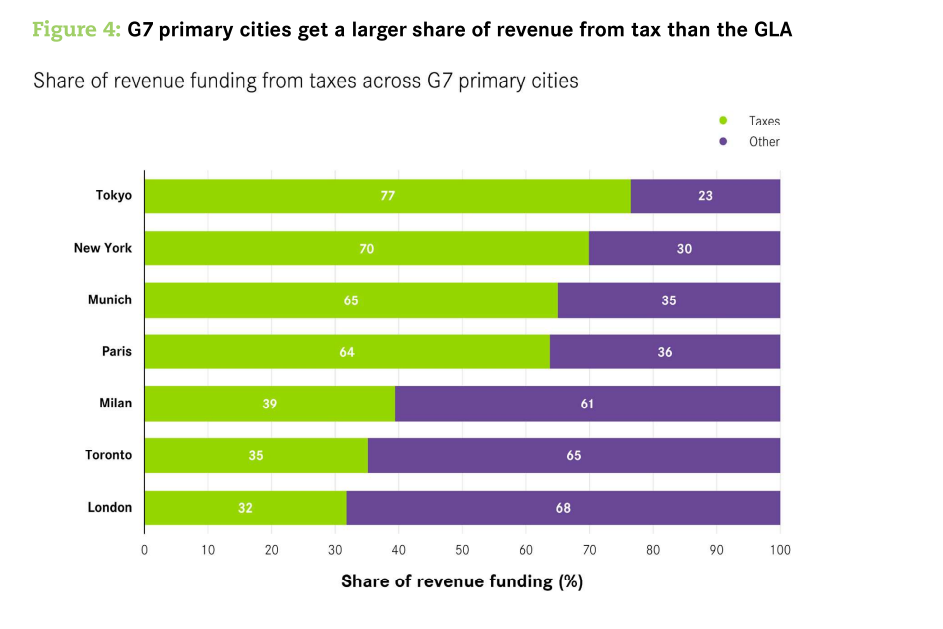
Analysis by the Centre for Cities found that the Greater London Authority relies more heavily on central government funding than comparable cities in countries including the United States, Canada, France, Germany, Italy and Japan.
Unlike cities such as New York City, Tokyo and Paris, London has no control over local income taxes and only limited influence over property taxation.
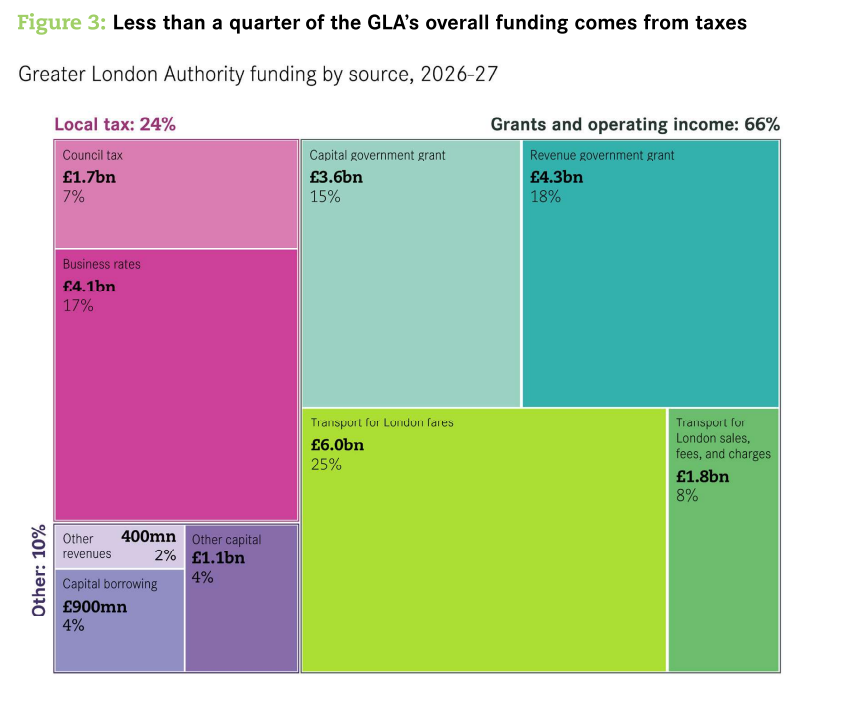
The report found that less than a quarter of the GLA’s £23.9 billion budget comes from locally controlled revenues such as business rates and the mayoral share of council tax. As a result, around 77% of the authority’s spending is directed towards day-to-day services, primarily transport and policing, leaving relatively little available for long-term investment in major infrastructure projects.
Researchers argue that this lack of financial autonomy restricts London’s ability to drive growth and deliver large-scale improvements that could benefit the wider UK economy.
The think tank estimates that if greater fiscal powers increased London’s economic output by just 1.75 % – a figure consistent
with OECD modelling- it could generate an additional £10.5 billion for the national economy.
Chief Executive Andrew Carter said London remained one of the world’s leading cities but lagged far behind international counterparts when it came to financial independence.
He said: “London is one of the greatest cities in the world, but when it comes to its own tax powers it is very weak. This is the UK’s most fiscally empowered city and still it has constraints that set it apart from its peers internationally.”
The organisation is urging the Government to allow London to retain a greater share of the taxes generated within the capital, arguing this would strengthen incentives for growth, improve accountability and make it easier to fund major infrastructure schemes.
The report comes shortly after the passage of the English Devolution and Community Empowerment Act, which granted London some additional powers, including greater control over licensing and the ability to introduce an overnight visitor levy.
However, questions remain over how much revenue from any future tourist tax would remain under City Hall’s control.
Sadiq Khan has repeatedly called for greater fiscal powers for the capital and welcomed the prospect of further devolution under the new government. He said: “The UK remains one of the most centralised countries in the world.
“I’ve long been calling for greater fiscal devolution for the capital. This would bring us into line with other global cities like Paris, Tokyo and New York, reducing our reliance on national government and enabling us to invest in the services that London needs most.”
While Burnham has yet to publish detailed proposals, he has previously said he wants to give regions greater control over transport, housing and essential services as part of a long-term programme of constitutional reform.


