

A child is born in Bradford to Pakistani parents.
They go to school here, grow up with a Yorkshire accent, support England, work here and eventually raise their own family here.
Pakistan may form an important part of their heritage, but England is the only country they have ever called home.
Are they English?
It is a question that has moved sharply back into the national conversation following comments by former Home Secretary Suella Braverman on BBC Question Time.
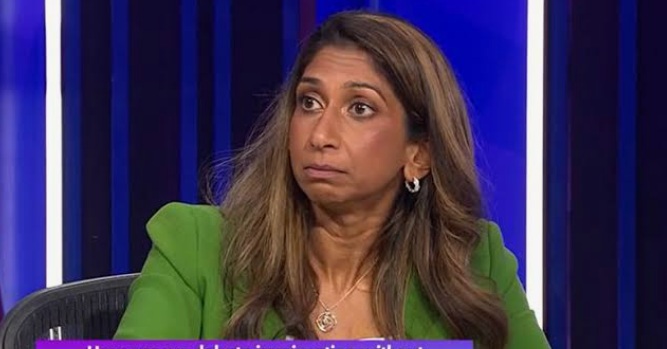
Braverman, who was born in Harrow and is of Indian heritage, told the programme: “I’m not an English person; I am of Asian origin.”
Speaking about what she believed constituted English identity, she referred to “lineage”, “ancestry” and a connection to the country’s heritage stretching back generations.
Pressed by presenter Fiona Bruce on whether that meant somebody had to be white to be English, Braverman did not give a direct yes or no answer.
Her comments have since prompted a much wider argument about the boundaries between being British and being English and whether Englishness is determined by ancestry, birthplace, culture or simply a person’s sense of belonging.
For Britain’s Asian communities, it is far from an abstract debate.
Sunak: Englishness should not become a DNA test
Braverman’s position contrasts sharply with that of her former boss, Rishi Sunak.
Like Braverman, the former prime minister was born in England and is of Indian heritage. But Sunak has publicly described himself as British, British Asian, British Hindu and English.
Writing recently about the growing debate around national identity, Sunak warned against allowing Englishness or Britishness to become what amounts to a “DNA test”.
His intervention followed controversy earlier this year when commentator Konstantin Kisin questioned whether Sunak could be considered English because he is brown and Hindu.
Sunak’s response was unequivocal.
“If you are born and brought up in England and view it as home,” he wrote subsequently, “what are you other than English?”
The difference between the two former senior Conservative politicians is striking.
Both were born in England. Both are of Indian heritage. Both have occupied some of the highest offices in the country.
Yet they have arrived at very different conclusions about their own Englishness.
Zahawi challenges Braverman from within Reform
Braverman’s view has also been challenged from within her own political party.
Fellow Reform UK politician and former chancellor Nadhim Zahawi said this weekend that being white was not a requirement for being English.
Zahawi’s own story is markedly different. Born in Iraq, he arrived in Britain aged 11 without speaking English and says he considers himself
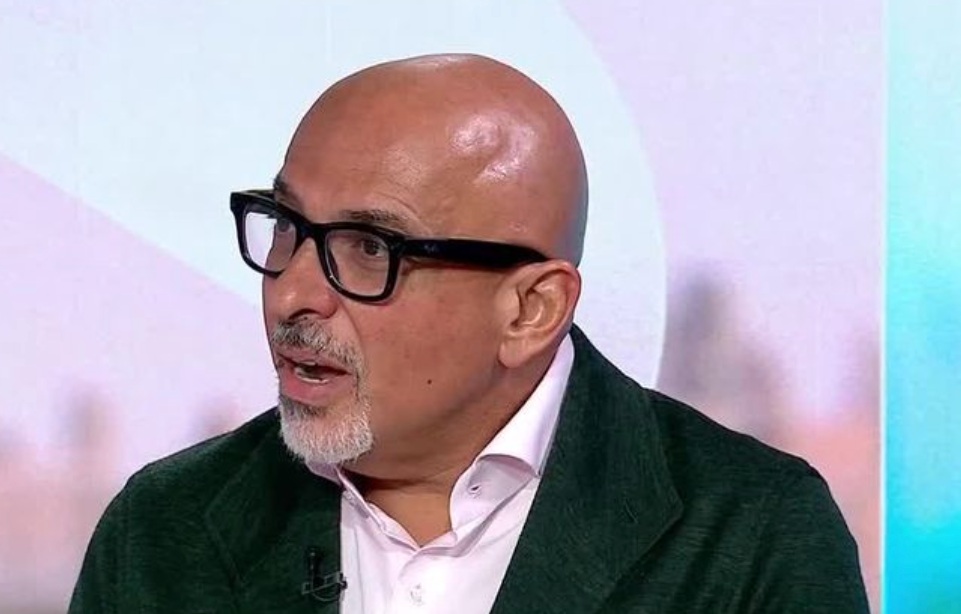
British rather than English.
“I see myself as British. I wasn’t born in England,” he told Sky News.
He described his parents’ pride in becoming British and reflected on his own journey from arriving in the country as a child to becoming Chancellor and living at 11 Downing Street.
But asked whether somebody had to be white to be English, Zahawi said: “I don’t think you have to be white to be English.”
“If you are born and bred in England, and you feel English, you have every right to be English.”
It means two prominent figures within Reform UK now appear to have different interpretations of where the boundaries of Englishness lie.
‘Brown, Muslim and as English as a Yorkshire cup of tea’
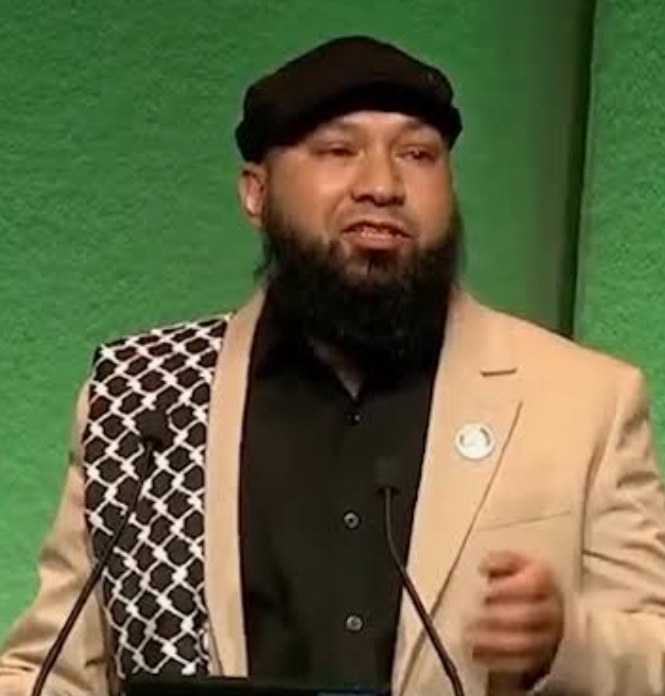
Green Party deputy leader Mothin Ali has gone further.
Addressing his party’s conference in Brighton, the Leeds councillor directly challenged Braverman’s comments.
“And a message to Suella Braverman, I’m Brown, I’m Muslim, but I’m as English as a Yorkshire cup of tea,” he said.
Ali linked the debate over national identity to wider concerns about racism and belonging, arguing that Britain faced a test of whether a diverse democracy could protect the equal right of everyone to belong.
His intervention is particularly significant because it rejects the suggestion that Muslim, Asian and English are competing identities.
For Ali, they coexist.
So what does the public think?
Polling suggests most people in England do not regard ethnicity as a barrier to Englishness.
Research by More in Common found 74 per cent believed somebody could be English regardless of their skin colour or ethnic background, while 17 per cent considered those factors important.
Similarly, YouGov found just 13 per cent of adults in England believed someone had to be white to be English.
But its research also exposed a more complicated picture.
Almost a third, 32 per cent believed Englishness required family heritage going back a number of generations.
And ethnic minority respondents were actually more likely than white respondents to say being white was necessary to be English: 24 per cent compared with 10 per cent.
The findings suggest the disagreement is not simply between white and minority Britain.
There are different understandings of Englishness within minority communities themselves.
Perhaps even more revealing is how people describe their own identity.
Among UK-born ethnic minority adults surveyed by YouGov, 43 per cent described themselves as either British but not English, or more British than English.
Just 10 per cent leaned more towards English than British.
So, while most people appear to accept that a person does not have to be white to be English, many minority Britons still appear more comfortable describing themselves as British.
Why remains a much bigger question.
The England being born today
That question becomes even more important when looking at the England of today rather than that of several generations ago.
There were 594,677 live births in England and Wales in 2024.
More than a third, 33.9 per cent were to mothers who themselves had been born outside the UK.
India was the most common overseas birthplace of mothers, accounting for 26,146 births. Pakistan accounted for 21,524 and Bangladesh 9,832.

Those figures do not mean there were that number of Indian, Pakistani or Bangladeshi babies. They record the mother’s country of birth, not the ethnicity or nationality of the child.
In fact, that distinction goes to the very heart of the debate.
Those children are not immigrants simply because their mothers were born overseas.
Many were born here.
They will take their first steps here. Attend nursery and school here. Develop Yorkshire, London, Birmingham, Mancunian or Geordie accents here.
They may support England at football, cricket or the Olympics.
They might grow up eating fish and chips one evening and biryani, dhal or samosas the next.
Their parents’ or grandparents’ stories might begin in Gujarat, Punjab, Sylhet or Kashmir.
Their own story begins in England.
So how will they identify?
And should anybody else get to decide for them?
When does ‘British Asian’ become British or English?
For Britain’s South Asian communities, questions about identity are nothing new.
British Indian. British Pakistani. British Bangladeshi. British Asian.
For many, those descriptions are important expressions of heritage and identity.
But there is a difference between choosing to describe yourself that way and feeling permanently required to explain where you came from.
Second and third-generation Britons will be familiar with the question: “Where are you really from?”
For someone born in Bradford whose parents may also have been born in Britain, the truthful answer could simply be Bradford.
At what generation does the additional explanation stop being required?
The debate is not unique to Britain. In the United States, another country shaped heavily by migration, terms such as Indian American and Asian American are commonplace alongside a strong overarching American identity.
Britain appears to have developed something similar around Britishness.
Englishness remains more contested.
What does the Census say?
Interestingly, Britain’s official statistics make no attempt to determine national identity through ancestry.
The Office for National Statistics describes national identity as a person’s own assessment of their identity and where they feel they belong.
It explicitly states that national identity is not dependent on ethnicity or citizenship.
The Census also allows people to select more than one national identity.
That means somebody can be ethnically Indian, Pakistani or Bangladeshi and nationally English or British without those identities being considered contradictory.
And Britain’s ethnic make-up continues to change.
The 2021 Census recorded 5.5 million people 9.3 per cent of the population of England and Wales within the Asian, Asian British or Asian Welsh ethnic group, up from 4.2 million, or 7.5 per cent, a decade earlier.
These are no longer conversations solely about people arriving in Britain.
Increasingly, they concern people whose families have been here for generations.
Is ancestry part of Englishness?
That does not mean ancestry should simply be dismissed.
For millions of people, being English is connected to family, history, landscape, tradition and generations of roots in a particular place.
That identity is real and deserves recognition.
The question raised by the current debate is whether ancestral Englishness must be the only form of Englishness.
Can someone whose family has lived in Yorkshire for centuries be ethnically and ancestrally English, while somebody whose parents migrated from Pakistan but who was born and raised in Bradford also be English through birthplace, culture and belonging?
Those identities do not necessarily have to cancel each other out.
But if ancestry becomes an absolute requirement, a much harder question follows.
How many generations are enough?
Take that child born in Bradford.
Her parents came from Pakistan.
She grows up in England. She goes to school and university here. She works here, pays taxes here and raises her children here.
She knows Pakistan through family, heritage and perhaps regular visits.
But England is home.
At 18, she says: “I’m English.”
Does she have the right to make that choice?
If the answer is no because her ancestry is Pakistani, what about her children?
Or their children?
How many generations must pass before a family stops being considered from somewhere else?
And if the answer is that ancestry means they can never become English, then the debate is no longer simply about integration.
It becomes a question of whether millions of British citizens are being asked to belong to a country while being told that one of its central national identities will always remain beyond their reach.
That matters because integration has to work both ways.
A country can reasonably expect people who settle here to learn its language, respect its laws and institutions, participate in society and contribute to the communities around them.
But belonging is part of that bargain too.
A society cannot continually ask successive generations to integrate while indefinitely treating them as newcomers.
Perhaps that is why this debate cannot ultimately be settled by Suella Braverman, Rishi Sunak, Nadhim Zahawi or Mothin Ali.
They can tell us what Englishness means to them.
They cannot necessarily tell millions of other people what it must mean to them.
Braverman has every right to say she is British and Asian but not English.
Sunak has the same right to say he is British, British Asian, Hindu and English.
Zahawi can describe himself as British.
And Ali can declare himself brown, Muslim and “as English as a Yorkshire cup of tea”.
Perhaps the bigger question is whether everyone else is afforded the same freedom.
Because the children growing up in England today will carry many different histories.
Some will trace their ancestry in this country back centuries.
Others will trace theirs to India, Pakistan, Bangladesh and countries across the world.
But many will share one thing.
England will be home.
And if they grow up believing themselves to be English, the debate now facing the country is deceptively simple:
Who gets to tell them they are not?


