

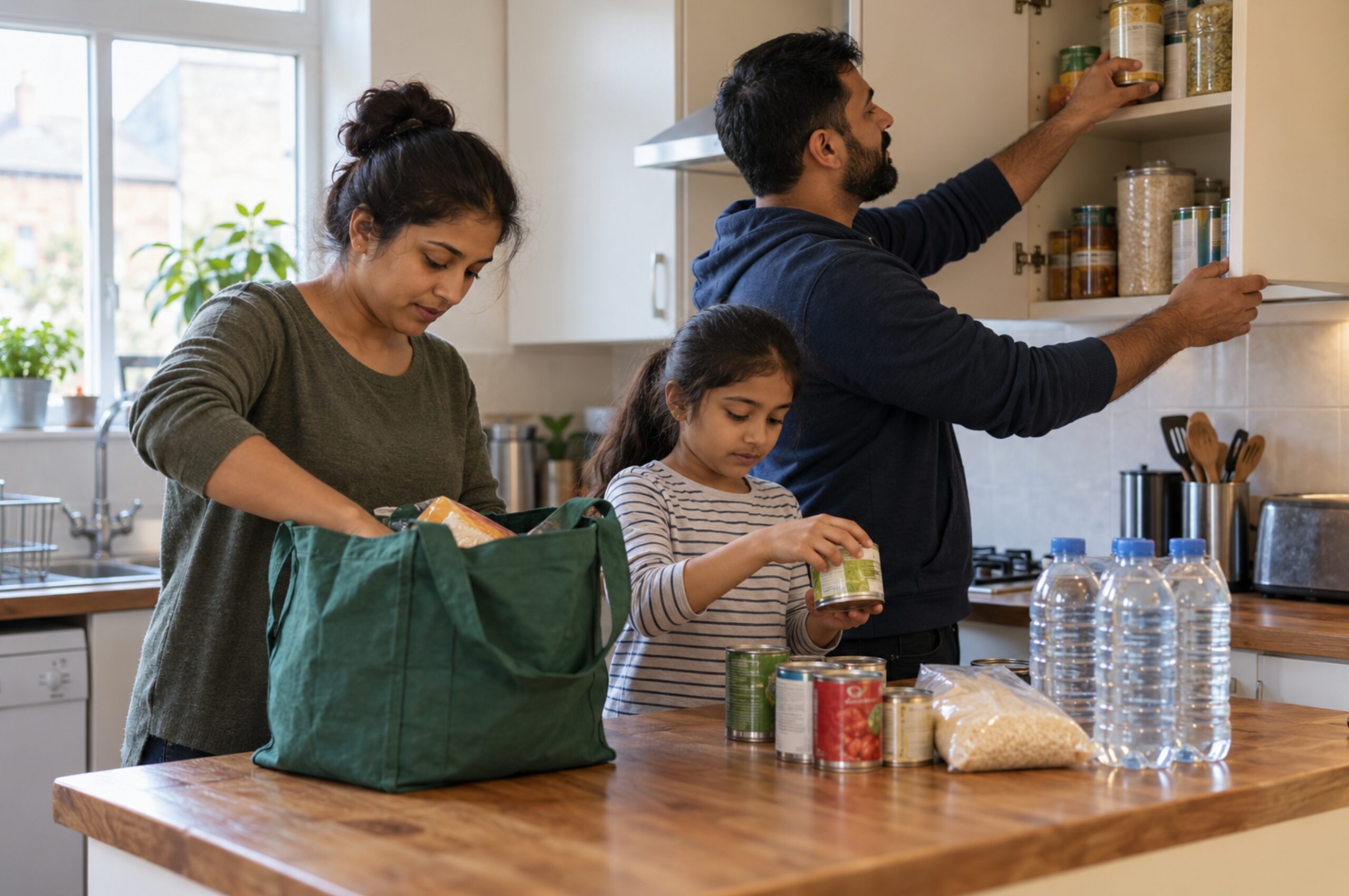
For families counting every pound at the supermarket, buying extra food to put aside can feel like a luxury. Yet households across Britain are now being encouraged to consider how they would cope for three days if essential services were disrupted.
The government’s new Be Ready campaign comes as Defence Secretary Wes Streeting warns about cyber attacks and disruption to essential supplies. Launched on 22 October as the first stage of a three-year campaign, it also encourages preparation for emergencies such as severe weather and power outages.
The practical question is straightforward: what would your household do if the taps stopped running, the electricity went off or supermarket payment systems failed?
The answer will depend partly on what families can afford, and whether they have somewhere to keep additional supplies.
When preparing means spending money you do not have
The government checklist recommends three days of bottled water and food that needs neither cooking nor refrigeration, alongside items such as a torch, warm clothing, a charged power bank and essential medical supplies. It also advises keeping some cash in case electronic payments are unavailable.
For someone with savings and spare cupboard space, these may be manageable additions to a shopping list. For someone struggling to buy this week’s groceries, setting aside food for a future emergency presents a harder choice.
Cash brings a similar problem. Money kept at home for an outage is money that cannot cover an immediate bill.
This does not mean preparedness is only possible for wealthy households. Some useful steps cost nothing. But the ability to buy and store a reserve of essentials is unequal, and advice to prepare needs to acknowledge that.
The government itself recommends checking existing supplies and building up gradually. Even so, buying one extra item at a time still depends on having something left in the budget.
Does bulk buying give South Asian families a head start?
For some South Asian households, keeping larger quantities of food is already part of everyday life. Families who buy rice, atta or lentils in bulk may have substantial cupboard supplies.
But South Asian households are diverse. Shopping habits, incomes, household sizes and available storage vary, and it would be misleading to assume every family has a well-stocked pantry.
There is also a difference between having food and being able to prepare it during an emergency.
A large bag of rice or dried lentils may stretch the household budget, but it generally requires water and cooking fuel. Frozen meals depend on reliable refrigeration and may need reheating. A full kitchen therefore does not automatically mean a family can manage comfortably through a prolonged outage.
A useful approach is to look at what everyone could actually eat without a working cooker. Depending on dietary needs, that might include ready-to-eat tinned chickpeas or beans, tinned fruit, crackers and suitable spreads. Check labels to make sure products can be eaten without heating.
Halal requirements, vegetarian diets, allergies and foods suitable for children or older relatives should all shape those choices. Emergency supplies need to be usable by the people relying on them.
Larger households need more than larger bags of rice
Water illustrates how quickly the demands increase.
The government recommends three litres of drinking water per person per day, with more needed for cooking and washing. On that basis, a six-person household would need 54 litres for three days’ drinking water alone.
Finding space for that quantity could be difficult in a small or crowded home. Carrying it home may also be a challenge for someone without a car or with limited mobility.
In a multigenerational household, preparation may involve several different needs at once: baby supplies, regular medication, mobility support and a way to receive information that everyone can understand.
The most useful starting point is a conversation about those needs, rather than an assumption that bulk buying has already covered them.
Preparation does not have to begin with a shopping trip
The British Red Cross advises households to think about managing at home for 72 hours, while stressing that people do not need to stockpile or do everything at once. Its guidance includes making a household plan and arranging support for others.
Families can begin by:
- Checking what they already have and identifying the most important gaps.
- Writing down essential phone numbers in case a phone loses power.
- Agreeing how to contact one another and where to meet if separated.
- Making sure everyone knows where supplies and important documents are kept.
- Signing up for relevant weather, flood or local alerts.
- Arranging to check on relatives or neighbours who may need help.
The Red Cross also encourages people to check eligibility for the Priority Services Register, which offers additional support through utility providers. This may be particularly relevant for people with health conditions, disabilities or other support needs.
Readiness needs to be within everyone’s reach
Relatives, neighbours, faith groups and community organisations could help share information, identify people who need assistance and make emergency planning more accessible.
That might mean helping someone understand an alert, printing important contact details or agreeing who will check on an older neighbour during a power cut.
But community goodwill cannot remove the financial barriers. Families who cannot afford extra food or bottled water need practical support alongside a checklist.
The campaign asks households to consider whether they could cope for three days. An equally important question for government is how it will help those whose budgets barely cover today.


