

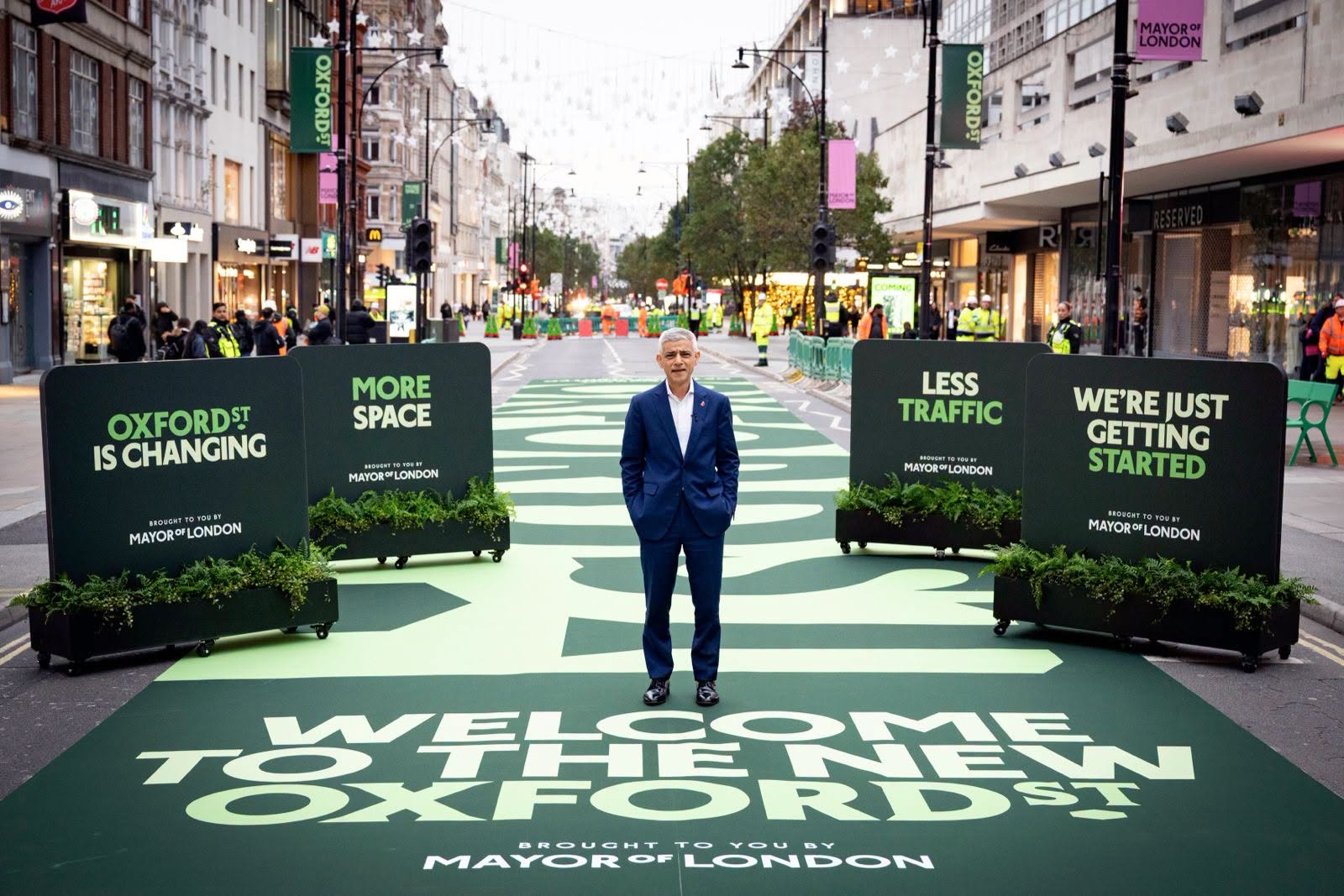
One of the world’s most famous shopping streets is entering a new era, with cars, buses and bicycles removed from a major stretch of Oxford Street. But while London’s Mayor promises a world-class destination for shoppers and tourists, concerns remain over traffic, accessibility and the impact on surrounding neighbourhoods.
For generations, Oxford Street has been a magnet for millions of shoppers and tourists from across the world. Now, one of London’s most recognisable destinations is undergoing a transformation that could fundamentally change how visitors experience the capital’s shopping heartland.
A near one-kilometre stretch of the famous street, between Great Portland Street and Orchard Street, became traffic-free from 8pm on Sunday, 25 October, marking the first major step in Mayor of London Sadiq Khan’s long-awaited pedestrianisation plans.
The move removes vehicles, including buses, cars and bicycles, from the central section of Oxford Street, with ambitions to replace the traffic-dominated environment with a more welcoming public space featuring trees, seating, improved signage and two new public squares.
For the millions of international visitors who associate Oxford Street with flagship department stores, Christmas shopping and London’s bustling retail scene, the changes could reshape one of the capital’s defining experiences.
But the ambitious project has also reignited a debate over whether transforming a globally recognised shopping destination will benefit the wider city or simply shift congestion and pollution into neighbouring streets.
A new chapter for London’s world-famous shopping street
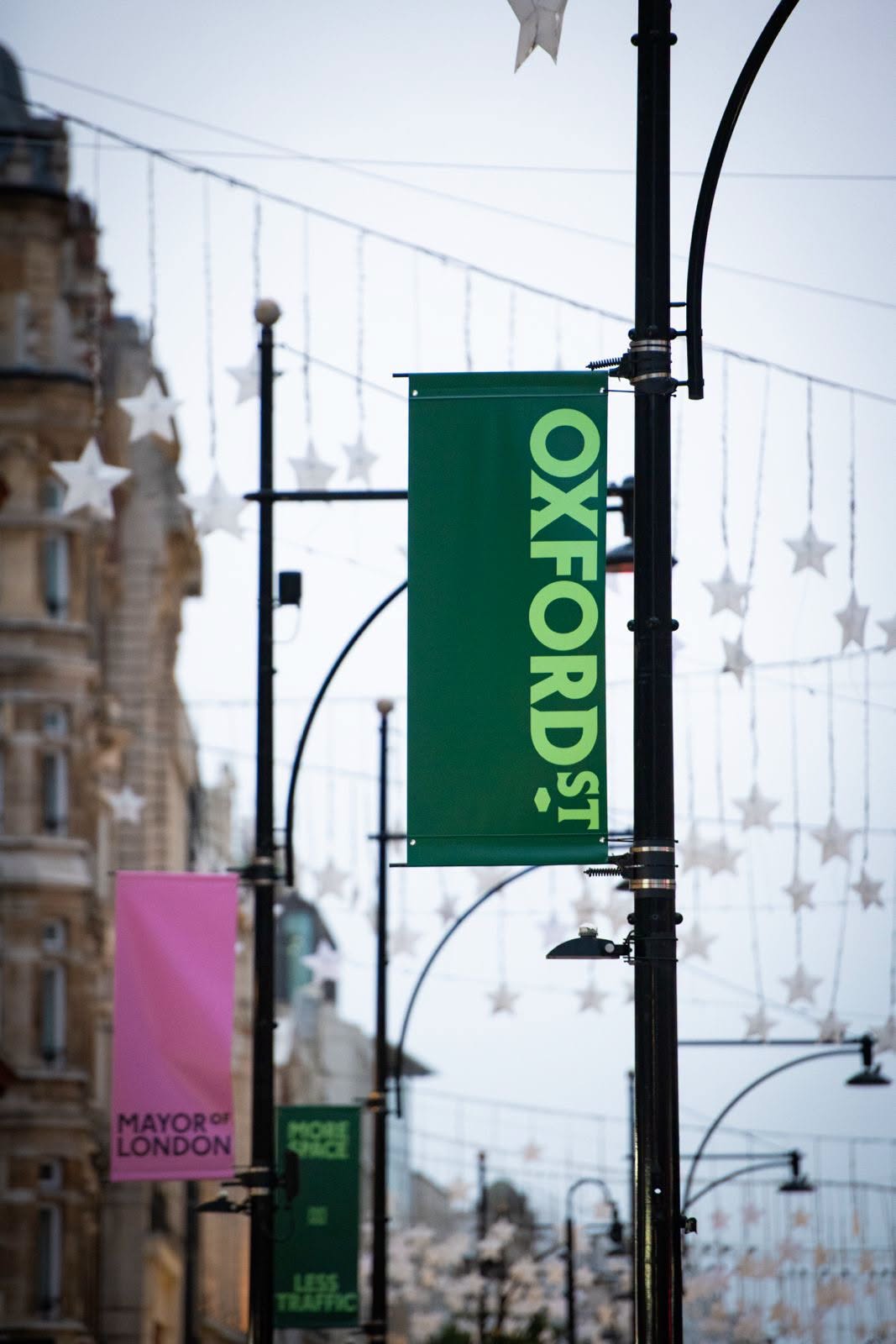
Oxford Street is more than a shopping destination. It is an internationally recognised landmark, home to major retailers including Selfridges, John Lewis and Marks & Spencer, and an important contributor to London’s visitor economy.
The Mayor believes removing traffic will help restore the street’s appeal at a time when traditional high streets face growing competition from online shopping and out-of-town retail centres.
Speaking after the traffic restrictions came into force, Khan said the initial phase would allow officials to assess how a pedestrian-focused Oxford Street could operate before permanent changes are introduced.
“This one kilometre, I want to use as a proof of concept: that investing in people rather than traffic leads to more footfall, better quality footfall, and a better spend,” he said.
He acknowledged that the physical transformation had barely begun, with the immediate change largely limited to removing vehicles.
“This is a test-and-learn phase. It’s just the first phase. The transformation hasn’t really begun in earnest except for it being traffic-free.”
Temporary measures will allow officials to collect data and gather feedback from businesses, residents and visitors before finalising the street’s permanent design.
Although only limited physical works are expected before Christmas, plans envisage more than 50 new trees, improved signage and two public squares by the end of spring 2027.
A £25 billion economic powerhouse
The transformation carries significant economic implications, not just for London but for Britain’s wider retail and tourism industries.
According to the Mayor, approximately £3 billion is spent in Oxford Street’s retail sector each year, while the area’s annual economic output is estimated at £25 billion, equivalent to around one per cent of the UK’s gross value added.
For Khan, those figures underline why the future of Oxford Street matters far beyond the capital.
“It’s in all of our interests for this part of our city to do well,” he said.
The Mayor argues that high streets must offer something online shopping cannot: memorable experiences, attractive public spaces and reasons for people to spend time as well as money.
“The choice we’ve got is simple: we don’t have any real-life retail – it’s all done online or it’s done in out-of-town centre shopping malls – or we have the sort of retail that we used to have in the past in Oxford Street, where people have great memories and great experiences as well.”
He hopes the redevelopment will encourage established retailers to invest while attracting new businesses and international brands.
Khan also pointed to growing commercial confidence ahead of the pedestrianisation, citing 39 new retail deals in recent months and particularly low vacancy rates in prime shopping locations.
According to the Mayor, vacancy rates have fallen to 0.4 per cent in the most sought-after retail spaces and around one per cent more generally.
Will London’s tourists see a better Oxford Street?
For visitors arriving from across Britain and overseas, the most immediate difference will be the absence of moving traffic along the pedestrianised section.
The longer-term ambition is to create a destination where people can shop, eat, relax and explore without competing with vehicles.
Nabeel Khan, Chief Executive of the Oxford Street Development Corporation, believes the changes could eventually become as widely accepted as other major public-space transformations in London.
“I think looking back in a year’s time, I hope Londoners will be saying ‘why did it take us so long to do this? It was such a no-brainer’,” he said.
He compared the potential significance of the scheme with the transformation of areas such as Trafalgar Square and the South Bank.
His ambition is for future generations to regard a pedestrian-friendly Oxford Street as an obvious improvement to the capital.
However, the experience of visitors will depend on more than the removal of vehicles. Accessibility, public transport connections, navigation and the quality of the new public spaces will all be important in determining whether the project succeeds.
Residents warn traffic could be pushed into neighbourhoods
Despite the Mayor’s optimism, the scheme has attracted opposition from local residents’ groups and Westminster City Council.
Critics argue that removing traffic from Oxford Street does not eliminate congestion but risks diverting vehicles onto nearby residential roads.
A spokesperson for the Marylebone Association, which says its concerns are shared by amenity groups in neighbouring areas including Soho, warned that the environmental impact could be felt beyond the shopping district.
“The Mayor isn’t removing traffic. He’s moving it from Oxford Street into our residential streets. You cannot improve London’s environment simply by moving pollution from one street to another.”
Questions have also been raised about access for disabled visitors and the potential disruption to surrounding communities and businesses.
Councillor Tim Barnes, Deputy Leader of Westminster City Council and Cabinet Member for Growth and Planning, expressed concern
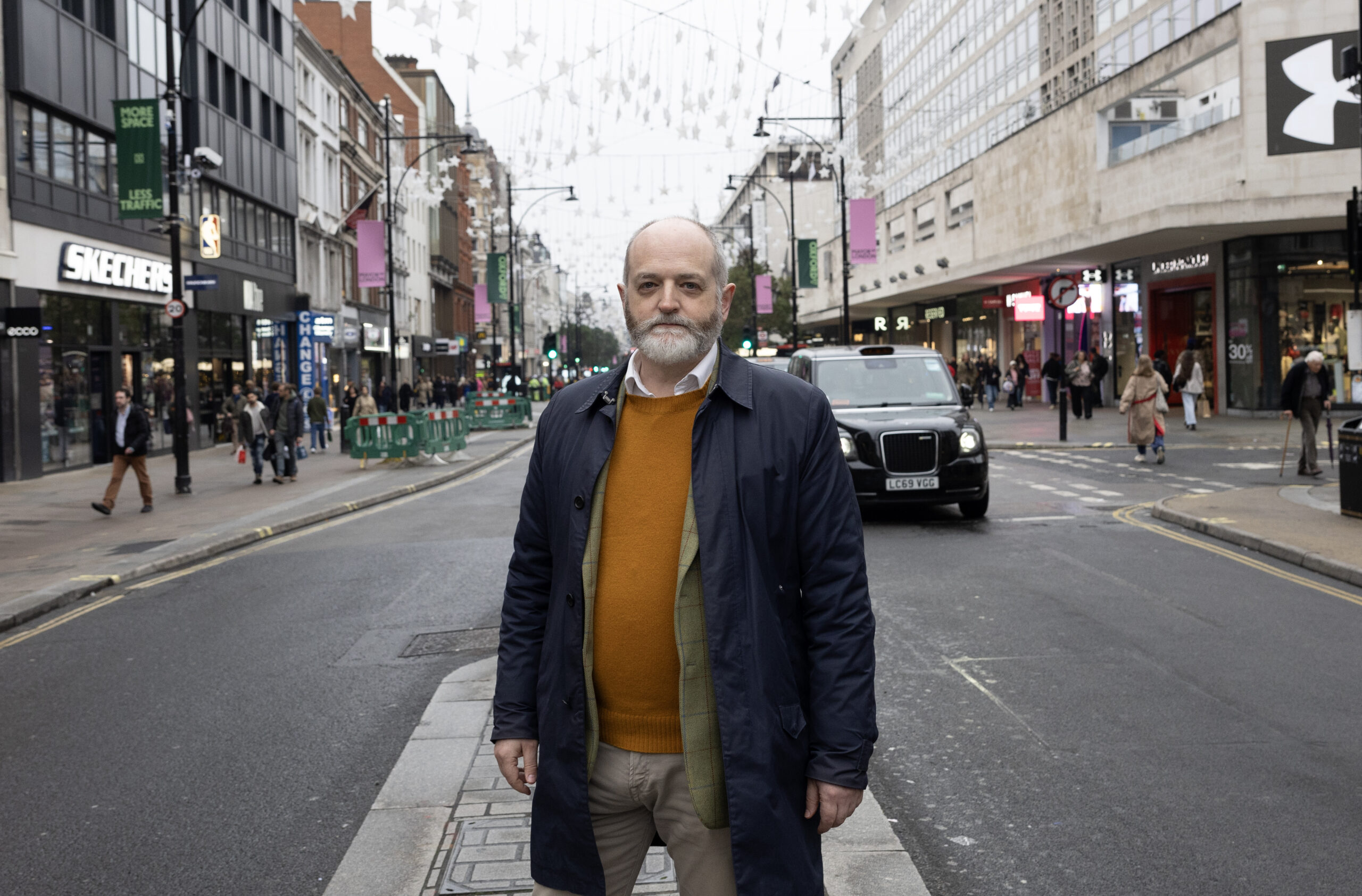
about the consequences for neighbouring areas.
“I’m a local resident. I live just a couple minutes behind where we are and I have done so for many years, and I’m very concerned that these plans will bring a large amount of disruption to the local area,” he said.
The objections highlight a central challenge facing the project: how to create a more attractive shopping destination without making everyday life more difficult for people who live and work nearby.
Mayor pledges to listen as transformation progresses
Khan said he remained committed to working with Westminster and Camden councils, local businesses, residents and retailers as the plans develop.
“I want to work with the councils, both Camden and Westminster City Council as well. I want to work with the businesses, the residents, [and] the retailers,” he said.
“We’ve been listening and working with them where we can. That’s why you’ve seen, for example, some of the changes we’ve made to support those who’ve got accessibility issues, disability issues.”
The Mayor insisted that the first phase was an opportunity to test the scheme and respond to concerns before permanent infrastructure was installed.
He said the success of Oxford Street was in the interests of councils, businesses, residents and the wider country.
Major retailers back the changes
Some of Oxford Street’s best-known retailers have welcomed the plans, viewing pedestrianisation as an opportunity to attract customers back to physical stores.
John Lewis, which has operated on Oxford Street for more than 160 years, is investing millions of pounds in refurbishing its flagship premises.
The redevelopment includes a new 300-seat restaurant, a sports department and enhanced festive offerings designed to improve the customer experience.
Naomi Simcock, Chief Operations Officer at John Lewis, described the pedestrianisation as one of the most exciting changes the retailer had witnessed.
“Having served Oxford Street for over 160 years, we’ve seen plenty of change, and the move to make the area more pedestrian-friendly is one of the most exciting,” she said.
“Retailers need to step up too, which is why we’ve invested millions in refurbishing our flagship store.”
She said the company was working closely with the Mayor’s Office to give visitors more reasons to spend time on the street.
The Mayor also highlighted investment by Marks & Spencer and other retailers as evidence of renewed confidence in the shopping district.
What happens next?
For now, Oxford Street’s transformation remains at an early stage.
Vehicles have been removed from the initial section, but the more visible changes to the streetscape will follow over the coming months.
The temporary arrangements will be monitored to assess their effects on pedestrian movement, retail activity, accessibility and surrounding roads.
By spring 2027, the Mayor hopes visitors will begin to see a greener, more attractive street with new public spaces.
His longer-term ambition is for Oxford Street to remain home to established names such as Selfridges and John Lewis while attracting new retailers and creating a shopping experience capable of competing on the world stage.
But the success of the project will ultimately be judged by more than visitor numbers or retail spending.
It will depend on whether the transformation improves the experience of tourists and shoppers while addressing the concerns of residents, disabled visitors and neighbouring businesses.
For a street that has long been one of London’s most recognisable symbols, the removal of traffic marks a significant turning point.
The question now is whether a traffic-free Oxford Street can become the world-class destination its supporters envision without creating new problems beyond its boundaries.


