

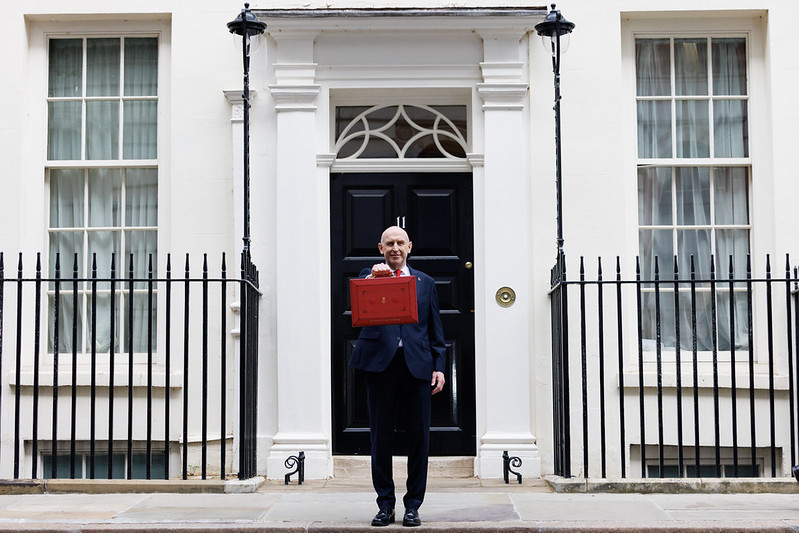
Millions of households across Britain are set to receive additional help with rising living costs following the Government’s Budget announcement today (Wednesday, 28 October), with measures aimed at reducing energy bills, supporting working families and providing relief for smaller businesses.
Chancellor John Healey unveiled a package of measures designed to give families and businesses financial breathing space against a backdrop of continued economic uncertainty, rising energy costs and pressure on household finances.
For South Asian communities, where family-run businesses, independent retail, hospitality and self-employment play an important role in local economies, several announcements could have particular significance.
£100 energy payment for 20 million households
One of the headline announcements is a new £100 energy payment for around 20 million households living in properties within council tax bands A to D.
The Government says the payment will be made directly into eligible households’ bank accounts, providing additional support towards energy costs.
The Chancellor also announced plans to abolish standing charges on household gas bills, potentially saving around £45 annually for many households, although savings will depend on energy usage and how costs are recovered through unit prices.
A temporary VAT reduction on domestic electricity bills will also be extended until July, with the Chancellor saying the measure will reduce the annual energy price cap by around £50.
These changes could be particularly welcome for low-income households, pensioners and larger families struggling with heating and electricity costs.
However, the measures are not all immediate. The removal of gas standing charges is expected from 2027 or as soon as practicable afterwards.
Food shopping and transport costs
The Government is suspending import tariffs on more than 100 products, including selected food items, in an attempt to reduce supermarket prices.
The Treasury estimates that lower food tariffs could deliver savings worth between £120 million and £185 million annually across consumers.
For South Asian households, the potential impact will depend on which imported ingredients and everyday products are covered, and whether retailers pass the savings on to customers.
The changes could also benefit independent grocery shops and food wholesalers importing eligible goods, although there is no guarantee that all products will become cheaper.
Fuel duty is being frozen again, providing some stability for motorists at a time when transport costs remain a concern.
There is further support for people who use their own vehicles for work, including delivery drivers, mobile workers and the self-employed, through higher tax-free business mileage allowances.
The Government has confirmed that the 55p-per-mile rate for the first 10,000 business miles will become permanent, while the rate for additional business miles will rise to 35p.
Support for unpaid carers and working parents
Families providing unpaid care for elderly relatives or people with disabilities could benefit from reforms to Carer’s Allowance.
Under the current system, carers can lose their entire weekly allowance if their earnings exceed the permitted threshold, even by a small amount.
The Government plans to replace this cliff edge with a gradual reduction in support as earnings increase.
The reform could be especially relevant to families balancing paid employment with caring responsibilities, including those supporting older relatives in multigenerational households.
However, the new system is not expected to begin until 2030–31, meaning carers will not see an immediate change.
Self-employed fathers, partners and adopters will also become eligible for a new parental allowance from April 2029, with more than 150,000 parents expected to benefit each year.
This could be significant for families whose income comes from self-employment, including those running small shops, restaurants, trades and other independent businesses.
Business rates relief offers hope for independent high streets
Among the most significant measures for small businesses is an increase in the threshold for small business rates relief from £12,000 to £18,000.
The Chancellor said the change would provide a tax break to approximately 70,000 smaller businesses.
This could offer meaningful support to independent retailers, restaurants, cafés and other high street businesses, particularly in areas with strong South Asian business communities such as Bradford, Leeds, Birmingham, Leicester and parts of London.
For family-run businesses facing higher wages, energy bills, rent and supplier costs, reduced business rates could help ease financial pressure.
However, the benefit will depend on individual premises, rateable values and eligibility requirements. Businesses with multiple premises may face different rules.
The Government also announced measures to tackle VAT avoidance by online marketplace sellers, potentially addressing concerns among high street traders about unfair competition from businesses operating online.
Adult gaming centres and vape shops will be excluded from the new business rates relief arrangements.
Investment and opportunities for growing businesses
The Chancellor announced an additional £20.4 billion for the National Wealth Fund and British Business Bank, intended to support investment and business growth.
The Government also plans to reduce outdated regulations and administrative requirements for businesses.
For South Asian entrepreneurs, particularly those looking to expand existing businesses or establish new ventures, improved access to investment and finance could present opportunities.
However, the Budget does not establish that this funding will be directly accessible to every small business, and further details will be needed on the programmes, eligibility criteria and application processes.
The Chancellor also confirmed there would be no changes to the taxation of employment income or dividend income announced in this Budget.
The Government has reversed plans to reduce the annual tax-free cash ISA allowance from £20,000 to £12,000, retaining the higher limit for savers.
What does the Budget mean for Asian Standard readers?
Several announcements are particularly relevant to the economic and family circumstances found across Britain’s diverse communities.
Independent shops, restaurants, takeaways, wholesalers and service businesses could benefit from changes to business rates and selected import tariffs.
Households with elderly relatives or family members requiring care may eventually benefit from reforms to Carer’s Allowance, while self-employed parents could gain access to financial support that has previously been unavailable to them.
For communities in Bradford and across Yorkshire, where the future of local high streets remains an important concern, the business rates announcement could be one of the Budget’s most consequential measures.
But important questions remain about whether the Government’s support will be sufficient to offset wider cost pressures, and how quickly the benefits will reach households and businesses.
Will the Budget make a real difference?
The Chancellor described the package as a way of providing immediate financial breathing space while laying the foundations for longer-term economic growth.
Yet much of the support is relatively modest, with some significant reforms not scheduled to take effect for several years.
For families struggling with food bills, housing costs and energy prices, the £100 payment will provide welcome assistance, but it is unlikely on its own to transform household finances.
For smaller businesses, changes to business rates could provide more sustained relief, although their overall impact will depend on rising operating costs and the wider economic outlook.
Ultimately, the test of Budget 2026 will be whether the measures translate into noticeable savings for households, stronger local businesses and greater financial security for communities across Britain.
Budget 2026 at a glance
| Measure | What it means |
|---|---|
| £100 energy payment | Around 20 million households in council tax bands A–D to benefit |
| Gas standing charges | To be abolished, with estimated savings of around £45 a year for many households |
| Electricity VAT relief | Extended until July |
| Small business rates | Relief threshold increased from £12,000 to £18,000 |
| Fuel duty | Frozen for another year |
| Business mileage | Higher tax-free mileage allowances |
| Carer’s Allowance | Earnings cliff edge to be replaced with a taper from 2030–31 |
| Self-employed parents | New parental allowance planned from April 2029 |
| Business investment | Additional £20.4 billion for the National Wealth Fund and British Business Bank |


