

Ministers could devolve further powers to Sir Sadiq Khan to boost employment for disabled Londoners.
There are currently 1.16 million disabled Londoners, of whom around 650,000 – 55.8 per cent – are in employment, according to the latest figures from the Department for Work and Pensions (DWP).
This is far below the non-disabled employment rate in London of 79.3 per cent – an increase of 1.1 percentage points since 2023/24.
Solving this disparity could help address the capital’s wider employment challenges. Up to 125,000 young Londoners aged 16 to 24 are not in education, employment or training (NEET).
Sir Stephen Timms, the Minister of State for Social Security and Disability, told the Local Democracy Reporting Service (LDRS) that the Government cannot tackle employment inequality and boost the fortunes of disabled Londoners from Whitehall alone.
“Andy Burnham has brought a very clear perspective about the benefits of devolution to his role as Prime Minister, and I think those benefits are particularly clear in the case of employment support,” he told the LDRS in an exclusive interview.
“What you need for effective employment support is in each area, skills support, colleges; employment support, job centres working together; and you need the NHS as well. It’s those three bodies are the key partners to make these programmes work successfully. And you can only do that, I think, with a devolved approach.
“We’re doing a lot of work at the moment talking to the Mayors – Sadiq and others – and let’s see where we where we get to.
“But I mean, the Mayors are all calling for greater devolution, and in many ways that’s that’s their job to do that. We’ve got to make sure that we judge these things correctly to have the best possible impact, and that’s what we’re all be working to do as we have those conversations with Sadiq and his colleagues.”

Sir Sadiq has been calling for control over programmes to get the unemployed into work for over a decade, saying in 2016 that more autonomy on the issue would “better help Londoners” to get jobs.
Last year, he repeated these calls, telling the London Assembly that he wanted a “greater role in overseeing skills and employment provisions”. In July, he told Assembly Members that City Hall could make a “big difference” in reducing the number of young adults not in education, employment or training.
In recent years, the Mayor has demanded “deeper devolution of skills and employment” through a multi-year funding settlement for London, a boost to the Adult Skills Fund and more powers over employment support.
City Hall recently launched London’s first Deaf and Disabled Londoners Action Plan, which highlights the Mayor’s Inclusive Talent Strategy (ITS) and Get London Working plan as ways to close the employment gap.
Mr Timms, who was also briefly responsible for welfare reform under the last Labour government in 2008, said ministers were working closely with City Hall.
“It’s a big priority for the government,” he said.
“It’s a large gap, and it’s been like that since 2010 – we really now want to get that gap down.”
Employment support and disability grants
In 2024, the Government launched Connect to Work, a voluntary programme to help people with disabilities or health conditions find sustainable work.
In London, four different partners are rolling this out across the boroughs, with Mr Timms suggesting early data from the capital is “encouraging”.
“The actual commissioning is being done entirely locally,” he added. “Local authorities can choose who the best people, organisations, charities maybe, colleges, who who are the best locally to deliver the programme. And in that way, we are confident that we will be able to provide a programme which is well-tailored to the particular local circumstances in each area.”
However, he warned that there had been a “surge” in demand for Access to Work grants, which provide practical or mental health support for employees whose disability or long-term health condition affects their work.
He added: “That’s led to quite a big backlog and long delays for people. We’re now going through an exercise of recruiting an extra 500 people, who’ll all be in post by the end of this year. They’ll need to be trained up, and we’re confident then that by September next year, we will have eliminated the backlog and we’ll be fully up to speed with everything.

“At the moment, 2.8 million people out of work on health and disability grounds of one kind or another; hundreds of thousands of them, we know, would love to be in a job. What we want to make sure is the system can provide the support that they need to get into work. And that’s good news for the economy, and very good news for the people affected as well.”
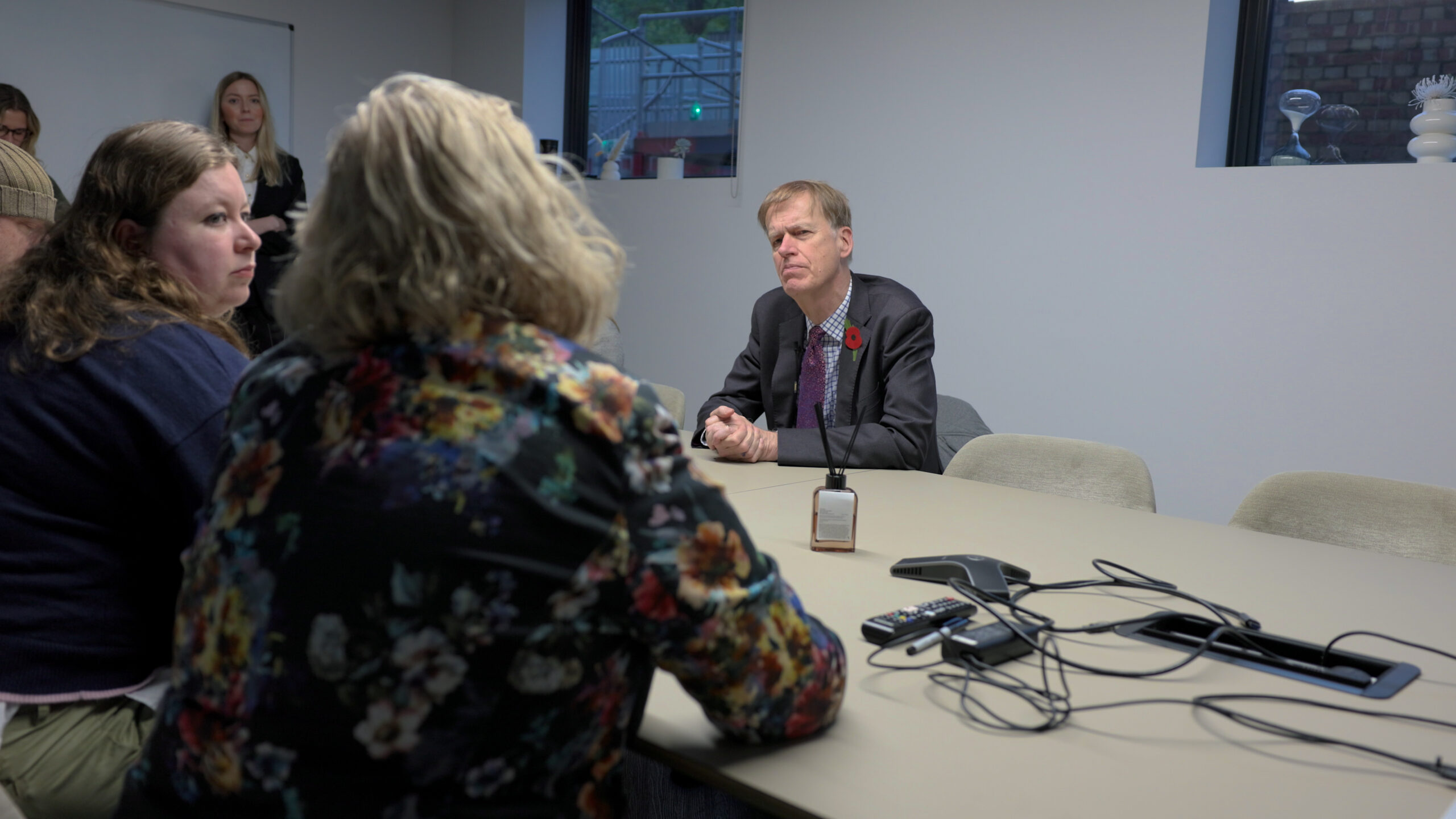
Mr Timms was speaking to the LDRS during a visit to Auticon in London Bridge, a firm that hires autistic adults as consultants.
In 2019, the London Assembly Economy Committee recommended that City Hall establish a specialist Disability Employment Taskforce to help tackle the employment gap.
Robert Posner, deputy CEO of ThinkForward, a charity that provides tailored coaching to students at risk of becoming NEET, told the LDRS: “Ministers and City Hall should provide young people with a consistent, trusted adult who helps them build confidence, develop work-ready skills and make a realistic plan tailored to the young person’s needs, provide good careers guidance and meaningful work experience, and create accessible routes into apprenticeships and jobs, providing the support employers need.”


