


Hundreds of children are becoming seriously ill before being diagnosed with type 1 diabetes, with the proportion reaching a potentially life-threatening medical emergency at diagnosis rising to an eight-year high, Diabetes UK has warned.
The charity says 902 children aged 15 and under in England and Wales were diagnosed with the condition while experiencing diabetic ketoacidosis (DKA) between April 2024 and March 2025.
DKA is a dangerous complication caused by a severe lack of insulin and can be fatal without urgent treatment.
According to the latest National Paediatric Diabetes Audit, 28 per cent of children diagnosed with type 1 diabetes were already experiencing DKA, compared with 20 per cent in 2017/18. Among children under five, the figure was 33 per cent.
Ahead of World Diabetes Day on 14 November 2026, Diabetes UK is urging families to recognise the early warning signs of type 1 diabetes to prevent children from reaching crisis point.
London student shares his experience
Hamza, an 18-year-old student from Greater London, was diagnosed with type 1 diabetes seven years ago after his father noticed he was drinking unusually large amounts of water.

“I was diagnosed with type 1 diabetes seven years ago, when I was just 11 years old,” he said.
“I recall one evening when my dad noticed that I was unusually thirsty and drinking more water than normal.
“We went straight to the hospital, it was around midnight, and everything happened very quickly. By the following morning, I was diagnosed with type 1 diabetes and spent the next few days in hospital coming to terms with what that meant.”
Hamza said his diagnosis was difficult to process at such a young age, but advances in diabetes technology have helped him manage the condition while continuing to enjoy an active lifestyle.
“Living with type 1 diabetes means I need to plan ahead, be prepared, and sometimes adapt to different situations. However, it doesn’t define me or limit what I’m capable of achieving.”
He is also involved in Diabetes UK’s Together Type 1 youth programme and hopes that speaking openly about his condition will encourage greater awareness within his community.
“Talking about my diabetes is one of the best ways to raise awareness, especially in my community and help people understand what living with diabetes is really like.”
Four warning signs parents should know
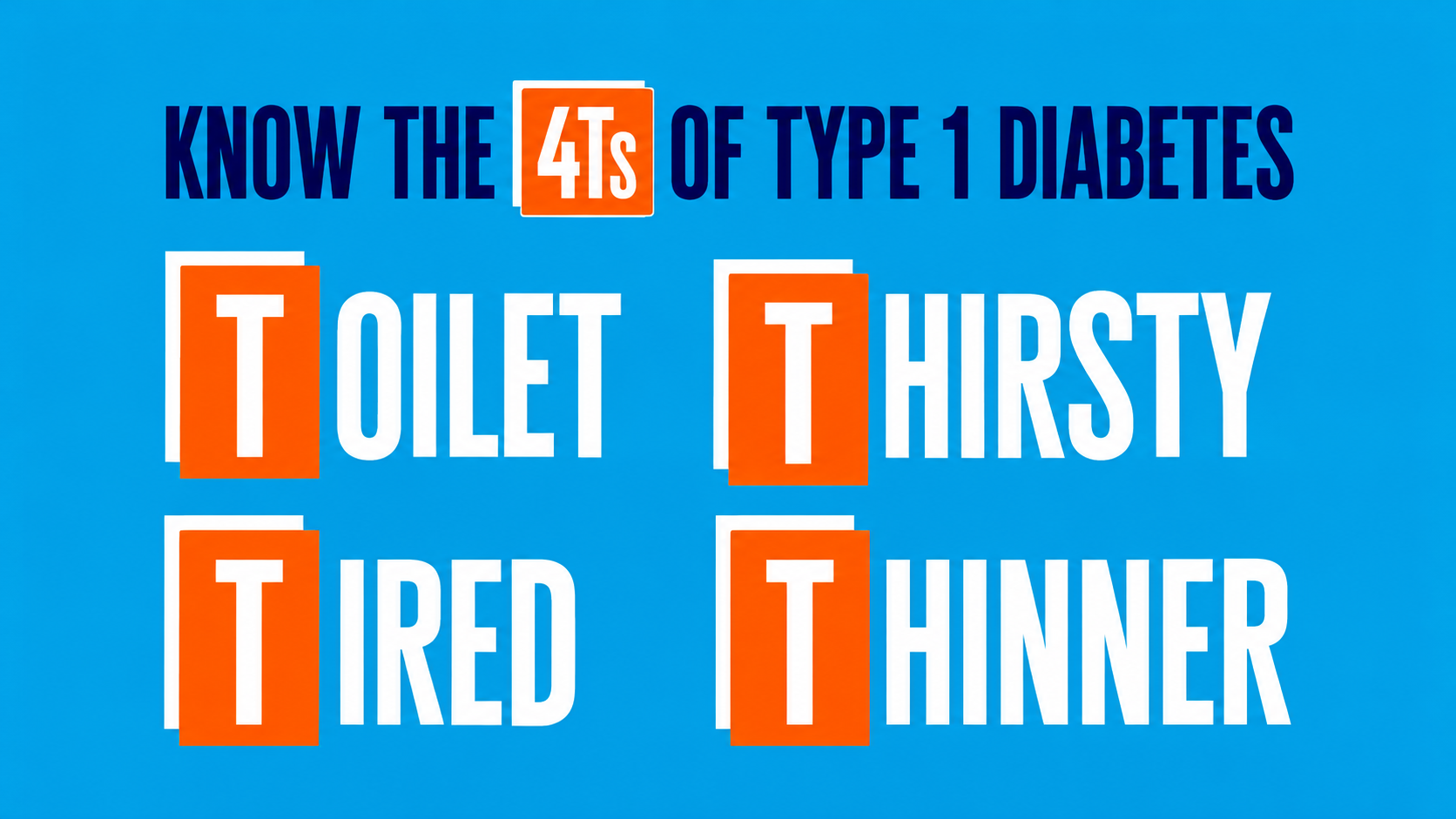
Diabetes UK is encouraging families to remember the ‘4Ts’ – four common symptoms of type 1 diabetes:
- Toilet: Urinating more frequently, particularly at night, heavier nappies in babies or new bedwetting in children.
- Thirsty: Constant thirst or increased feeding in babies.
- Tired: Unusual tiredness, longer naps or changes in behaviour.
- Thinner: Unexplained weight loss or appearing noticeably thinner.

Parents are urged to recognise the four warning signs of type 1 diabetes and seek urgent testing. Image: AI-generated illustration.

The charity warns that symptoms can be harder to recognise in young children because they may resemble common illnesses.
It is urging parents to contact their GP immediately and request a test for type 1 diabetes if their child develops any of these symptoms.
Family’s tragedy highlights need for awareness
The campaign also highlights the death of two-year-old Lyla Story from Hull, who died in her sleep from DKA in May 2025, just hours after being diagnosed with acute tonsillitis.
Lyla had shown symptoms including extreme tiredness, increased thirst and heavier nappies, but her type 1 diabetes had not been diagnosed.
Her father, John Story, said: “Losing Lyla shattered our world. No family should have to experience the devastating loss we have, which is why awareness of the 4Ts is so important.”
Colette Marshall, Chief Executive of Diabetes UK, said: “A type 1 diabetes diagnosis should never start with a medical emergency. Yet every year, hundreds of UK families face the heartbreaking reality of seeing their children reach crisis point before anyone recognises the condition.”
She added: “This World Diabetes Day, we’re urging everyone to learn the 4Ts and share the signs with others. If a child shows any one of these symptoms, particularly if it seems unusual for them, the message is simple: think type 1 diabetes. A simple test could make all the difference – and it could even save a life.”
Type 1 diabetes is an autoimmune condition affecting more than 350,000 people in the UK. It can develop at any age, cannot currently be prevented and requires lifelong insulin treatment.
Diabetes UK advises anyone noticing the 4Ts in themselves or their child to contact their GP immediately and ask for a type 1 diabetes test. If the GP surgery is closed, call NHS 111 for advice. If symptoms are worsening, go straight to A&E.
Parents can learn more about the four warning signs of type 1 diabetes through the Diabetes UK awareness campaign.


