

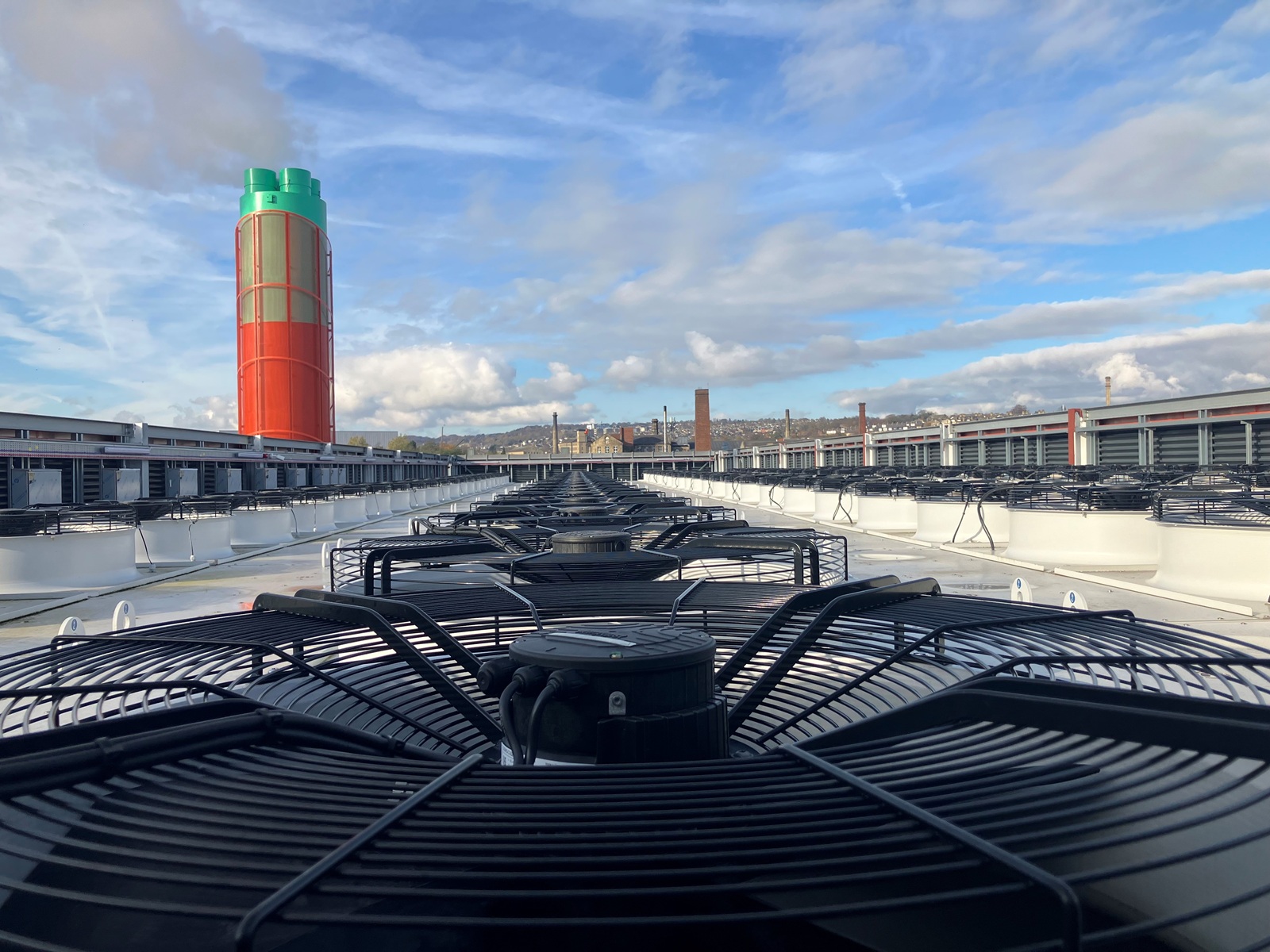
A £75million energy centre has officially launched in Bradford, providing low-carbon heating to some of the city’s most significant buildings and marking a major step towards reducing its reliance on gas.
The centre on Thornton Road is one of the biggest air source heat pump-led energy centres in the country and, from Thursday, 12 November, provides heating to Bradford City Hall, much of the campuses of the University of Bradford and Bradford College, and Bradford’s two court buildings.
The centre, at the heart of a huge heat network, uses an array of rooftop fans to draw heat out of the air – a process that centre bosses likened to a “reverse fridge”.
This heat is then processed and transported via a series of underground pipes across the city centre.
The centre has attracted £75million of investment into Bradford and, following its launch, will soon expand to provide heating to other buildings, including St Luke’s Hospital.
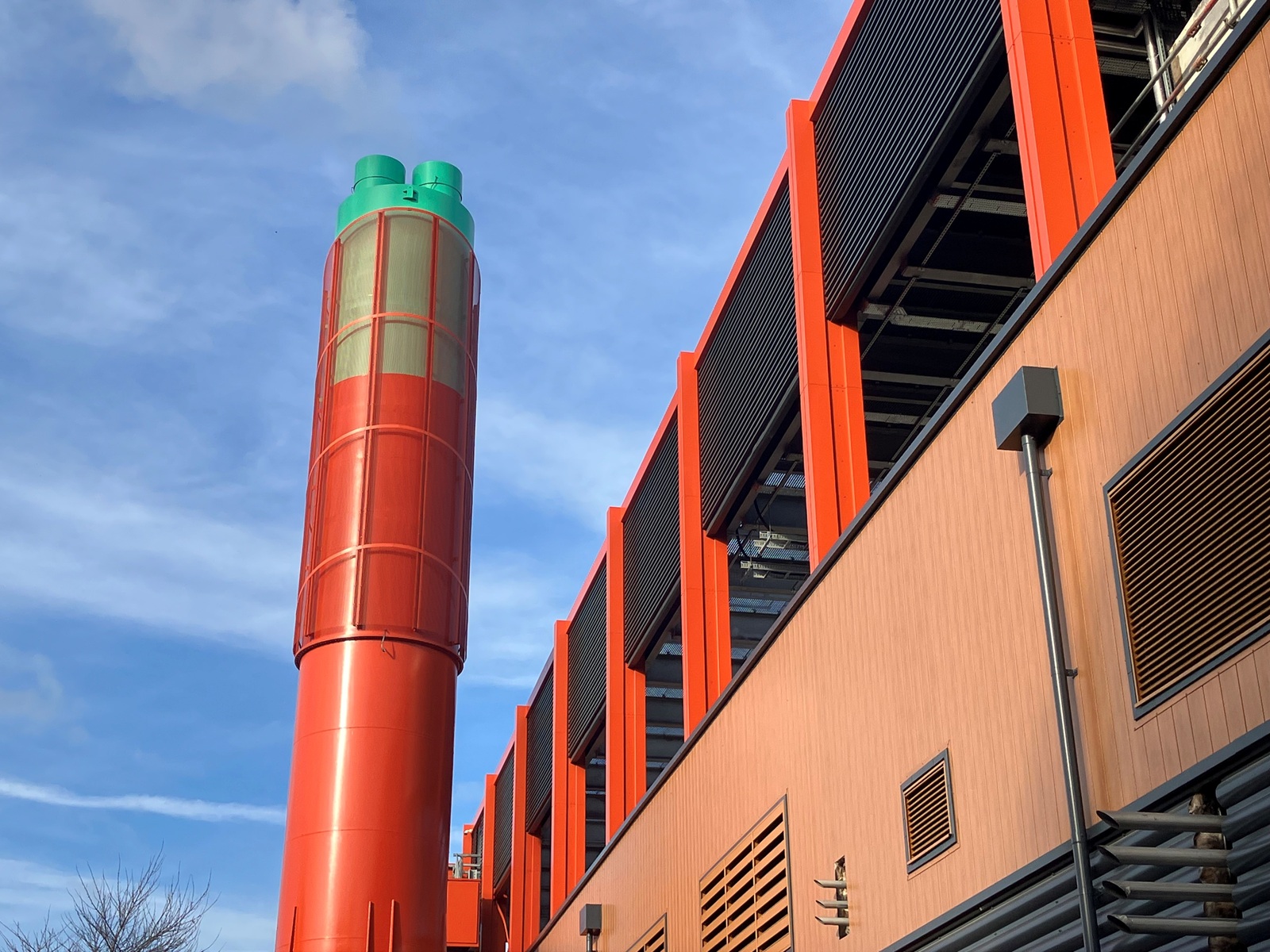
Built on the site of a former Victorian gasworks, the centre’s distinctive red chimney, used to disperse water vapour produced during the process, is the latest addition to a Bradford skyline that has historically been dominated by mill chimneys.
Although other parts of the country have heat networks, these are often built for one specific customer, such as a council or a particular developer.
Bradford’s network is described as the first city-wide heat network and is open to new customers, from residential developers and businesses to public buildings.
Network expected to cut carbon emissions by 75 per cent
1Energy, the company behind the scheme, says the network will not only reduce the city’s carbon footprint but also give Bradford’s businesses and public services a route away from dependence on imported fuel.
The network cuts customers’ gas demand by 75 per cent and also allows them to replace their existing boilers.
It is also expected to cut carbon emissions by at least 75 per cent, saving more than 2,200 tonnes of carbon in its first year, equivalent to removing up to 15,000 short-haul flights.
Around 115 people have worked on the project ahead of its launch.
John Hartley, CEO of 1Energy, said: “For generations, this site supplied the gas that powered Bradford. Today, it begins a new chapter, providing low-carbon heat for some of the city’s best-known buildings and putting Bradford at the forefront of modern energy infrastructure.”
Bradford City Hall will be the first Grade I listed building in the country to be connected to a heat network, bringing together modern technology with the city’s rich history.
Plans to expand the network across Bradford
Mr Hartley described the Bradford Energy Centre as a “flagship” scheme for the company.
Asked if there had been interest from more potential customers, he said: “Our team is talking to people about connecting.”
He said that now the centre is complete, new customers could be connected in a matter of months.
Grant Moffit, Head of Safety for 1Energy, said the site had been designed for future expansion, with space for an extra boiler to join the three 1,600ml boilers that store the heated water on the site.
He said the network would provide significant long-term savings for customers, as they would no longer need to replace or service boilers once connected.
The heavily insulated pipes buried underground mean very little heat is lost on the journey from the centre to the buildings it is heating.
Council welcomes investment in city’s energy infrastructure
Cllr Andrew Judson, Deputy Leader of Bradford Council, said: “Bradford is showing other cities what can be done by delivering modern energy infrastructure that supports our regeneration ambitions and strengthens the city’s offer to businesses and developers.
“It is an achievement the whole city can be proud of, showing how Bradford is leading the way in building a more resilient local economy.”
“By reducing reliance on imported gas and improving air quality, the network will bring lasting benefits for local people. As it grows, it can support more businesses and buildings, providing infrastructure that helps Bradford attract further investment and thrive.”
Matthew Tidmarsh, Associate Director Estates and Commercial at the University of Bradford, said: “The launch of the Bradford Energy Network marks a significant milestone, not only for the University but for the city.
“As a University with a strong commitment to sustainability and civic engagement, we are proud to play a leading role in a project that will substantially reduce carbon emissions, improve energy resilience and create lasting benefits for future generations. We hope Bradford’s success will inspire similar initiatives across the UK.”
The £75million invested in the scheme is made up of £55million of private capital and £20million of government investment through the Green Heat Network Fund.
With a further £9.7million in Green Heat Network Fund (GHNF) funding secured to support the network’s expansion, 1Energy could invest more than £100million into the network as it grows.


