


For decades, Britain’s relationship with South Asian food has been one of contradiction.
Chicken tikka masala is often described as Britain’s national dish. Curry houses have become part of the country’s cultural fabric. Biryani regularly tops food delivery rankings. Yet despite its popularity, Indian cuisine is still rarely spoken about in the same breath as French, Italian or Japanese fine dining.
Celebrity chef Asma Khan believes that is no accident.
Speaking on The Trevor Noah Podcast, the Michelin-recognised restaurateur argued that the hierarchy of global cuisine is deeply shaped by racism, with food from large parts of Asia, Africa and the Middle East continuing to be viewed as “cheap and cheerful”, while European cuisines are automatically associated with sophistication.
“There is a lot of racism when it comes to what is elevated cuisine,” Khan told Trevor Noah.
She pointed out that French and Italian food have long been regarded as the benchmark for luxury dining, while Japanese and Korean cuisine have increasingly entered that category. South Asian food, however, continues to battle stereotypes despite centuries of culinary history.
Khan recalled being told that no one would pay £139 for one of her biryanis because Indian food simply was not considered valuable enough.
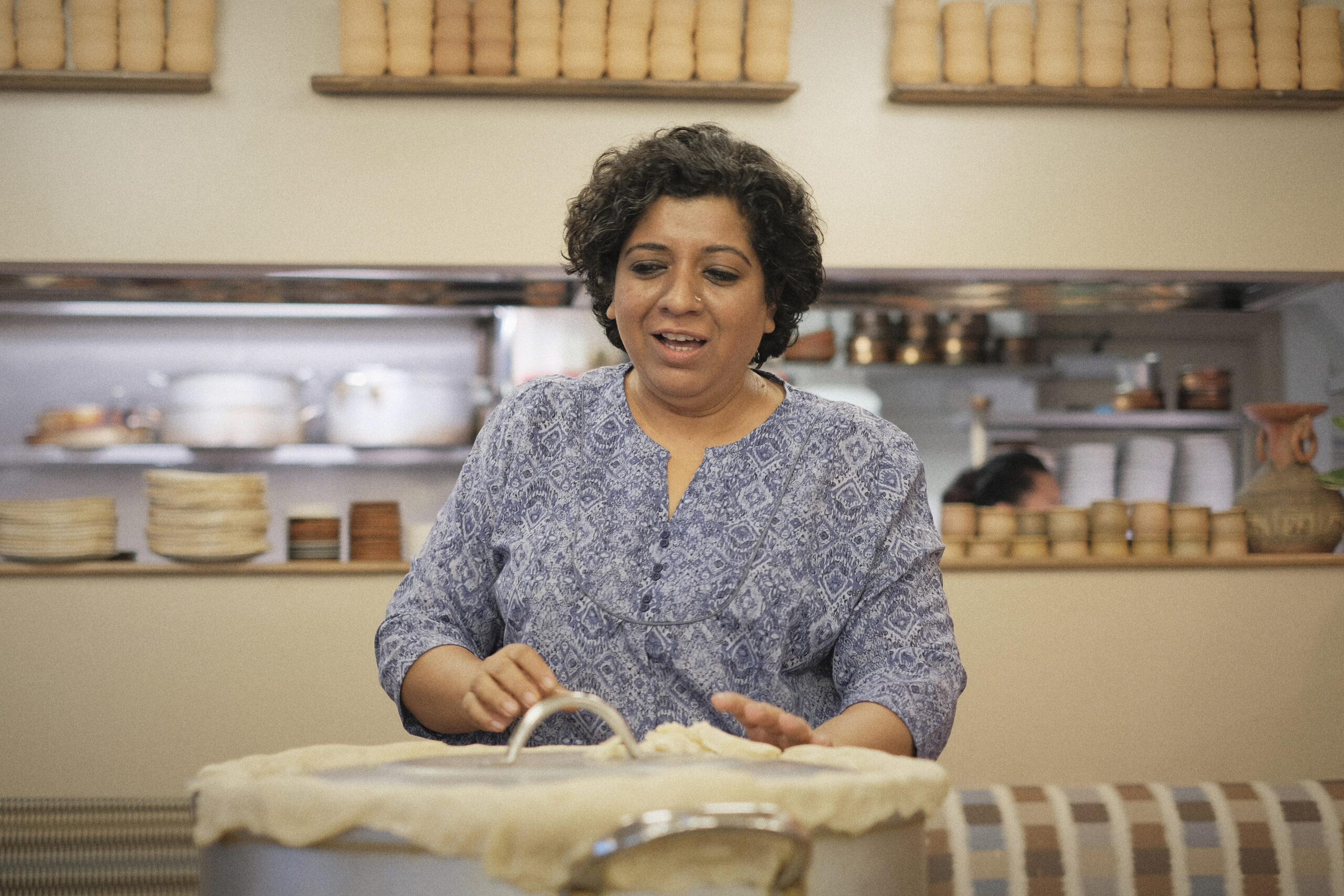
She proved the critics wrong. The meal sold out within minutes.
For Khan, that success was about far more than business. It challenged the long-held belief that some cuisines deserve prestige while others are expected to remain affordable.
She also criticised what she described as the image of the celebrity chef that has dominated fine dining for years.
Rather than celebrating aggressive kitchen culture and the myth of the tortured culinary genius, Khan argued that food should instead honour the communities, histories and generations that created it. “Our food heritage goes back centuries,” she said.
Referring to Africa, South Asia and the Middle East, Khan argued that many of the ingredients, farming traditions and culinary techniques the world relies on today originated in those regions.
“This is the cradle of civilisation,” she said. “So much of what we eat today is because of what happened in our lands.”
For Khan, every dish carries the legacy of farmers whose contribution has largely disappeared from public memory.
“The world eats because of us. In the dust that flies are the souls of these amazing men and women who grew crops. No one is telling their story.”
Her comments also touched on the language often used to describe South Asian cuisine.
While “curry” has become almost synonymous with Indian food in Britain, the term itself is widely understood to have been popularised during the colonial era as a catch-all label for an extraordinarily diverse range of regional dishes.
Indian cuisine varies dramatically from state to state, shaped by geography, climate, religion and local ingredients, making it almost impossible to define under a single name.
For Khan, reducing centuries of culinary tradition into a single category has contributed to Indian food being viewed as familiar comfort food rather than refined cuisine worthy of the same recognition afforded to European gastronomy.
Her remarks have resonated widely because they extend beyond restaurants and recipes.
Recently, at the We The Women conference, Khan said during a conversation: “If you can’t accept us, don’t eat our food,” calling out what she described as racism and hypocrisy.
Britain has embraced South Asian food as part of everyday life, yet conversations around race, immigration and identity continue to reveal a disconnect between celebrating the cuisine and recognising the cultures behind it.
For Khan, food cannot be separated from the people who created it, and she has consistently voiced that belief, maintaining that “food is political.”
Her message was ultimately a reminder that recipes are more than ingredients on a plate. They are records of migration, agriculture, survival and culture.
Until those histories are valued as highly as the food itself, she believes the conversation around fine dining will remain incomplete.


