

The FIFA World Cup 2026 reminded the world why football is often described as the global game.
Across every continent, families, neighbours and strangers came together to celebrate moments of joy, heartbreak and national pride. The tournament once again proved that football has the power to unite communities regardless of language, culture or geography.
For Britain’s South Asian community, however, the conversation around football works differently. While millions passionately follow the sport, representation on the pitch has often failed to match that enthusiasm.
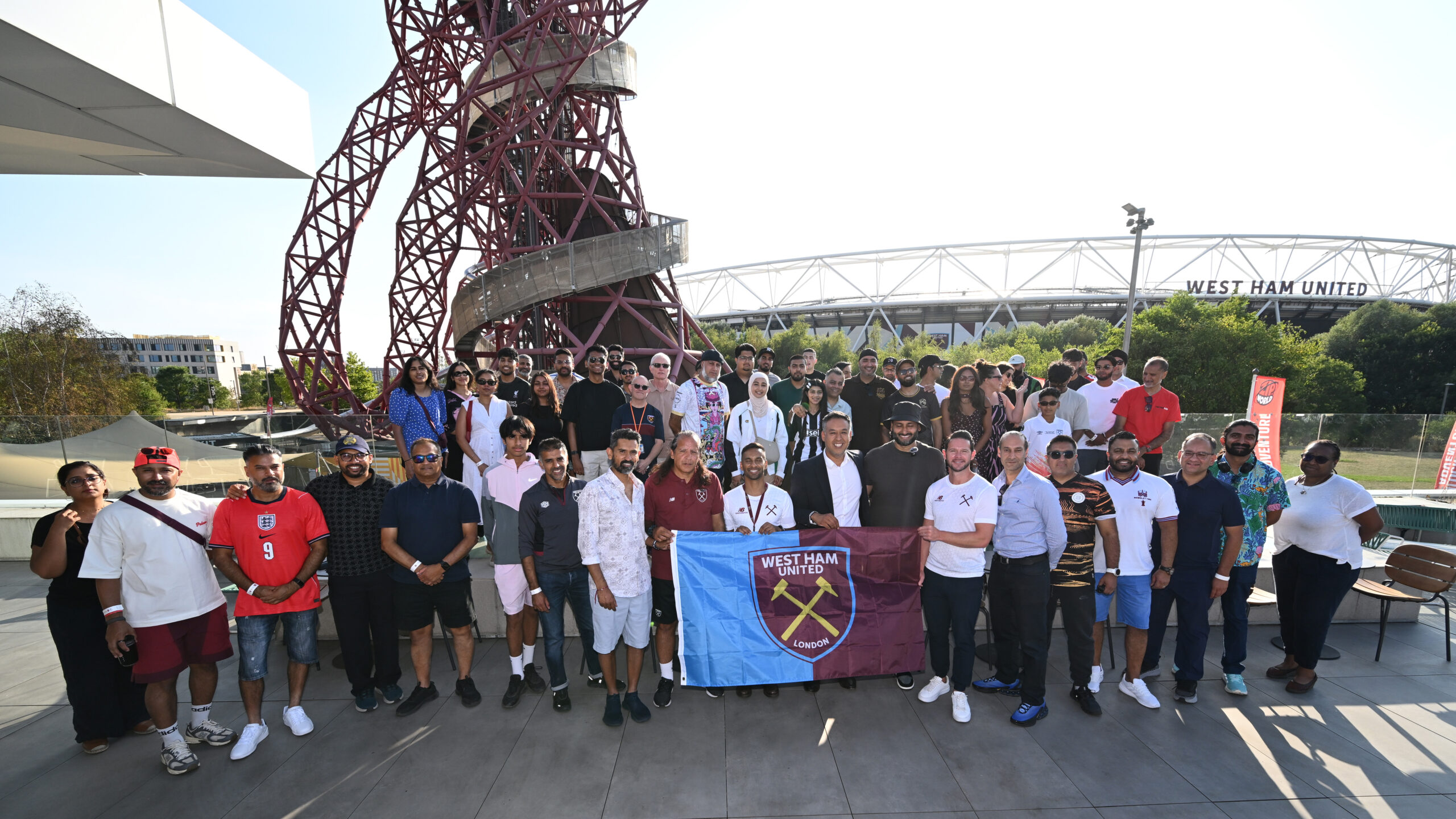
It was this conversation that West Ham United placed in the spotlight as it hosted a South Asian Heritage Month event alongside Inclusive Irons and DesiBallers. Held at Riverside East beside the London Stadium, the gathering brought together more than 100 supporters, content creators, community leaders and football advocates to discuss inclusion, representation and the role football can play in bringing communities together.
The focus wasn’t on the men’s first team or the upcoming Premier League season. Instead, the event highlighted a different side of football, one centred on belonging.
The event was organised alongside the supporters’ group Inclusive Irons and community platform DesiBallers, both of which have spent recent years working to increase South Asian visibility within English football.
One of the evening’s focal points was a screening of Our Game, a short film by filmmaker Ethan Dahanayake. The film explored how football connects people from different backgrounds through shared experiences and identity.
Panel sessions examined the progress made during the past year. Speakers highlighted grassroots initiatives designed to encourage more young people from South Asian backgrounds to participate, whether as players, coaches, volunteers or supporters.
West Ham Foundation representatives also shared examples of community projects that have made football more accessible. One such example was delivered in east London, where partnerships with schools and international charities helped improve accessibility.
Although football remains Britain’s most popular sport, British South Asians continue to be underrepresented within the professional game compared with their presence in grassroots football and among supporters.
Campaigns led by organisations such as DesiBallers and Inclusive Irons have increasingly challenged clubs and governing bodies to create clearer pathways into the sport while ensuring supporters from all backgrounds feel represented.
For many attending the event, representation extends beyond seeing more South Asian players in professional teams.
It also means recognising the growing influence of South Asian coaches, journalists, educators, volunteers and community organisers who continue to shape football behind the scenes.
West Ham’s Interim Chief Executive Officer, Karim Virani, described the club as a “family made up of people of all ages, backgrounds and walks of life”, while Inclusive Irons chair Apu Vyas said one of the group’s key ambitions was ensuring the club’s fanbase reflects the diversity of the local community.
Former West Ham midfielder Matt Jarvis echoed those sentiments, saying events like these help encourage wider participation across every area of football, from playing and coaching to working within clubs and supporting from the stands.
As English football continues to examine questions around equality and representation, initiatives such as this demonstrate how clubs are increasingly using heritage celebrations not simply to recognise communities, but to engage them in conversations about the future of the game.
For many supporters gathered in Stratford, the evening served as a reminder that football’s greatest strength has never been confined to what happens during 90 minutes on the pitch.
Instead, it lies in its ability to bring together communities that have long been part of the game’s story, even if their voices have not always been equally heard.


