


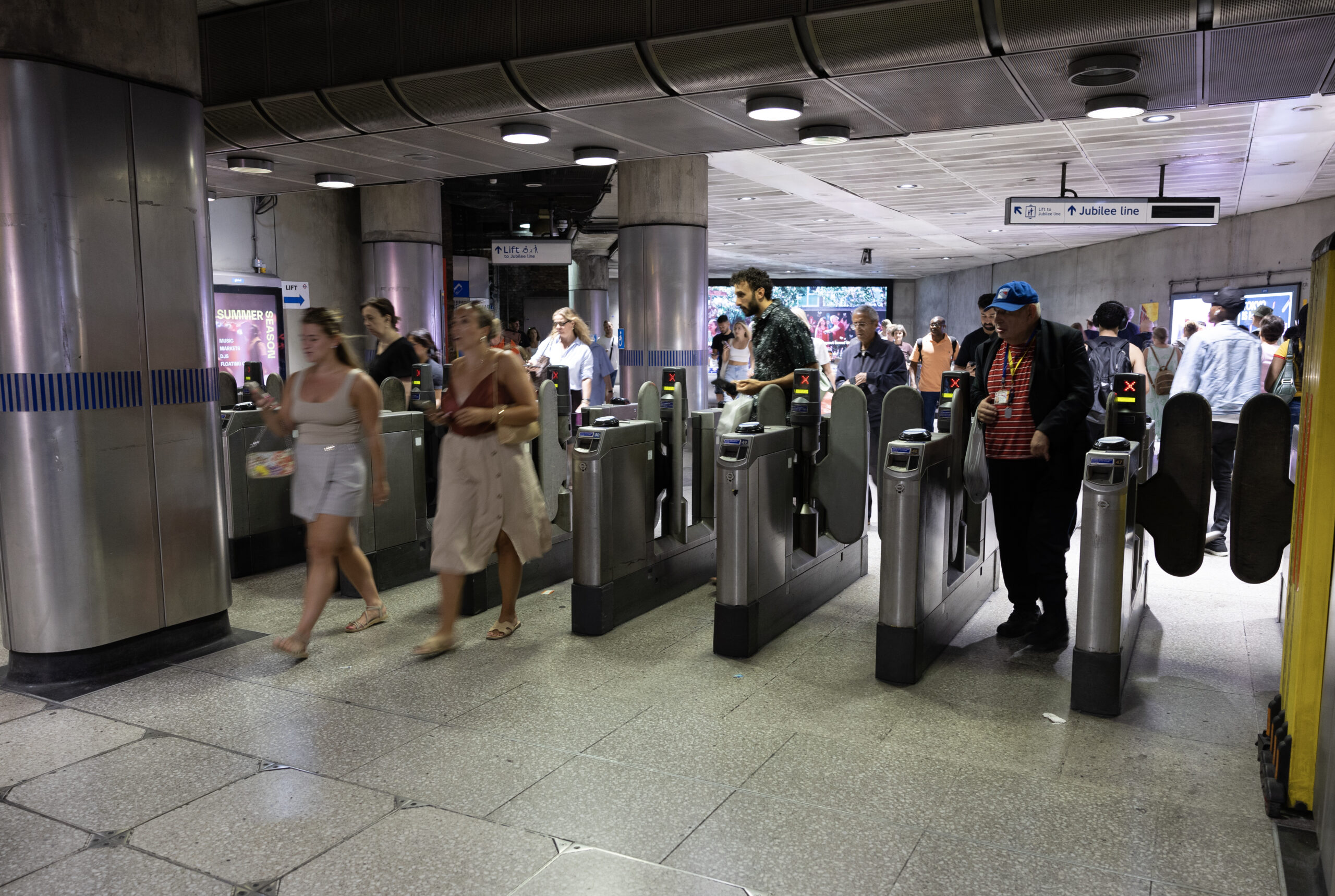
A senior Conservative campaigner has accused City Hall of rewarding Transport for London (TfL) executives despite fare evasion continuing to cost the transport network an estimated £190 million every year.
Festus Akinbusoye, a Westminster City cllr and former Police and Crime Commissioner, said London Mayor Sir Sadiq Khan should stop awarding bonuses to senior TfL officials and instead invest more in enforcement across the capital’s buses and rail network.
The criticism follows a TfL report published in July which revealed that 2,048 members of staff earned more than £100,000 during the last financial year after overtime and bonuses were included. TfL Commissioner Andy Lord received a total remuneration package worth £635,533.
Mr Akinbusoye argued that executives should not be rewarded while fare evasion remains a major financial problem. “You have to blame the people who are in charge,” he said.
“It makes you wonder who’s actually funding the criminal decisions of those people who choose not to pay to use the trains as the rest of us have to. Taxpayers are subsidising the criminal choices of those who choose not to pay, and people in City Hall are being rewarded for failure.”
He said the estimated £165 million lost annually through fare evasion on the London Underground and Elizabeth line alone could instead fund around 2,000 additional revenue protection and enforcement officers.
“We need to put the right level of incentive in place for those who are responsible for this,” he said.
“There is no way that the Commissioner for TfL should be getting any bonus whatsoever at all at a time where fare evasion is rising.”
The comments build on recent analysis released by Conservative London Assembly Member Neil Garratt, who said successful prosecutions against people who failed to pay fare evasion penalties had fallen from 29,113 cases in 2020 to 14,406.
Mr Garratt also said there are currently around 500 enforcement officers across the TfL network, the same number as in 2010.
Separately, analysis by the Centre for Government Reform suggested that fare evasion on the London Underground and Elizabeth line almost matched the additional revenue generated by fare increases introduced in March.
Mr Akinbusoye said Londoners should not have to pay higher fares while fare evasion remains widespread. “Londoners are faced with a cost-of-living crisis,” he said.
“They’ve seen their fares go up. They do not care about New York.”
He added that he believed the Mayor should not increase fares again until fare evasion had been brought under control.
TfL estimates that around 3.5% of its 3.6 billion annual passenger journeys previously went unpaid, equivalent to about 126 million unpaid journeys every year, or around 2.4 million each week. The transport authority now says the fare evasion rate has fallen to 3.3 per cent.
TfL has set a target of reducing system-wide fare evasion to 1.5% or lower by the 2030/31 financial year.
Last year, the City Hall Conservatives also published a 10-point strategy to tackle fare evasion. Proposals included installing taller ticket barriers similar to those used in New York, introducing AI-enabled barriers, and launching a city-wide campaign promoting fare payment and civic responsibility.
Mr Akinbusoye said taller barriers would be worthwhile despite potentially slowing passenger flow.
“This is about a collapse in the social contract that we have in London, where law-abiding citizens see every day people pushing through the barriers,” he said.
TfL defended its approach, saying enforcement activity had already helped reduce fare evasion.
A spokesperson said the authority had focused officers on locations where fare evasion was most common while using technology to identify persistent offenders. They said the fare evasion rate had fallen from 3.9% in 2022/23 to 3.3%.
The spokesperson added: “By increasing enforcement activity to tackle fare evasion, last financial year we issued over 69,000 penalty fares and reported over 21,000 individuals for possible prosecution.
“We are committed to reducing the current rate of fare evasion to 1.5 per cent by the 2030/31 financial year and the strategy we now have in place will help ensure more persistent evaders face justice.”


