

Sitting in her wheelchair, wearing her pagh and watching one of the biggest Punjabi stars in the world perform, Jeevna Kaur Notay probably did not expect that within minutes thousands of people would be cheering for her.
The eight-year-old from West Yorkshire had been brought to Diljit Dosanjh’s Manchester concert by her family during what has been another challenging period in her young life.
Jeevna was born with a congenital limb difference and had her left foot amputated when she was just two years old. She has also undergone several procedures on her right leg.
She is currently receiving further treatment and rehabilitation, with a frame fitted to her leg and a wheelchair helping her get around while she recovers.
Yet none of that has stopped the determined youngster from embracing life, including playing junior amputee football with the England Amputee Football Association.
And on Sunday night, she found herself on a very different kind of pitch.
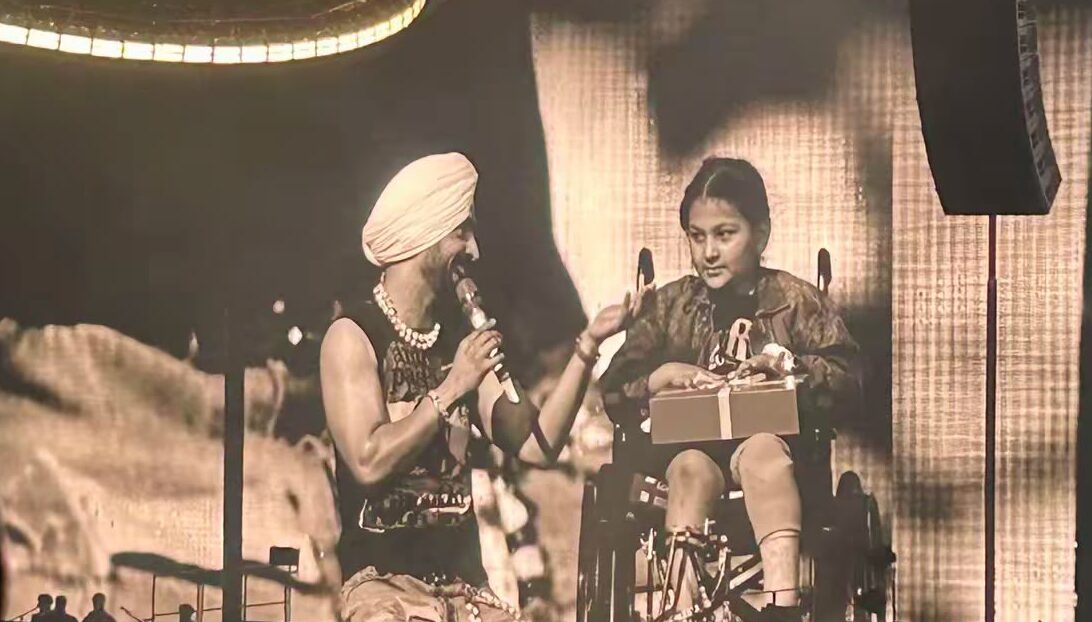
Spotting Jeevna in the front row of his Manchester show, Diljit invited the youngster onto the stage.
What happened next has since been shared widely across social media.
Handed the microphone by the Punjabi superstar, Jeevna confidently shouted Diljit’s famous rallying cry: “Punjabi aa gaye oye!”
The arena responded.
When Diljit asked where she was from, Jeevna proudly shouted: “Leeds.”
He then asked how many others in the arena were from Leeds, prompting cheers from the crowd before telling them: “This girl is from your city!”
But it was what happened next that made the encounter particularly emotional for Jeevna’s family.
Diljit sat beside the eight-year-old and sang Ikk Kudi to her, the much-loved song based on the poetry of legendary Punjabi poet Shiv Kumar Batalvi.
For her father, seeing his daughter sitting beside one of the world’s most recognisable Punjabi performers carried a significance far beyond meeting a celebrity.
“There was something incredibly poignant about seeing this little Punjabi girl, sitting there in her wheelchair with everything she is physically going through at the moment, being serenaded with Ikk Kudi by one of the biggest Punjabi artists in the world in front of thousands of people,” Jeevna’s father Surj Notay, told Asian Standard.
The timing made the encounter even more meaningful.
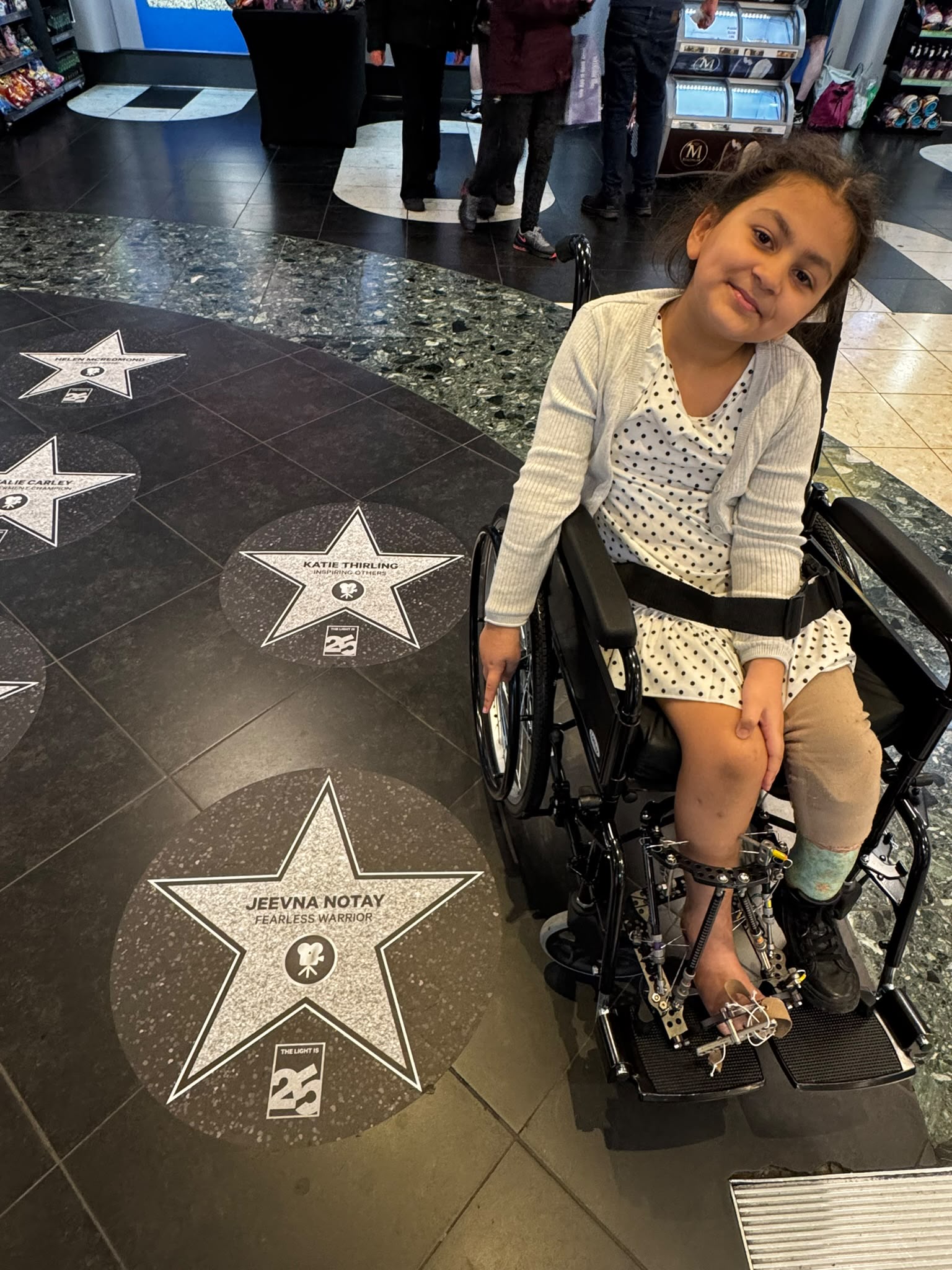
Just days before the concert, Jeevna had been recognised as a “Star in the Light”, celebrating the way she has continued to shine while undergoing treatment and rehabilitation.
Within days, the youngster who had been recognised for her resilience found herself quite literally placed under the spotlight on one of Punjabi music’s biggest stages.
Her father said: “For us it isn’t really a celebrity story.
“It’s about disability, representation, resilience and identity. Jeevna spends a lot of her childhood around hospitals, operations and rehabilitation. For those few minutes none of that defined her.
“She was simply a confident little Punjabi girl, in her pagh, absolutely owning an arena.”
That confidence is something Jeevna carries beyond the concert stage.
Despite having her left foot amputated and undergoing continued treatment on her right leg, she remains active and plays junior amputee football through the England Amputee Football Association.
Her participation in sport is particularly significant for a child who regularly has to move between periods of activity, surgery and rehabilitation.
It is also why her family believes moments of visibility like the one in Manchester matter.
Children with limb differences and other visible disabilities can often grow up seeing few people who look like them represented in sport, entertainment or popular culture. For children who are also from minority ethnic communities, those layers of representation can be even rarer.
Jeevna, however, appears determined to take up her space.
She is proud of being differently abled and equally proud of her Punjabi and Sikh heritage – something evident as she sat on stage in her pagh beside Diljit and confidently addressed an arena full of people.
Footage of their encounter has since travelled well beyond the Manchester audience, appearing across TikTok and Instagram, while concertgoers have contacted the family with videos they filmed from different parts of the arena.
Diljit also featured Jeevna on his own Instagram grid in a post from the Manchester show, giving the moment an even wider audience.
For Jeevna’s family, however, perhaps the most important audience is not the millions who may encounter the footage online.
It is another child who looks different.
A child going through operations.
A child using a wheelchair or prosthetic.
Or simply a child who needs to see someone like themselves being celebrated rather than defined by what they cannot do.
For a few unforgettable minutes in Manchester, Jeevna was not the little girl undergoing another difficult period of treatment.
She wasn’t a patient.
She wasn’t defined by an amputation, a wheelchair or a medical frame.
She was Jeevna, eight years old, Punjabi, proud, and with an arena behind her.
And when one of the world’s biggest Punjabi stars sat beside her and sang Ikk Kudi, thousands of people got to see her exactly that way too.


