

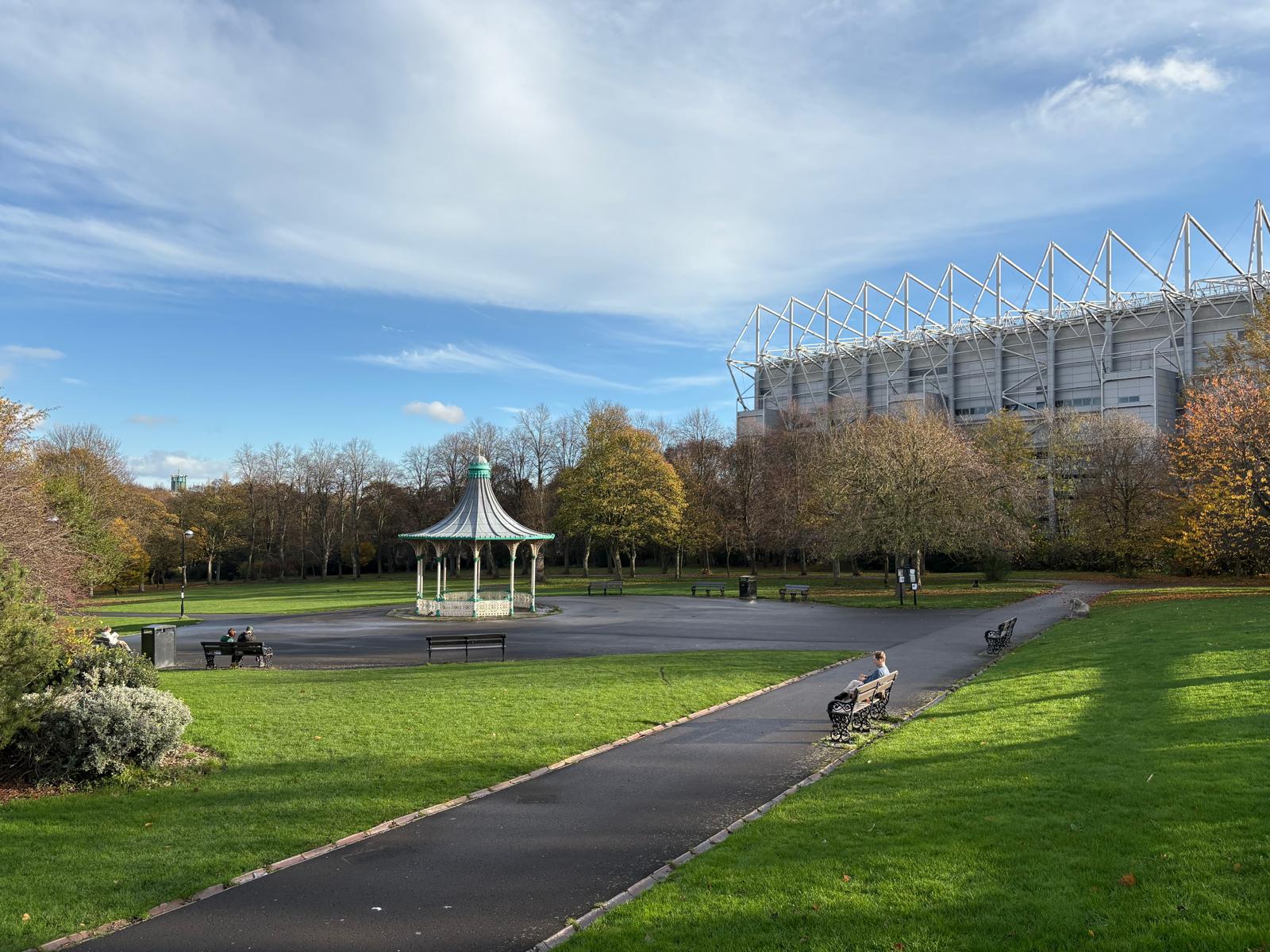
A “world-class” football stadium and around 1,000 nearby homes feature in a new regeneration vision for Tyneside—but the plans leave open whether Newcastle United will redevelop St James’ Park or build a new ground.
The draft Strategic Regeneration Framework (SRF) sets out ambitions for Newcastle and Gateshead’s urban core over the next 25 years, including new housing, improved transport links and billions of pounds of investment.
Due to be considered by local councils and the North East mayor over the coming weeks, the framework identifies Newcastle United as an anchor for a stadium quarter combining sport, culture, education, innovation and city living.
It does not favour either redevelopment of St James’ Park or a new stadium. Supporters are still awaiting the club’s decision, with neighbouring Leazes Park among the locations discussed as a potential alternative.
The ground’s city-centre location is central to the wider regeneration ambitions. Known as the “cathedral on the hill”, St James’ Park brings thousands of supporters into Newcastle on matchdays, and regional leaders want a future stadium to retain that connection to the city’s heart.
The framework envisages the surrounding quarter becoming a “nationally significant destination for sport, culture, innovation, education and urban living”.
Alongside a world-class stadium and around 1,000 homes, proposals include completing the final stages of the Helix development and transforming St James’ Boulevard into a “green and connected urban spine”.
That route would link Central Station, Forth Yards, Newcastle College, the football club and Leazes Park.
The document suggests that regeneration led by sport could strengthen the city’s commercial centre, supporting more high-quality office space, hotels and conference facilities.
Its ambition is for the district to remain active beyond matchdays, bringing together the club’s international profile, research and enterprise at Helix, education at Newcastle College and green space at Leazes Park.
New buildings, streets and public spaces would connect those activities, with an emphasis on safe, accessible green spaces and a welcoming public realm.
North East mayor Kim McGuinness told the Local Democracy Reporting Service that either a new stadium or substantial redevelopment could transform the area.
“Newcastle United has a proud history at St James’ Park and it’s a very special place,” she said.
“Clearly if Newcastle build a new world-class stadium, this would greatly boost major urban regeneration in the area – creating more jobs and new homes. A new stadium or major re-development would be transformative for the city.”
She said supporters and residents should be involved when the club is ready to share its proposals.
“As a fan myself, I know the stadium is where we’ve all felt the emotional ups and downs that football brings, so it’s right that people are at the heart of plans for any new stadium or re-development.”
Newcastle City Council leader Colin Ferguson said the decision on the stadium’s future rested with the club.
“Like many fans across Newcastle, we are eagerly awaiting the decision from the football club as to the future of St James’ Park,” he said.
“This framework builds upon the vision in our Council Plan to make Newcastle the UK’s most successful regional capital. It makes clear that a world-class stadium in the heart of our city could be a key part of our city’s success.”
He added: “Whatever the club’s decision on the stadium, if it is backed by fans and residents, we will work with them to ensure it unlocks wider regeneration, jobs, homes, investment and improved green space, delivering lasting benefits for Newcastle and the wider North East.”


