

More than 5,000 film workers worldwide have pledged to refuse collaboration with Israeli film institutions and companies described as “implicated in genocide and apartheid against the Palestinian people.”
Launched in early September with 1,200 signatories, the Film Worker Pledge marks the first major international industry-wide refusal to engage with complicit Israeli film institutions. Organisers say the surge in signatures represents an unprecedented collective commitment to meaningful action in response to the war in Gaza.
“In this urgent moment of crisis, where many of our governments are enabling the carnage in Gaza, we must do everything we can to address complicity in that unrelenting horror,” the signatories said. “We answer the call of Palestinian filmmakers, who have urged the international film industry to refuse silence, racism, and dehumanisation, as well as to ‘do everything humanly possible’ to end complicity in their oppression.”
Image: Istock
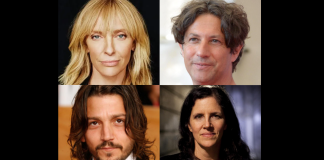
The pledge has drawn support from across the global industry, with recent signatories including directors Laura Poitras, Radu Jude, Jonathan Glazer, Melina Matsoukas, Fisher Stevens and Alex Gibney; cinematographer Ed Lachman; and actors Myha’la, Andrew Garfield, Joaquin Phoenix, Rooney Mara, Harris Dickinson, Omar Sy, Toni Collette, Cole Escola, Diego Luna, Judah Friedlander, Carrie Brownstein, John Early, Elliot Page, Ebon Moss-Bachrach, Leila Bekhti, Eric Andre, Bowen Yang and Waleed Zuaiter.
While Israeli film lobby groups have sought to discredit the pledge, dozens of Israeli filmmakers have publicly endorsed it. More than 50 Israeli documentary filmmakers signed an open letter declaring their “wholehearted support”, writing: “We cannot, nor do we wish to, absolve ourselves of our responsibility – by our being part of the Israeli collective – for the crimes being committed in the West Bank and Gaza.”
Israeli cinematographer and director Avigail Sperber, writing in Haaretz, argued that the pledge challenges local filmmakers to consider whether dissent within Israel is genuine resistance or merely a “licensed and harmless way for the state to maintain a façade of acceptability.”
The pledge cites rulings by the International Court of Justice, which has found a plausible risk of genocide in Gaza, and a United Nations investigation which concluded that Israel has committed genocide against Palestinians. It defines complicity as including “whitewashing or justifying genocide and apartheid, and/or partnering with the government committing them.”
Critics of the pledge have included groups such as Friends of Israeli Producers Association, whose stated mission is “to show Israel in a different light rather than the usual focus on wars”, and Creative Community for Peace, which has been registered as an alternative business name for StandWithUs, a pro-Israel lobby group.
The pledge also draws attention to longstanding concerns around Israeli film institutions, such as the Jerusalem Film Festival’s screenings at the Museum of Tolerance, built on an ancient Palestinian cemetery.
The initiative takes inspiration from Filmmakers United Against Apartheid, established in 1987 by Jonathan Demme, Martin Scorsese and others to oppose collaboration with apartheid South Africa.
It joins a wider movement of cultural boycotts, including the 2024 declaration by more than 7,000 authors and publishing workers refusing work with Israeli publishers, and the “No Music for Genocide” campaign. The pledge also sits alongside recent statements by artists’ unions, including open letters from members of the US actors’ union SAG-AFTRA, motions passed by Equity UK, and a recommendation from the Norwegian Actors’ Equity Association for its members to reject collaboration with Israeli arts institutions while occupation and apartheid policies continue.


