

London’s children need a reformed school curriculum to protect them from increasing exposure to online harms and inappropriate content, the capital’s Deputy Mayor for Children and Families has said.
Joanne McCartney said “education is not keeping up with the technological change”, and that teachers needed to be specially trained to help pupils deal with negative influences and improper material.
This summer the Online Safety Act (OSA) was implemented, meaning platforms needed to impose age verification checks to prevent children from seeing harmful content.
However, the use of Virtual Private Networks (VPNs) and doctored images to get round such regulation has prompted fears that some pupils will be exposed to even more dangerous content on the darker side of the internet.
Speaking at a National Education Union (NEU) event at the Labour Party conference on 29 September, Ms McCartney said: “The online world has allowed kids to be exposed at a much earlier age and made such content much more accessible.
“And behaviour online then reflects itself in the real world.
“What we’ve really tried to focus on from City Hall is trying to address those issues – for example, the Violence Reduction Unit is now rolling out quite a lot of programmes to skill up teachers, youth workers and parents into understanding online harms as part of our social switch and training sessions, but also trying to build resilience in young people themselves.
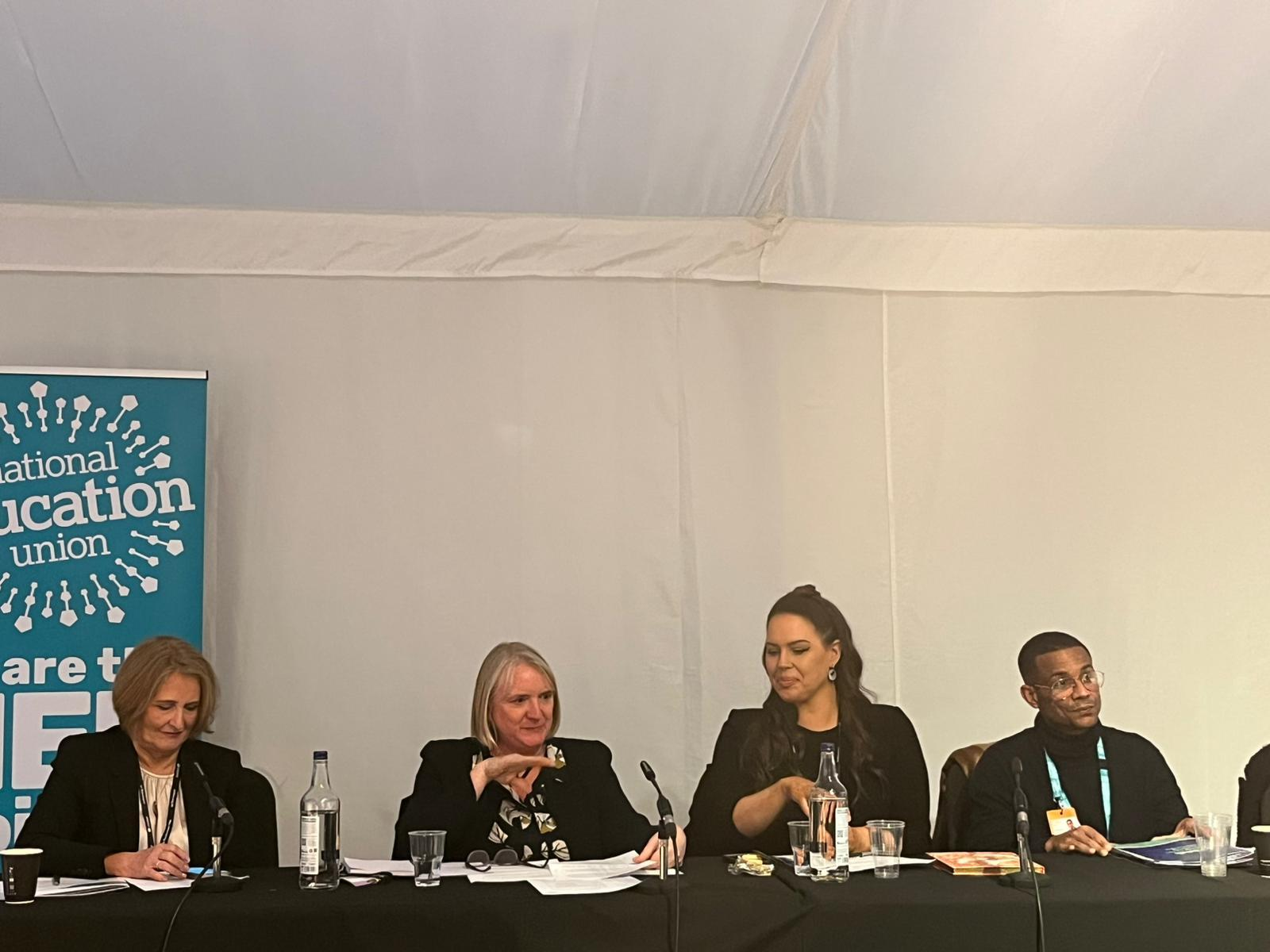
Image: LDRS
“Where we work now in primary schools, we’ve got them talking about respectful and healthy relationships.”
She said primary school children had become increasingly exposed to pornography and misogyny, especially through influencers such as self-proclaimed misogynist Andrew Tate.
This, in turn, creates a “toxic environment” for young people, who are then drawn into viewing even more “serious and damaging content” through the social media algorithm.
“We need to do a lot of work with young people around resilience and understanding so they can recognise when something that they’re seeing is not right and they can see those red flags,” she added.
“The curriculum review that’s coming up can be quite useful as well.
“Education is not keeping up with the technological change and talks about digital literacy from our young people, the ability to understand and appreciate the issues about these information and sources.”
She said she hopes schools can work on these developing issues in the classroom. “But we’ll need resources to be able to do that and proper training for teachers as well.”
Research by City Hall in 2021 found that more than 70 per cent of young people had seen content during lockdowns in 2020 and the following year that was either violent or explicit. This includes videos of suicide, nudity and extreme violence.
However, only 40 per cent of young people interviewed reported online harms because most of them either didn’t know how to, had previously been ignored, or gone through previous negative experiences.
Daniel Kebede, General Secretary of the NEU, said: “We need a decisive cultural shift that protects children in the online world.”
He suggested that a multifaceted approach, including holding social media giants to account, was needed.
“It’s incumbent on us to do something as a society – but instead of pointing to parents or looking at schools to do more, you actually have to take this proper challenge head on and take on the big tech giants and force them to be socially responsible and regulate them,” he added.
The Department for Education said new Relationships, Sex and Health Education guidance will need to be followed in 2026.
Officials said “positive attitudes to relationships between friends and family” will be taught in primary school “followed by new dedicated content in secondary school that helps boys identify positive male role models”.
Schools will also be expected to teach “lessons on incel culture, including how a piece of content online can impact a person’s understanding of sexual ethics and behaviour, as well as increasing awareness of AI, deepfakes and how pornography links to misogyny.”


