


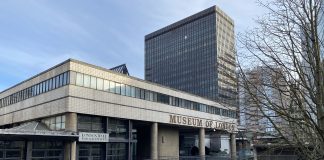
Campaigners contesting the demolition of two buildings by the Barbican estate have been granted approval to take their case to the High Court.
Barbican Quarter Organisation (BQO) had sought to contest the City of London Corporation’s decision to green-light knocking down Bastion House and the former Museum of London and construct three office buildings in their place.
The group claimed the demolition would lead to tens of thousands of tonnes of carbon emissions being released and requested a judicial review (JR) on environmental grounds.
The BQO and its lawyers at Leigh Day have now said all three grounds have been granted approval to proceed to court.
A BQO spokesperson said the decision marks “a crucial moment for residents and for everyone who cares about London’s heritage and climate commitments”.
A City of London Corporation spokesperson said: “The grounds on which the claimant requested a judicial review for the London Wall West proposals will now proceed to consideration at a full hearing.We have no further comment at this time.”
The redevelopment plans, which include a range of public realm works as well as the demolition and subsequent construction of the three office buildings, went to the Corporation’s Planning Committee in April last year.
Ahead of the meeting former Levelling Up Secretary Michael Gove issued a Section 31 Holding Direction.
This prevented the committee granting approval as Mr Gove considered whether to call it in and decide himself.
The order was subsequently lifted and the Corporation green-lit the plans.

Formal approval was given in December after a deal was agreed to purchase Ferroners’ House from the Worshipful Company of Ironmongers, which was necessary to proceed with the scheme.
The three new buildings are to be between five and 17 storeys tall. The Corporation, which was the applicant as well as the planning authority, has said the project will contribute to its target of a minimum of 1.2 million square metres of additional office floorspace by 2040.
BQO’s claim is being brought on three grounds: that the Corporation failed to abide by Environmental Impact Assessment Regulations relating to impartiality and objectivity; that it misunderstood and/or failed to apply policy presuming buildings will be reused rather than demolished; and that it failed to consider alternatives to demolition.
A spokesperson for BQO said: “This is a crucial moment for residents and for everyone who cares about London’s heritage and climate commitments. We are delighted that the court has recognised that our case is arguable and should now progress to a full hearing.
“BQO is very grateful to everyone who has supported this campaign. We would not be here without you. Your continuing financial support will help put a stop to this harmful project.”
Ricardo Gama, Partner at Leigh Day, said: “The City of London has recognised in its planning policies that it is no longer acceptable to treat buildings as disposable. Given the massive amounts of carbon needed to demolish and replace buildings, the age of single use buildings is over.
“That is why our clients were surprised that, in their view, the City of London failed to follow their own policies in granting planning permission for a demolition and rebuild scheme instead of looking properly at a reuse and refurbishment scheme.”


