

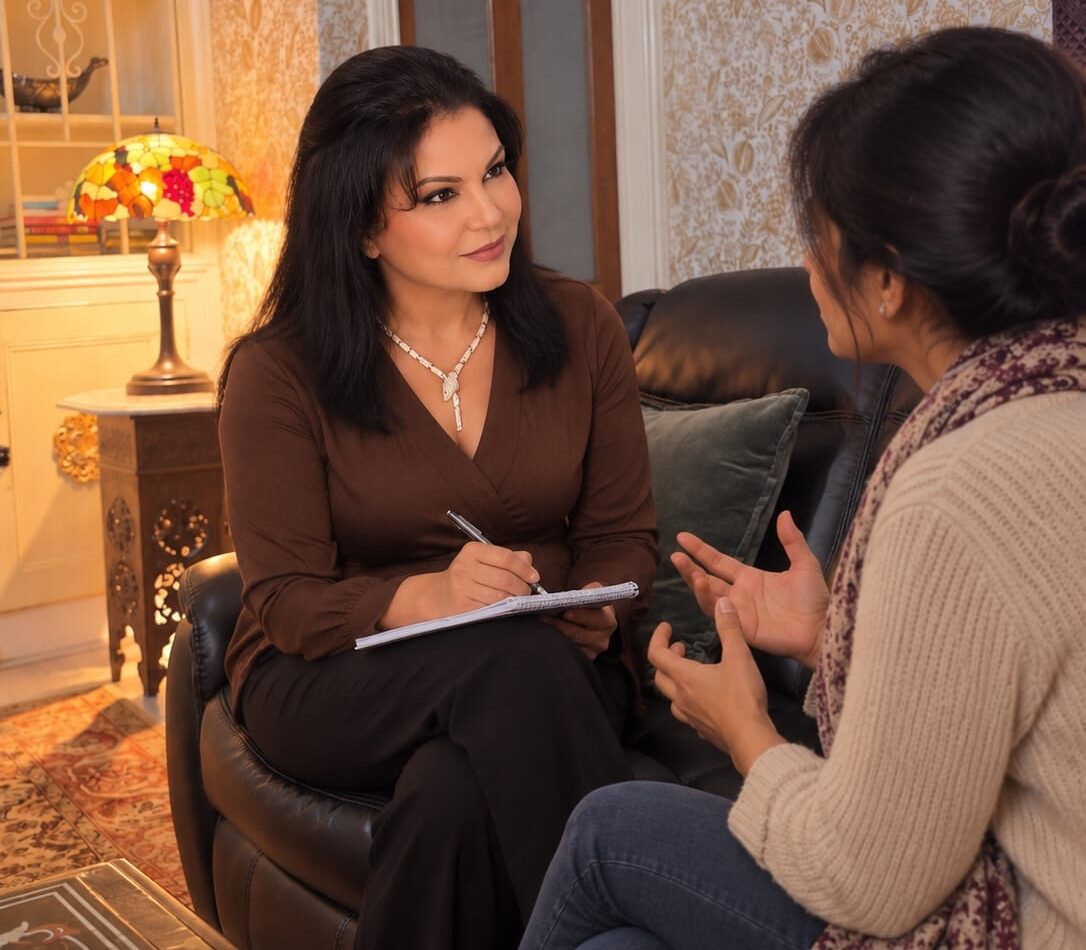
I want to share three illustrative scenarios to help us understand what living with POI can feel like, and how family reactions can deepen the hurt. These are not accounts of identifiable clients, but examples of why compassion, privacy and support matter.
In beauty, we talk a lot about helping women feel good about themselves. As a beauty specialist and counsellor, I know how difficult that can be when the people closest to a woman make her feel she is not enough.
Sometimes the hurt is hard to put into words. Sometimes the tears come first.
Primary ovarian insufficiency, or POI, happens when the ovaries stop working normally before the age of 40. It can affect periods, hormones and fertility. A diagnosis can bring uncertainty about health, relationships and a future a woman may already have imagined.
For some women in our South Asian communities, there is another worry: What will the family say?
Of course, many families respond with love. But where marriage and motherhood are treated as the milestones every woman must reach, a medical condition can become something she feels she has to hide.
I want to provide three scenarios (note they are not accounts of identifiable clients) so that we can all be more aware of the impact of POI and how this can affect women.
“I didn’t even know I was ill”
Imagine a woman in her twenties. A condition affecting her reproductive health is the last thing she expects.
Then came the tests, the appointments and a diagnosis she was still trying to understand. Before she had time to make sense of it herself, her husband’s family began judging her fertility.
Her mother-in-law and sisters-in-law called her hijda, using the term as an insult.
She began wondering whether she would ever be accepted. Had she somehow let everyone down?
This is where I want us to stop and think. A young woman is trying to understand what is happening in her body. Why should she also have to defend her place in the family?
She has done nothing wrong. She needs medical care, patience and someone willing to listen.
And using a gender-diverse community’s identity to humiliate her harms that community too.
When a family wedding becomes something to dread
She used to look forward to weddings and family gatherings, the clothes, the food, the chance to catch up.
After her diagnosis, she began dreading the questions.
“When are you giving us good news?”
It can sound affectionate to the person asking. To someone struggling with fertility, it can feel like being asked to explain her most private pain in a room full of relatives.
Then come the comparisons and the advice she never asked for. Someone else is pregnant. Someone knows a remedy. Someone tells her not to worry.
Eventually, staying at home feels easier.
In our communities, being involved in one another’s lives can be a source of warmth and support. But closeness should also leave room for privacy.
Before asking a woman about children, consider whether she has invited that conversation. You may know nothing about what she is carrying.
Sometimes the kindest words are simple: “You don’t have to explain. We’re here for you.”
“Am I still worthy of love?”
For this woman, the deepest fear was that her diagnosis had changed her place in her marriage.
Hurtful comments made her feel that being a wife was not enough; she had to become a mother to remain valued.
Her husband’s family pressured him to marry another woman. Although he did not want to leave her, he eventually entered another marriage under that pressure.
She was left feeling rejected and replaceable.
As a counsellor, I would want to give her space to speak honestly about that hurt. She should not have to rush towards acceptance or pretend she is coping to make everyone else comfortable.
Rebuilding confidence takes time. It may begin with recognising that what happened to her does not prove she was inadequate.
Her diagnosis did not make her less deserving of loyalty, tenderness or love.
What I want women and families to hear
POI does not decide a woman’s femininity, character or worth. It does not erase her ability to love or be loved.
It also does not automatically mean pregnancy is impossible. Fertility outcomes vary, and women need individual advice from a qualified healthcare professional rather than promises, assumptions or family speculation.
But reassurance should not depend solely on the possibility of a future pregnancy. A woman deserves respect whether she becomes a mother or not.
As a beauty specialist and counsellor, I care about how women feel in themselves. No beauty treatment can undo the hurt of being told you are a disappointment. That is why the words spoken at home matter so much.
Listen before offering advice. Keep private information private. Challenge cruel comments, even when they come from someone older or more senior in the family.
We can respect our elders and still say: “That is hurtful. Please don’t speak to her like that.”
Counselling can offer space for grief, fear and uncertainty. Medical professionals can explain the condition and discuss care. Families can offer something just as necessary: a home where a woman does not have to earn kindness.
If you are living with POI, you do not owe everyone an explanation. You are allowed to feel upset, to ask for support and to set boundaries.
You deserve to be cared for as the person you are today.
Taking time for yourself can begin with a conversation. At Prity Aesthetic Clinic in Clayton, Bradford, Prity offers personalised beauty and skincare treatments alongside free counselling sessions for women, with warmth, privacy and care. Find out more or get in touch.


