

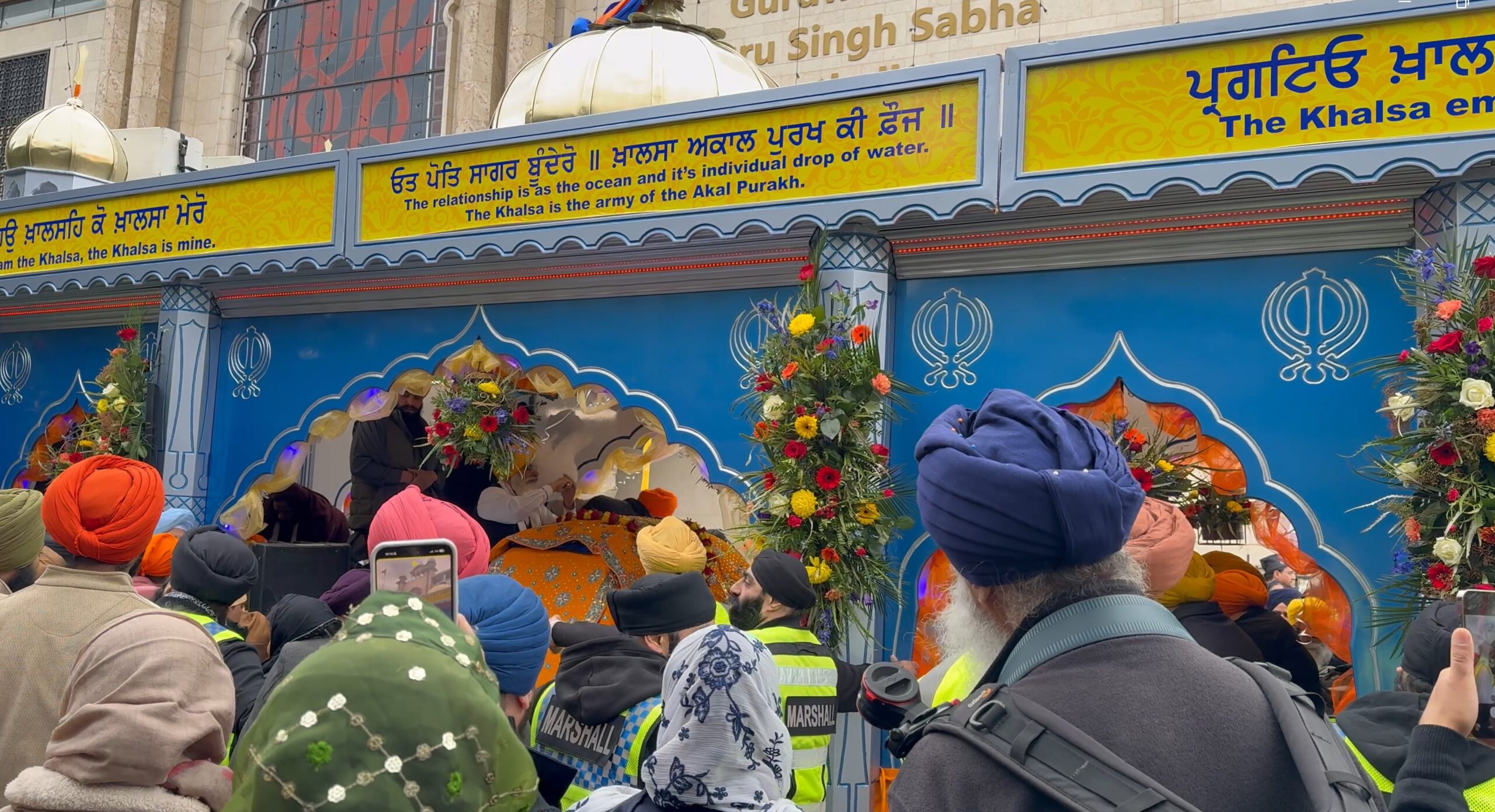
Every spring, the streets of Southall are transformed. A sea of saffron flows through West London, drums echo into the distance, and the air carries the scent of freshly prepared langar. But beyond the colour and celebration, Southall’s annual Nagar Kirtan has come to represent something far deeper, a powerful symbol of resilience, shared humanity and the possibility of unity in an increasingly fragmented Britain.
Held to mark Vaisakhi, one of the most significant dates in the Sikh calendar, commemorating the birth of the Khalsa in 1699, the Nagar Kirtan is, at its core, a moving act of faith. Yet in Southall, it has evolved into one of Europe’s largest public expressions of community cohesion, drawing tens of thousands of people from across the UK and beyond.
A festival rooted in faith and openness
At the heart of the celebration lies a simple but profound principle: seva, or selfless service.
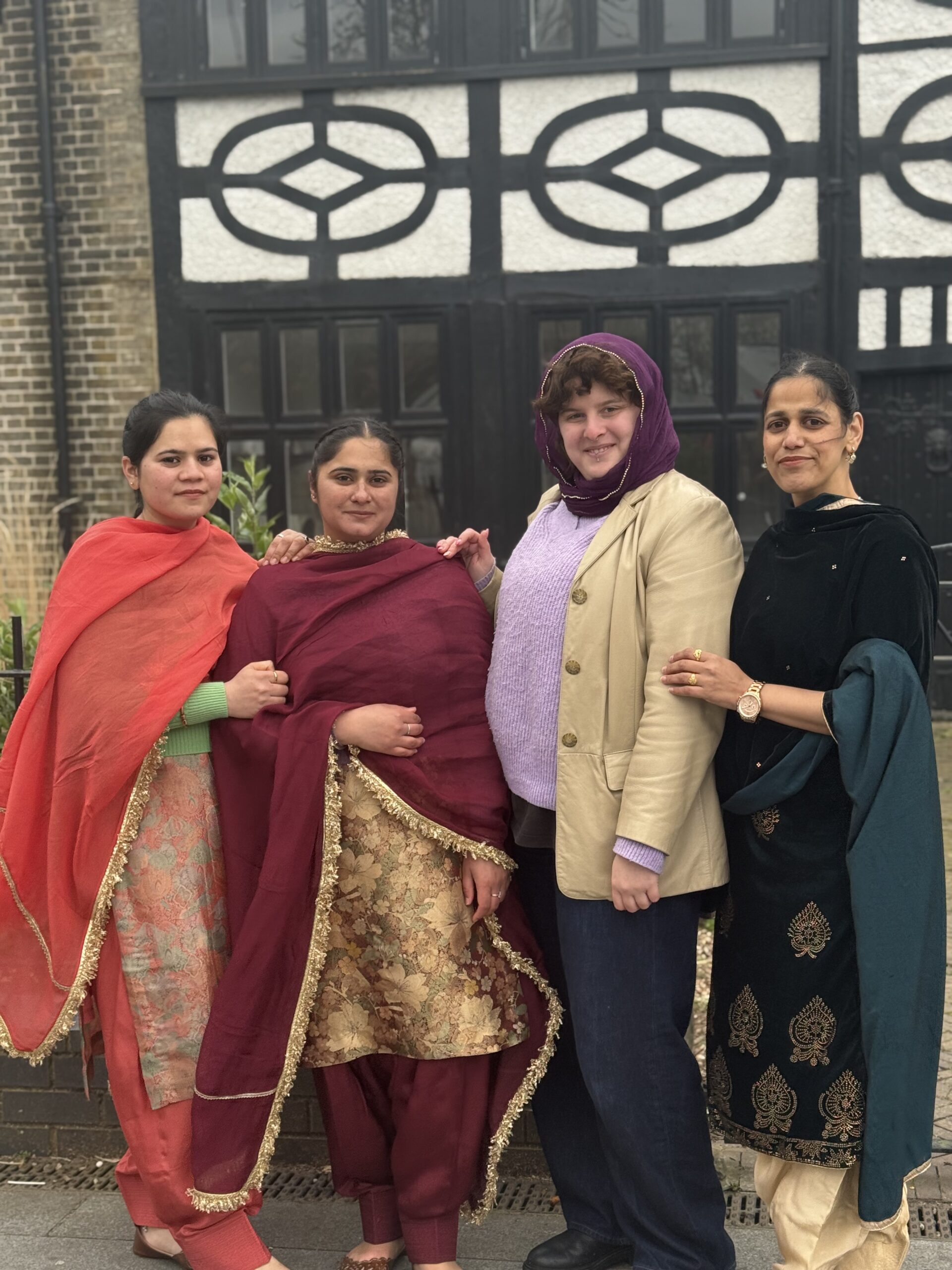
For first-time attendees, the experience can be both overwhelming and deeply moving. Our new intern Amelia Oprean, attended for the first time despite living nearby, described arriving early and instinctively joining a queue for food, unsure of what to expect, but quickly understanding its significance.
“I wasn’t too sure what I was being given, but I knew that food giving is a big part of Vaisakhi, so I wasn’t going to refuse,” Amelia reflected.
What she encountered was langar, the Sikh tradition of a free, community kitchen open to all, regardless of background, faith or status.
Volunteer Anisha Kaur, one of hundreds serving food on the day, explained the ethos behind it: “One of the reasons we celebrate is to honour the wisdom our first Guru shared upon us, to work hard and share the fruits of our labour. Without judgement, anyone is allowed to come in to have a hot meal… they will always be welcome.”
That openness is not symbolic, it is practised. Visitors, many attending for the first time, are not just welcomed but embraced. “The kindness and patience of everyone I spoke to really touched me,” Amelia added. “My heart truly was full and my stomach definitely fed.”
Tradition in motion
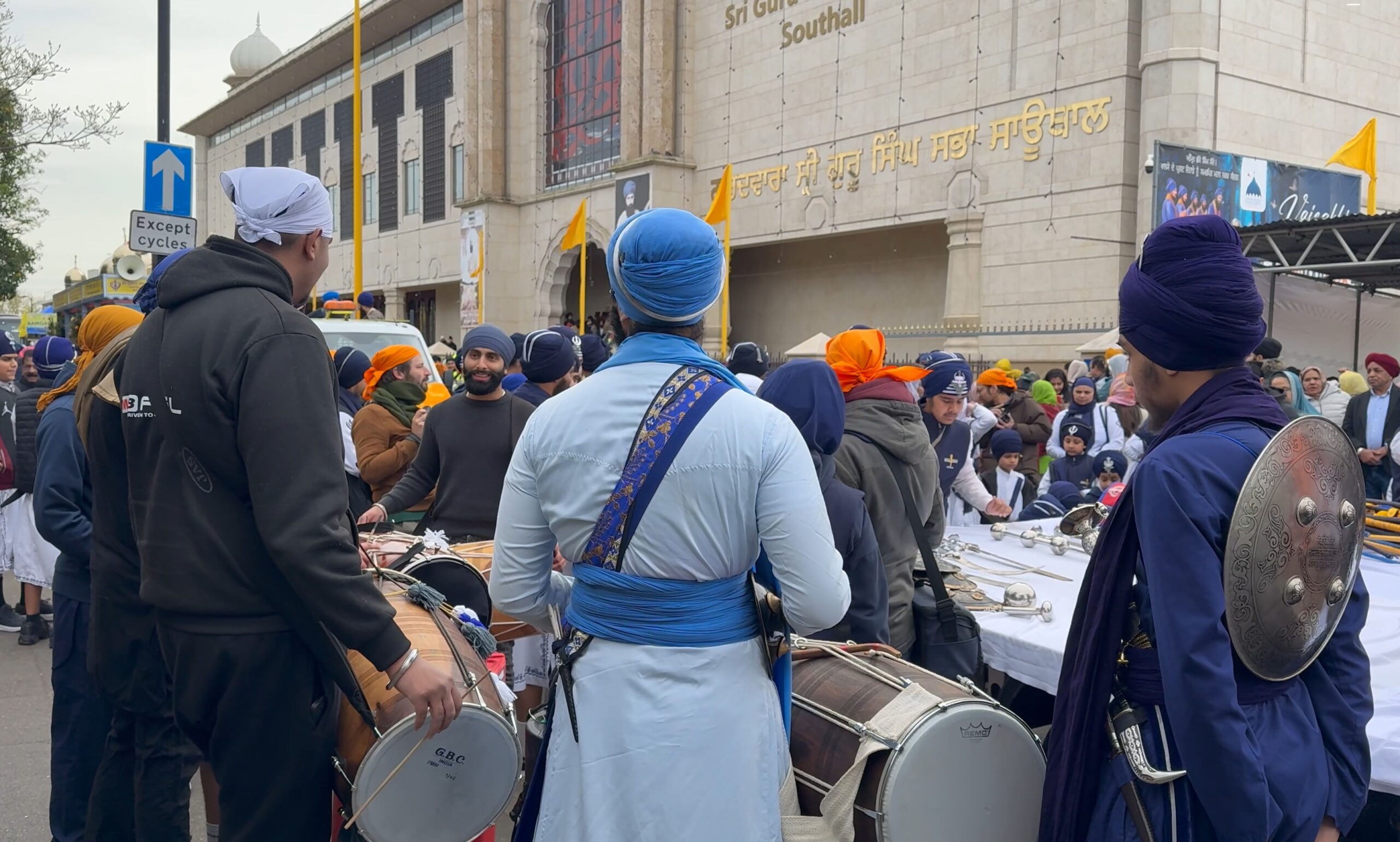
As the procession begins, Southall’s streets become a living expression of Sikh heritage. Leading the way are gatka performers, practitioners of traditional Sikh martial arts, showcasing discipline, strength and spiritual focus.
Young participants, dressed in traditional attire, carry forward centuries-old practices with pride. “Our uniforms are inspired by traditional Sikh wear,” said Bahadur Singh, preparing for the procession. “We wear these when performing our martial arts.”
Alongside them, the rhythmic beat of the dhol and nagara, once war drums, now signals celebration, unity and cultural continuity.
For many, the Nagar Kirtan is not just a religious procession, but an educational experience, a moment where culture, history and identity are shared openly with the wider public.
From hostility to harmony
To understand the full significance of Southall’s Nagar Kirtan, one must look back.
In 1976, the area was the site of a brutal racist killing. Gurdip Singh Chaggar, an 18-year-old Sikh, was murdered in a hate attack, a
tragedy compounded by the dismissive response it received at the time. The incident galvanised a generation, leading to the formation of the Southall Youth Movement and a wave of activism against far-right violence.
Just three years later, in 1979, Southall became the backdrop to further unrest during protests against a National Front meeting. The death of teacher Blair Peach during those demonstrations remains one of the most painful chapters in the area’s history.
For those who lived through it, today’s scenes of celebration are hard-won.
Balwinder Rana, who served as chief steward during the protests, reflected: “We are living in a different world now… but that was only made possible because the community, together with our allies, stood up to the fascists.”
The transformation is stark. Where once there was fear, there is now festivity. Where communities were divided, they now gather, not just in tolerance, but in shared joy.
A model for interfaith Britain
In a country often described as divided, politically, socially and culturally, Southall’s Nagar Kirtan offers a different narrative.
It is one of the rare events where faith is not confined but shared. Where people of all backgrounds walk together, eat together and learn from one another.
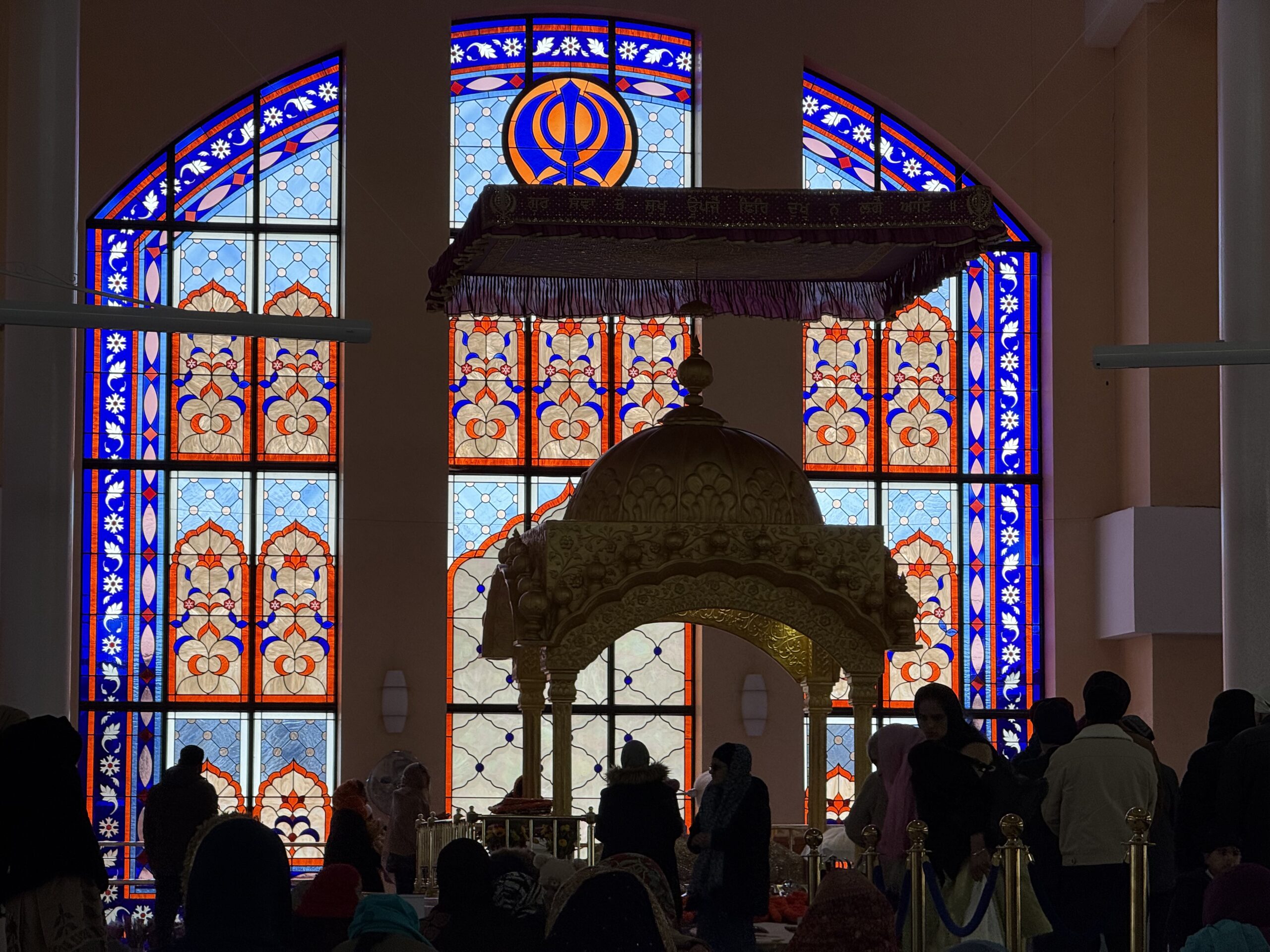
Inside the Gurdwara, visitors encounter not just prayer, but partnership. Community stalls, from charities to corporate organisations sit side by side, united by a shared message of inclusion.
“There is a sense of togetherness and community that you don’t get anywhere else,” said one attendee. Another added: “There is no judgement here… people rushed to help without hesitation.”
These are not small moments. They are the building blocks of trust, the kind that cannot be legislated, only lived.
More than a festival
Today, Southall’s Nagar Kirtan stands as a testament to how far Britain has come and how far it still has to go.
While challenges around inequality, representation and recognition remain, the festival demonstrates what is possible when communities are given space to celebrate openly and authentically.
It is not just a Sikh celebration. It is a British one.
A reminder that diversity, when embraced, does not divide, it enriches.
As crowds continue to gather year after year, many for the first time, the message remains clear: in the shared act of walking, serving and celebrating together, barriers begin to fall.
And in Southall, at least for one day each year, unity is not just an aspiration, it is a lived reality.
Vaisakhi will be celebrated on Monday 14th April, with several festivals taking place across the country.
The London Mayor’s Vaisakhi festival will take place on Saturday, 18 April at Trafalgar Square.


