


London is falling behind major European cities including Copenhagen, Berlin and Brussels when it comes to clean air, according to new research.
Analysis by Clean Cities ranks Greater London 16th out of 40 European cities, giving the capital a ‘C’ grade and warning that tougher EU air pollution limits coming into force in 2030 could leave it further behind.
The report says London would fail all four key measures if it were required to meet the new EU standards.
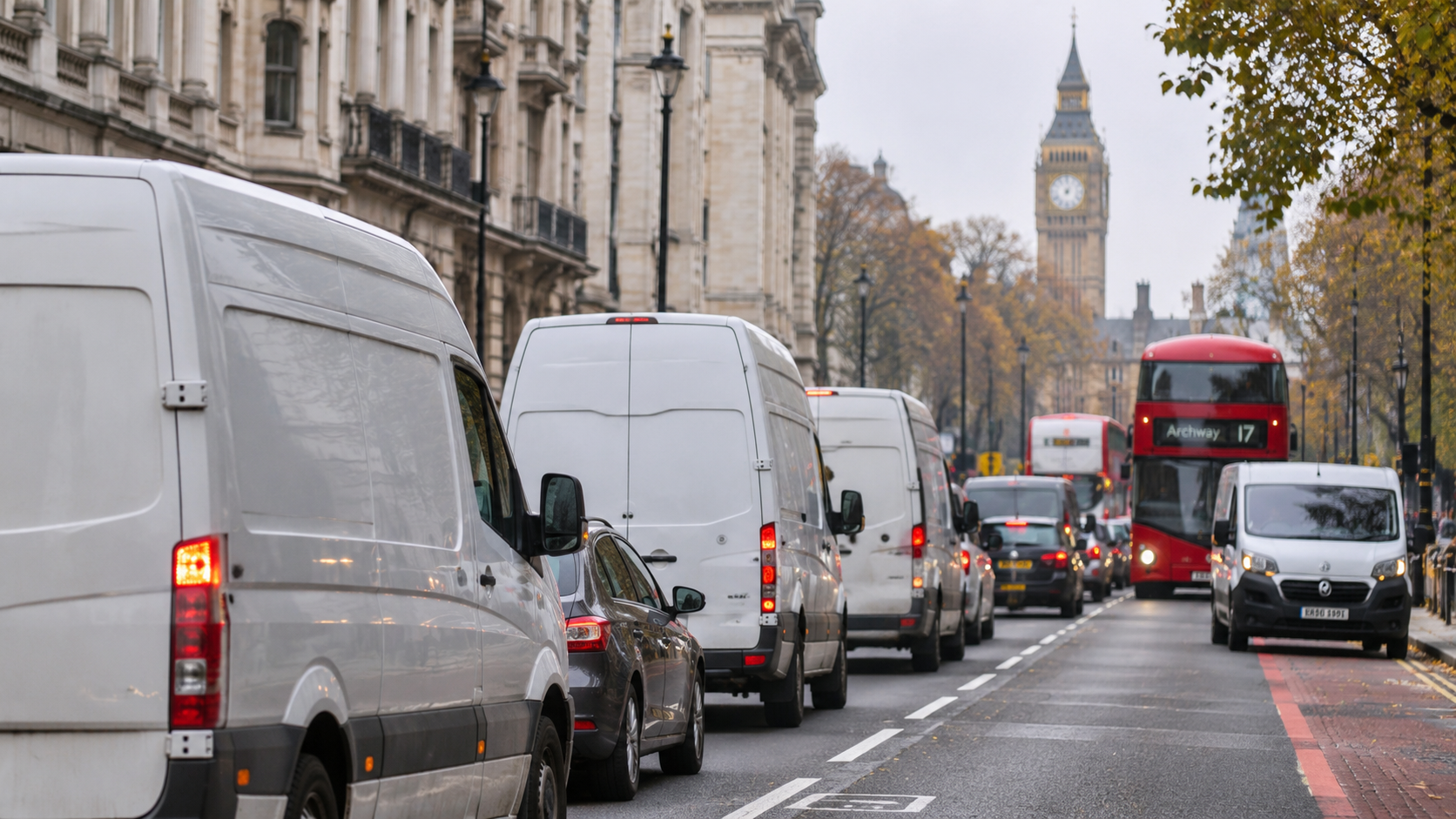
Campaigners have blamed City Hall for failing to tackle diesel van usage, with vans now the largest road transport source of nitrogen oxides (NOₓ) in central and inner London.
Department for Transport figures show that 100,761 diesel vans were registered to businesses in London at the end of 2025, the highest number since records began in 2009. This compares with just 5,582 battery-electric company-registered vans.
Campaigners call for action on diesel vans
Zak Bond, Campaign Manager at Clean Cities, said: “London has received just a C grade in our latest city ranking, and repeated air pollution alerts and illegal levels of pollution show there is still a long way to go, despite the strong successes of ULEZ. Londoners deserve to know when they will finally be able to breathe clean air.
“Diesel vans are moving in the wrong direction, with the number of company-owned diesel vans in London passing 100,000 for the first time last year. We cannot clean up London’s air while thousands of polluting vans continue to drive around our streets.”
He urged Mayor Sadiq Khan to fulfil his commitment to make London the world’s first electric-vehicle-ready global city and introduce a zero-emission zone for freight.
City Hall defended its record on improving air quality but acknowledged that more work was needed.
London trails European cities on cycling infrastructure
Transport for London (TfL) also faced criticism over the lack of protected cycling infrastructure.
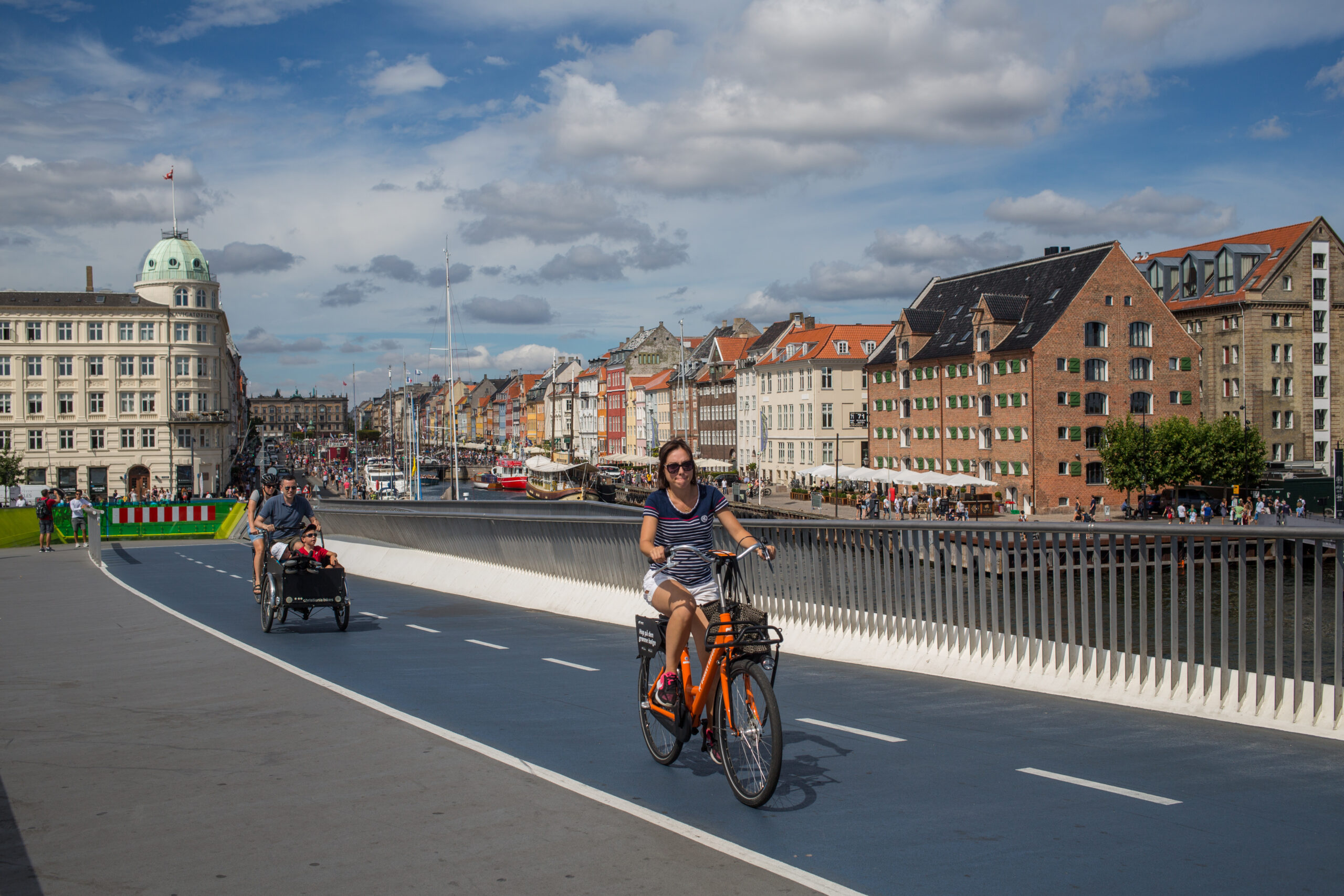
Only 12 per cent of London’s main roads currently have protected cycle lanes, compared with 73 per cent in Copenhagen and 66 per cent in Greater Amsterdam.
This is despite around 1.5 million cycle journeys being made in London every day.
Jemima Hartshorn, Founder and Director of Mums for Lungs, said: “Children are still exposed to traffic fumes on their way to school and in their own neighbourhoods. This is simply not good enough for a city that has promised to protect children’s health.”
She called for stronger action on diesel deliveries, more School Streets and safer walking and cycling routes.
Defra’s Air Pollution in the UK 2025 report, published in October, identified Greater London, Bristol and Glasgow as areas exceeding legal nitrogen dioxide limits in 2025.
Clean Cities also raised concerns about London’s progress towards an emission-free bus fleet, with only around a third of active buses currently classed as clean.
The Mayor has committed to making the entire bus fleet emission-free by 2030.
The report recommended expanding School Streets, which temporarily restrict vehicle access outside schools during specified periods.
London data shows these schemes have reduced nitrogen dioxide levels by up to 23 per cent during morning drop-off times.
ULEZ credited with reducing air pollution
Despite its criticism, the Clean Cities report acknowledged significant improvements in London’s air quality.
Nitrogen dioxide (NO₂) levels fell by 46.3 per cent, while fine particulate matter (PM₂.₅) levels declined by 27.1 per cent between the 2016–18 and 2023–25 comparison periods.
The report attributed part of this improvement to the introduction and expansion of the Ultra Low Emission Zone (ULEZ).
However, City Hall Conservatives Transport spokesperson Thomas Turrell questioned the Mayor’s environmental record.
He told the Local Democracy Reporting Service (LDRS): “In reality, as we already knew, ULEZ in outer London has made no difference to the environment, despite his best attempts to claim otherwise.”
Green Party Assembly Member Caroline Russell said: “London has made progress, but the Mayor cannot keep congratulating himself on ULEZ while failing to reach updated targets and while action to tackle some of the capital’s most polluting vehicles is still falling short of what is needed.”
She called for better pollution warnings, a fully electric bus fleet, more protected cycling routes, additional School Streets and measures to reduce traffic.
City Hall defends London’s clean air record
A spokesperson for the Mayor of London said: “London’s air is dramatically cleaner than it was a decade ago, and this report recognises the role the ULEZ has played. Children are breathing cleaner air, and a study led by Queen Mary University of London found that their lungs developed better after the scheme was introduced.”
The spokesperson added that London’s Cycleway network had grown fivefold since 2016.
The Mayor’s updated Vision Zero Action Plan also includes a commitment to deliver 200 additional School Streets by 2030.
City Hall said it would continue working with TfL, boroughs and businesses to reduce pollution and make walking, wheeling and cycling safer.


