

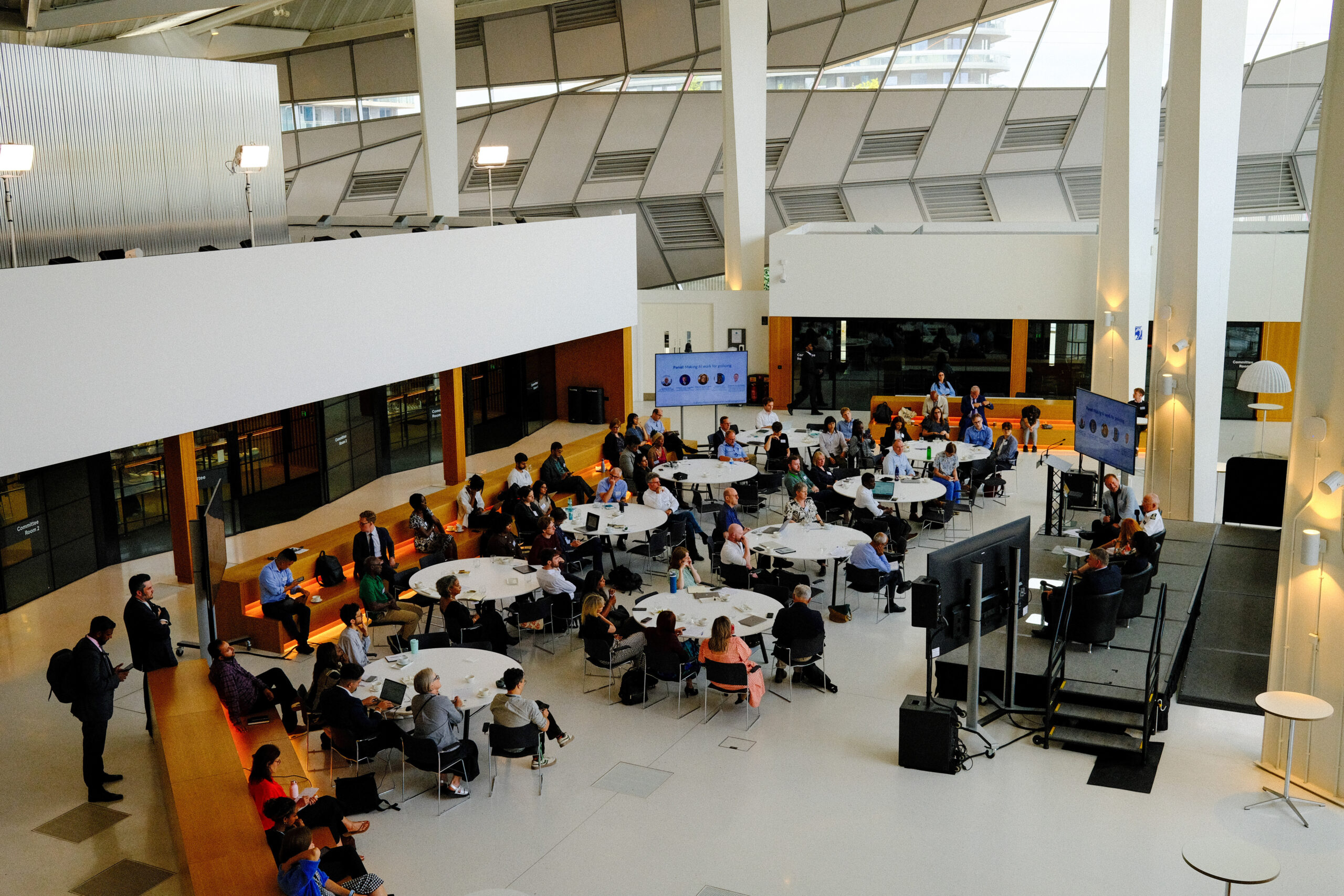
The Metropolitan Police Commissioner has defended the force’s growing use of artificial intelligence, arguing that officers risk falling behind increasingly sophisticated criminals if they fail to embrace the technology.
Sir Mark Rowley said existing legal safeguards already provide sufficient oversight, dismissing calls from academics and campaigners for new legislation governing police use of AI.
The Metropolitan Police has increasingly turned to AI as it seeks to make better use of limited resources and declining officer numbers. Last month, the force announced it would expand the use of artificial intelligence to analyse video evidence during criminal investigations.
In an interview with the Local Democracy Reporting Service following the “Policing for London in the Age of AI” summit at City Hall, Sir Mark said current laws already offered robust protections. “There is so much regulation already around data, human rights, surveillance. I don’t think we’re lacking regulation. There’s plenty of that to protect the citizen,” he said.
“The bigger risk, and what Londoners have said in recent surveys, is that they worry about whether the police can keep up with criminals on technology – not whether we’re overusing it.”
The Met currently uses AI to help process images from around one million CCTV cameras across London.
According to the force, early deployment of the technology in serious crime investigations has already saved the equivalent of 454 officer days by speeding up the review of video evidence.
Speaking at the summit, Sir Mark said police had “no other option” but to adopt new technologies. “The world is changing fast, and our ability to catch criminals is degrading because the technology is available to them,” he said.
“We either put fewer people in prison or use technology to help keep pace with the world around us.”
He added that AI could help officers identify dangerous offenders and process the vast amounts of digital evidence now generated during investigations. “If fraudsters are using AI to automate attacks, how can we use AI to counter that – this won’t be a human-scale task,” he said.
Sir Mark also reiterated comments made last month that policing could not wait for Parliament to legislate every time technology evolved.”If every time a new capability emerges, or we find a new use case for data exploitation, we have to wait for new legislation before we use it, we will fail,” he said.
“The pace is simply too fast, and the legislative process is too slow.”
However, several speakers at the City Hall summit challenged that position.
Green Party London Assembly Member Benali Hamdache said evidence presented during the event showed existing oversight was insufficient. “He’s wrong,” he said.
“We heard crystal clear today that there isn’t a framework, there’s a lack of clarity, and we already have examples of the police misusing this technology.”
He argued that legislation should guide police on when AI can be used “appropriately, safely and constructively”.
One example discussed at the summit involved West Midlands Police, where Microsoft Copilot reportedly generated inaccurate intelligence about football supporters that was not properly fact-checked before operational decisions were taken.
Labour London Assembly Member Marina Ahmad, who organised the summit, also called for clearer rules. “The most important thing for me is that the legislative framework is a reassurance for people,” she said.
“We don’t want things being done to people, we need to bring people along. Otherwise, there will be anger, there will be tension, because people don’t understand what’s happening.”


