

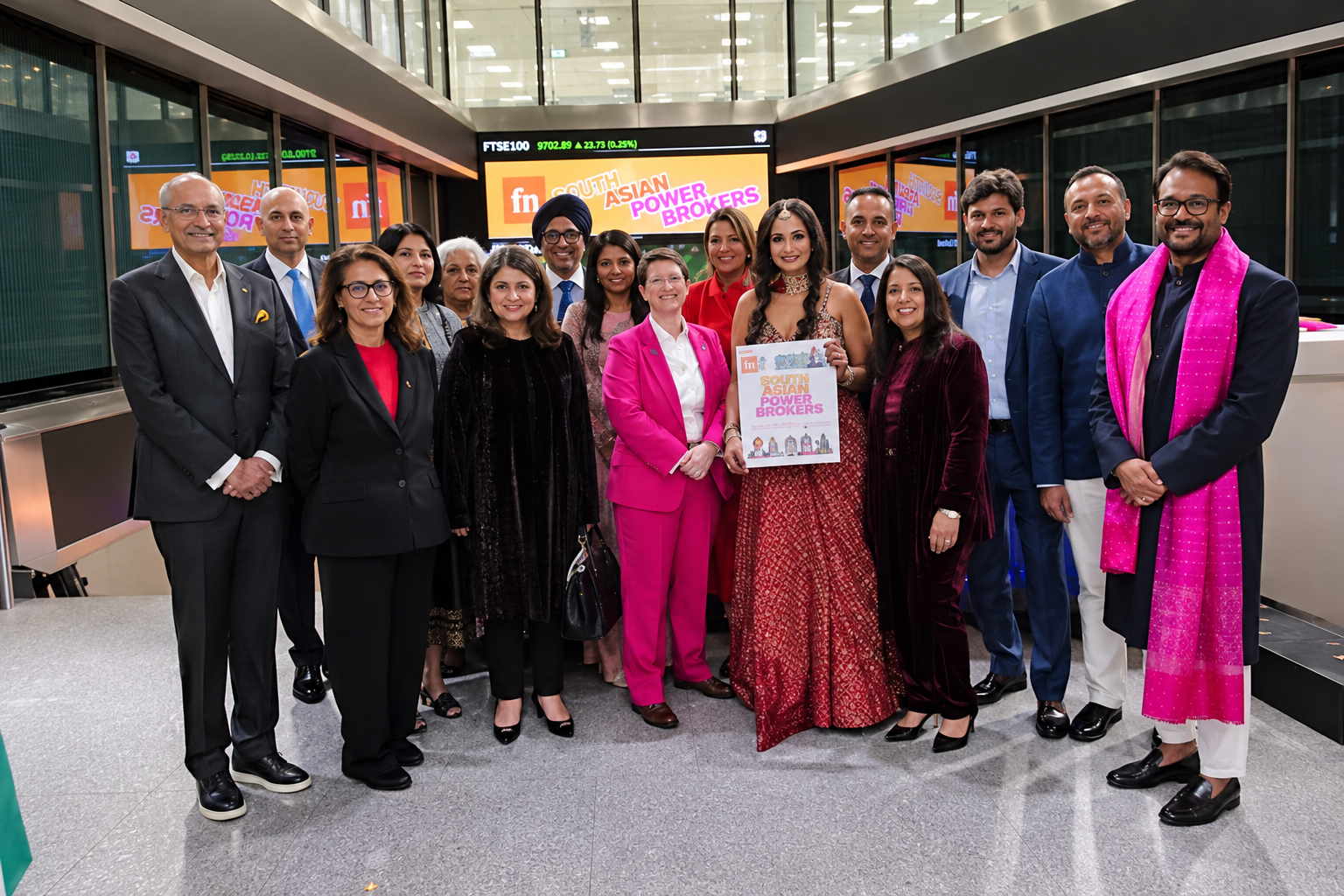
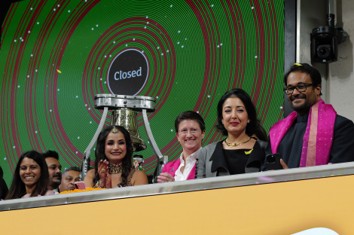
When Shruti Tripathi Chopra rang the closing bell at the London Stock Exchange on 29 October, the significance extended well beyond the end of another trading day.
For Britain’s South Asian community, it was a powerful reminder of how far representation has come within some of the country’s most influential institutions, and how much remains to be achieved.
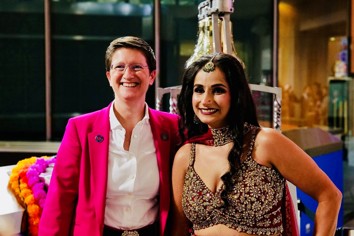
Chopra, editor-in-chief of Financial News and Private Equity News at Dow Jones, was among the first Indian-origin media professionals to take part in the Exchange’s newly revived bell-ringing tradition, marking an occasion that brought together leading figures from across British finance, investment and business.
The ceremony coincided with the second annual South Asian Power Brokers celebration, recognising individuals of South Asian heritage whose decisions, investments and leadership are helping shape global financial markets.
The symbolism was particularly striking.
In 1986, London’s financial markets underwent the historic reforms known as the Big Bang, which accelerated electronic trading and fundamentally changed how the City operated.
Four decades later, the Exchange has revived its traditional bell, reconnecting modern financial markets with a practice that once defined the trading day.
But while the bell represents the Exchange’s past, Chopra’s appearance alongside some of Britain’s most influential South Asian business figures offered a glimpse of its changing future.
For generations, British South Asians have contributed to the country’s commercial success, building businesses, creating employment and establishing themselves across professions from banking and law to technology and investment.
Yet visibility at the highest levels of financial leadership has not always reflected those contributions.
That is why occasions such as this carry significance beyond the individuals being celebrated.
They challenge long-standing assumptions about what leadership looks like and whose achievements deserve recognition on the most prominent platforms.
Among those associated with the celebration were Sir Ron Kalifa, a leading figure in financial technology and investment; Neel Sachdev, vice-chair of international law firm Paul, Weiss; Parminder Kohli, chief executive of the UK’s Office for Investment; Pavita Cooper, chair of the British Fashion Council; and Vathany Vijayaratna, Deutsche Bank’s chief executive for the UK and Ireland.
Dame Julia Hoggett, chief executive of the London Stock Exchange, also took part in the occasion.
Their presence reflected the growing influence of South Asian professionals across sectors central to Britain’s economic future.
The gathering was not simply about recognising cultural heritage. It was about acknowledging people who help direct investment, shape institutions and influence decisions affecting businesses and communities.
For younger British Asians considering careers in finance, law or business, that visibility can matter.
Seeing successful professionals celebrated not despite their heritage, but alongside it, sends a message that cultural identity and professional ambition need not be competing priorities.
For Chopra, the occasion carried an additional personal significance.

The ceremony took place on Karva Chauth, a Hindu festival traditionally observed by many married women through fasting and prayer.
Her visiting in-laws were able to share the occasion, including her mother-in-law, who was observing the fast.
The coincidence brought together family, faith, cultural tradition and professional achievement in one of London’s most recognisable financial institutions.
It was a particularly meaningful illustration of how British South Asian identities are increasingly visible within spaces historically associated with established corporate traditions.
Chopra has also broken barriers in financial journalism, becoming the first woman and first person of colour to lead Financial News and Private Equity News.
Her career demonstrates that representation is not confined to those making investment decisions. It also matters among the journalists and editors who scrutinise financial institutions, influence public debate and determine which stories receive attention.
Reflecting on the celebration, Chopra spoke about the importance of South Asian professionals being recognised for both their achievements and their heritage.
Her message was that success should not require people to leave their cultural identities behind.
It is a sentiment likely to resonate with many British Asian families whose children are pursuing careers in professions where senior leadership has historically lacked diversity.
But the wider challenge now is to ensure that recognition translates into opportunity.
Celebrating established leaders is important. Equally important is creating pathways for talented young people who may not have access to professional networks, influential mentors or the financial resources that can help open doors.
That means encouraging meaningful mentorship, widening access to internships and graduate opportunities, and ensuring that career progression is based on ability rather than background or connections.
For young people growing up in cities and towns with substantial South Asian communities, including Bradford, Birmingham, Leicester and London, these conversations are particularly relevant.
The next generation of financial leaders may already be sitting in classrooms, studying at universities or building small businesses within those communities.
Their potential should not be limited by whether they know someone in the City.
The celebration concluded with a Diwali reception recognising South Asian contributions to business and the wider economy.
Yet the enduring importance of the occasion may lie less in the ceremony itself than in the questions it raises about Britain’s future.
Who has access to positions of influence? Who is encouraged to pursue ambitious careers? And how can those who have reached the top help create opportunities for others?
The return of the London Stock Exchange bell after four decades is a reminder of how dramatically financial institutions can change.
Shruti Tripathi Chopra’s moment on the balcony offers another reminder: the people representing those institutions can change too.
For Britain’s South Asian communities, the real measure of progress will not simply be who rings the bell today, but how many more doors are opened for the generations who follow.


