

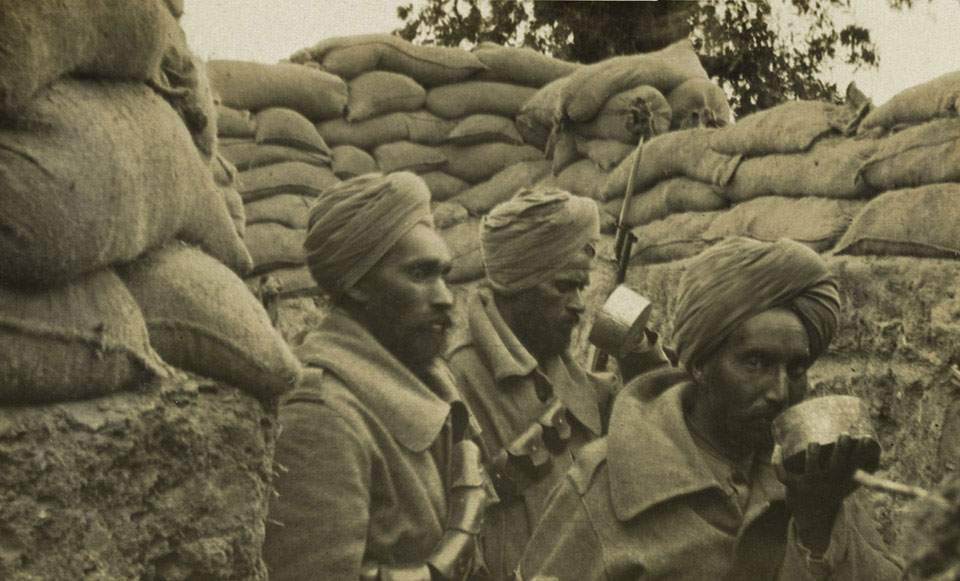
At 11am today, Britain will fall silent.
Across the country, heads will bow, poppies will be worn and communities will gather to remember those who gave their lives in war.
At the Cenotaph in Whitehall, King Charles will lead the nation’s Remembrance Sunday commemorations, with around 10,000 veterans taking part in the annual march past.
But as Britain pauses to honour its fallen, there is another silence worth reflecting upon.
It is the silence surrounding the soldiers whose sacrifices helped shape the country we know today, yet whose stories remain unfamiliar to millions.
They came from villages and towns across what is now India, Pakistan and Bangladesh. They were Sikhs, Muslims, Hindus and Christians. They were sons, brothers, husbands and fathers.
Many travelled thousands of miles from home to fight in wars that would change the course of world history.
Some returned carrying wounds that would remain with them for life.
Others never returned at all.
Their sacrifice was real. Their courage was extraordinary. And their history belongs to Britain as much as it belongs to South Asia.
The soldiers Britain still does not know
More than a century after the First World War, the scale of South Asia’s contribution to Britain’s military history remains astonishing.
Over 1.3 million Indian servicemen took part in the First World War, serving across Europe, the Middle East and Africa. More than 74,000 lost their lives.
During the Second World War, the pre-partition Indian Army grew to around 2.5 million personnel, becoming the largest volunteer army of its kind in history.
These were not marginal contributions. They formed a major part of the Allied war effort.
Yet a poll conducted by Focaldata for British Future found that just 52% of the British public knew that Indian soldiers had served in the Second World War.
That statistic raises a difficult question.
If almost half the country is unaware of their service, how complete is our collective act of remembrance?
For British Asian communities, this is more than a question of historical recognition.
It is about family, identity and belonging.
The men who fought in those wars were the grandfathers and great-grandfathers of people who now live in towns and cities across Britain.
Their descendants are today’s teachers, nurses, shopkeepers, business owners, students and neighbours.
Their family histories are woven into the fabric of modern Britain, whether those connections are widely recognised or not.
A young soldier, thousands of miles from home
Consider the story of Sepoy Khudadad Khan.
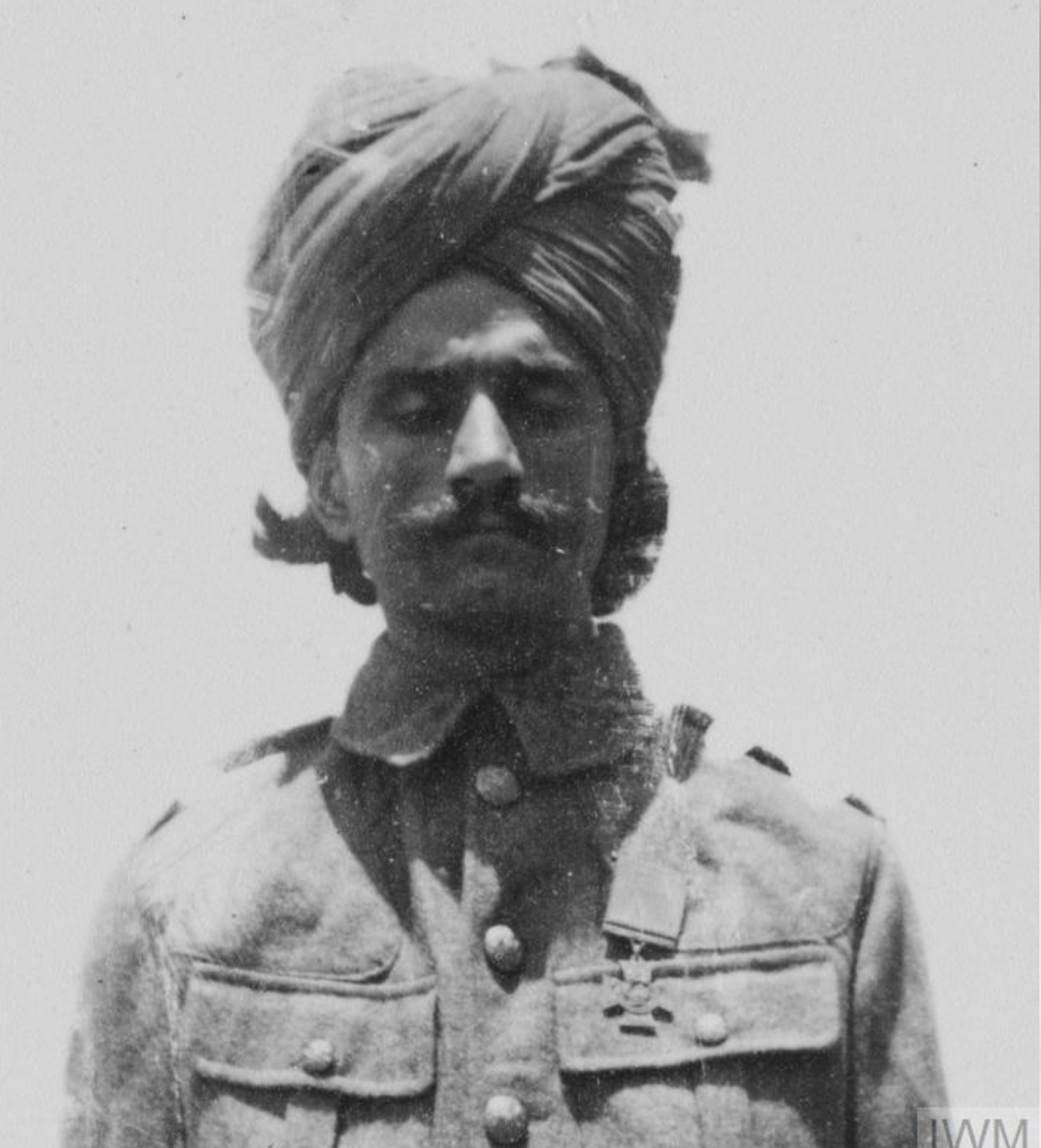
In October 1914, the 25-year-old soldier from what is now Pakistan found himself on the Western Front in Belgium.
As German forces advanced during the First Battle of Ypres, Khan and his fellow soldiers continued defending their position despite devastating losses.
Five of his comrades were killed. Khan himself was severely wounded.
Their resistance helped delay the German advance until reinforcements arrived.
For his bravery, Khudadad Khan became the first Indian soldier, and the first Muslim, to receive the Victoria Cross.
His story is one of extraordinary courage.
But it is also a reminder of how much history remains unfamiliar.
How many children in British classrooms know his name?
How many people wearing a poppy today know what happened to him?
And how many other stories, without medals or famous names attached, have disappeared from public memory?
A grandfather’s medals. A family’s untold history.
Sometimes the most powerful accounts of war are not found in museums or military archives.
They are discovered in family homes.
A box of medals tucked away in a cupboard. A faded photograph. An old uniform. A name written on the back of a letter.
For some British Asian families, these may be the only surviving traces of a relative’s wartime service.
Through the Royal British Legion and British Future’s My Family Legacy campaign, families are being encouraged to explore these histories and share them with future generations.
One participant, Nima Suchak, began uncovering her grandfather Vallabhdas’s military history after discovering his medals.
He had served during the Second World War in Burma and North Africa, but had never spoken to his family about his experiences.
His story illustrates how easily wartime memories can disappear, even within the families closest to those who served.
Silence does not always mean an absence of history.
Sometimes it means a history that has never been told.
Five bronze soldiers carrying a message across Britain
This Remembrance Sunday, efforts are under way to bring these stories into the national conversation.
A touring exhibition, The Forgotten Army, developed by the Royal British Legion and British Future, features a bronze sculpture by British Pakistani artist Mahtab Hussain.
It depicts five South Asian soldiers, representing the diverse communities who served in the pre-partition Indian Army during the Second World War.
The exhibition has travelled to communities across Britain, inviting people to learn about a military history that has too often been overlooked.
For Hussain, the inspiration is deeply personal.
His grandfather served in Burma during the Second World War.
The sculpture is therefore more than an artistic tribute. It connects one family’s history with the experiences of millions of others.
It also offers a different way of thinking about remembrance.
Not simply as a ceremony held once a year, but as an opportunity to recover stories, start conversations and bring generations together.
Remembering without forgetting the complexity of Empire
The history of Indian soldiers serving Britain cannot be separated from the history of the British Empire.
These men served at a time when the Indian subcontinent was under colonial rule.
Their experiences were not identical. Their reasons for joining the armed forces varied, shaped by economic circumstances, family traditions, military careers, loyalty, opportunity and the realities of colonial society.
Recognising their courage does not require overlooking that history.
Nor does acknowledging the complexities of Empire diminish the sacrifices made by individual soldiers.
Both truths can exist together.
The men who fought deserve to be remembered as individuals, not simply as numbers in a military record or symbols in a debate about Britain’s past.
Their lives, choices and sacrifices were human.
And their stories deserve to be told with the same dignity as those of every other soldier who served.
A shared history that belongs to us all
There is something particularly meaningful about remembering South Asian soldiers in Britain today.
The descendants of those who served in the Indian Army now live alongside the descendants of British soldiers who fought in the same conflicts.
Their children attend the same schools. Their families share the same streets. Their communities contribute to the same country.
The histories that once connected them on distant battlefields now connect them in everyday British life.
That shared history is an important part of understanding modern Britain.
And remembrance offers an opportunity to recognise it.
Not by dividing sacrifice according to nationality, faith or ethnicity, but by acknowledging the full breadth of those who served.
A Sikh soldier from Punjab, a Muslim soldier from what is now Pakistan, a Hindu soldier from India and a British soldier from Yorkshire may have come from different worlds.
But their experiences became intertwined through the same global conflicts.
Their descendants should not have to search the margins of history to discover that connection.
This Remembrance Sunday, let us remember more
As the Last Post sounds and wreaths are laid at memorials across the country, Britain will once again honour those who served and died.
It is a solemn tradition that brings generations together.
But remembrance must also be an act of understanding.
It must encourage us to ask whose stories we know, whose names we recognise and whose experiences still need to be brought into the light.
For British Asian families, it may begin with a conversation around the dinner table.
A question to a grandparent.
A search through an old family album.
A photograph shared with a younger generation.
For schools, museums and communities, it may mean ensuring that the contribution of soldiers from the Indian subcontinent is recognised as an integral part of British history.
And for Britain as a whole, it means recognising that the story of those who defended this country was never confined to these shores.
They fought on the same battlefields. They endured the same dangers. They suffered the same losses.
They deserve a place in the same remembrance.
This Remembrance Sunday, as Britain falls silent, perhaps the most meaningful tribute we can pay to the soldiers whose stories remain untold is to ensure that the next generation finally hears them.
Because remembrance is not only about honouring those we know. It is also about discovering those we have yet to remember.
Asian Standard News: Help us preserve their stories
Did your father, grandfather, great-grandfather or another family member serve in the First or Second World War?
Do you have photographs, medals, letters or memories that deserve to be shared?
Asian Standard News wants to hear from British Asian families whose relatives served in the armed forces.
By sharing these stories, we can help preserve an important part of our communities’ history for future generations.
Their stories are part of our shared history. Let us make sure they are never forgotten.


