


As the UK prepares to mark 80 years since VJ Day on 15 August, the day that formally ended the Second World War, it’s not only a moment of national reflection, but also a reckoning with whose stories are remembered. For Captain Jay Singh Sohal OBE, a Foundation Trustee of the Commonwealth War Graves Commission (CWGC), that question hits close to home.
“It wasn’t a white Western war,” he says. “This was a war that was fought and won by people from all over the Commonwealth. A significant number of those Commonwealth war dead are people who are drawn from modern-day India, modern-day Pakistan, Bangladesh, people who look like you and I.”
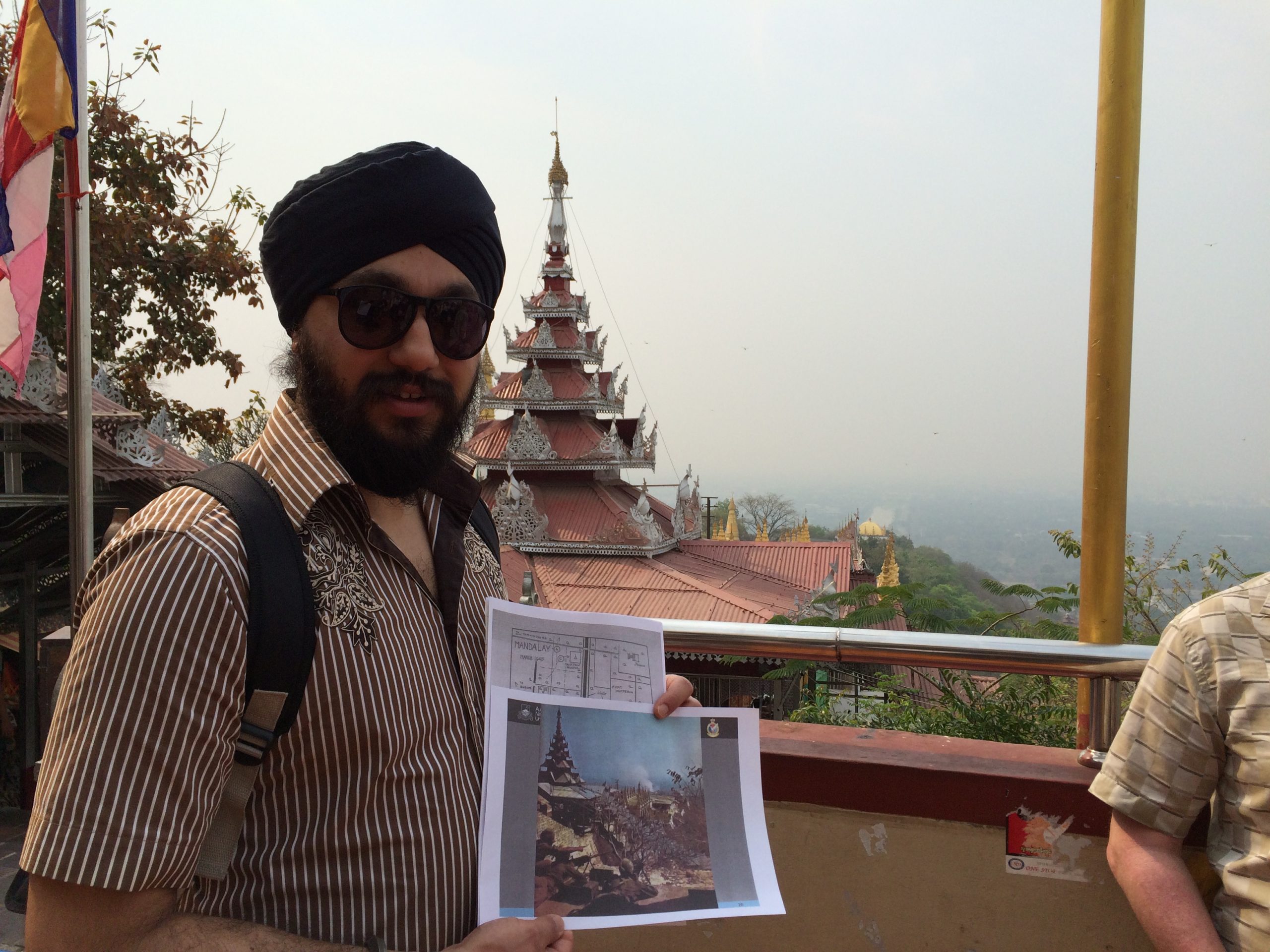
Sohal, a British Sikh, has spent over a decade working to bring these forgotten narratives back to the forefront of British history. The sacrifices of South Asian soldiers, particularly from undivided India, have been “significant,” he says, and yet overlooked due to the complexities of Empire, Partition, and post-colonial politics.
“It’s often a kind of difficult period of history because… of the connotations with the British Empire, colonial times. And the nature of Partition and independence is quite difficult. But it shouldn’t take away from the fact that the Indian contribution at large was a significant one during the Second World War.”
That gap in recognition resonates with a new generation of British South Asians who are only now discovering the extent of their community’s sacrifice:
Saira, 22, Halifax: “I thought WW2 was just a Western thing. In school, it was all Churchill and the Blitz. I didn’t realise until TikTok and some Insta pages started sharing stories about Indian soldiers.”
A theatre too often forgotten
Sohal has made it his mission to highlight the Indian contribution to the Far East campaign, especially in places like Burma, Malaya, and Singapore, where Commonwealth soldiers, often overlooked in textbooks, fought under gruelling tropical conditions to halt Japanese advances.
“The British Empire could call upon proven fighting men from the subcontinent to undertake remarkably brave acts in war,” he says. “And it’s one we should always remember.”
Zaira, 22, Leeds: “Let’s be real, colonial soldiers were never meant to be remembered as heroes. We were tools. Disposable.”
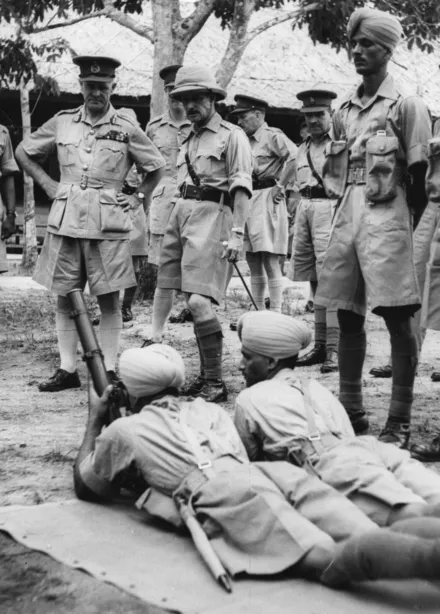
He recalls visiting battle sites in Burma, including Mandalay Hill, where Sikh machine gunners helped liberate the city.
“It made that connection for me to realise that it was that Indian contingent, particularly with Sikhs, my forebears, who made such a significant impact.”
Further north, in Mogong near the Chinese border, he stood at the location where Thaman Gurung, a 20-year-old Gurkha soldier, was awarded the Victoria Cross for extraordinary heroism in 1944.
“He led his company under heavy fire, was pinned down, took casualties, and still advanced. He seized a Bren gun and fired from the hip, something you’re never taught to do, just to hold the line and ensure the bridge could be taken. It was moving to stand where he stood.”
Bahadurs and Shaheeds
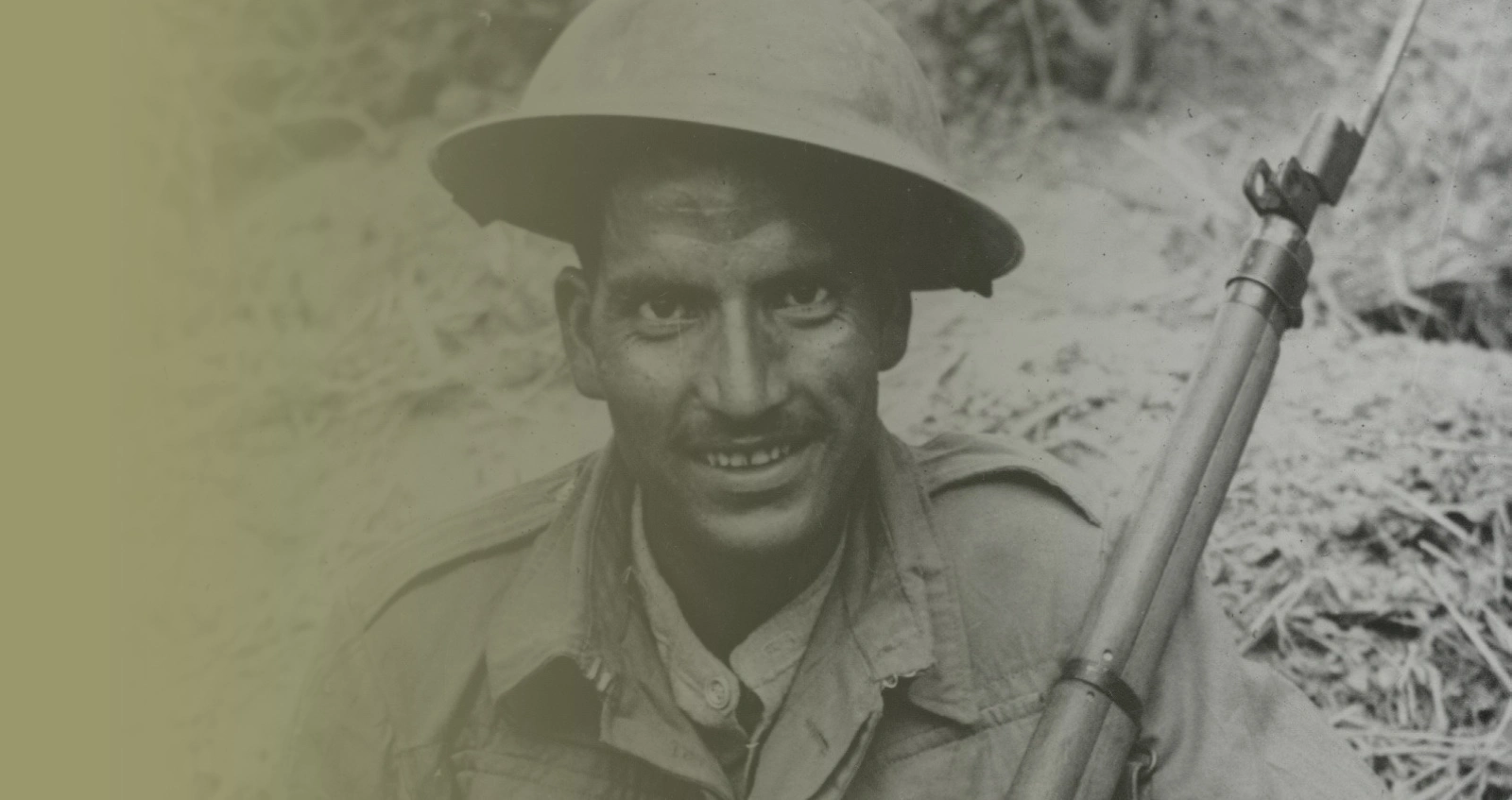
For South Asians, these weren’t just soldiers; they were bahadurs (valiant warriors) and often shaheeds (martyrs) who gave their lives not for empire, but for a cause they believed was just: the fight against fascism and tyranny.
“We believe very deeply in the significance of fighting and dying for a just cause,” says Sohal. “We honour our braves, our bahadurs, our shaheeds. That should never be lost in translation.”
Tuba Ahmad, form Leeds said: “It’s kind of heart-breaking. Imagine giving everything to a country that didn’t even see you as an equal. And then getting written out of the story?”
Faheem (not his real name): “Also racism. Straight up. We weren’t white, so our pain didn’t matter then and still doesn’t. But it should. Our ancestors didn’t die quietly.”
These values of service, sacrifice, and loyalty run deep in South Asian martial traditions, especially among Sikh, Gurkha, Punjabi, and Pathan communities, many of whom served in the fiercest fronts of WWII.
“If it wasn’t for them and their contribution,” he adds, “the outcome of the war in the East would have looked very different.”
Growing up with gaps in the story
For Sohal, this mission is deeply personal. Raised in inner-city Birmingham in a devout Sikh household, he grew up surrounded by stories of ancestral bravery. Yet at school, those same stories were nowhere to be found.
“There was always a bit of a gap… What I was hearing at home was different to what you hear at school. The curriculum didn’t reflect the contributions made by people who looked like me.”
Razia, 21, Huddersfield: “Not really. We always talked about the Partition or migration to the UK, but never about the world wars.”
Sana Shabbir, 18, Leeds: “That number shook me. Like, how come no one taught us that in school? It’s wild that my people fought in a world war, and I only found out recently, or it’s not a conversation you just hear it fleetingly and not with the importance that it deserves.”
That absence of representation fuelled his lifelong pursuit of truth and visibility. His work eventually led to the creation of the WWI Sikh Memorial at the National Memorial Arboretum and to his appointment as a CWGC Trustee, where he now helps shape global remembrance policy.
“It just needed that strong representation. And I’ve been quite privileged to lead on that to help tell these stories.”
More than numbers: Honouring lives
Over half a million Commonwealth troops died in Europe. Nearly 20,000 more perished in the Far East. But reducing them to numbers, Sohal warns, risks erasing their humanity.
“Each individual is a personal story. Someone who had a family, came from a background, had an upbringing, but was motivated to contribute to free the world from tyranny and aggression.”
Ayesha, 24, Leeds: “Imagine waiting years with no letters, raising kids alone, surviving food shortages, all while being invisible. Those women were the war’s silent backbone, and no one clapped for them even now.”
This is why remembrance cannot be one-dimensional or exclusive. It must reflect the full, diverse scale of sacrifice that shaped the Britain we live in today.
“Remembrance must be more than just about the white Western experience,” he says. “It has to reflect the diverse contributions that helped shape the freedoms we enjoy today.”
On role models and responsibility
When asked who inspires him, Sohal names both his Sikh elders, those who lived through Partition and war, and British historians and public servants who have helped create space for diverse commemoration.
“I’ve always looked up to people who’ve tried to create a bridge between history and identity, people who’ve used their platform to tell our story.”
This year, Sohal’s journey was recognised with an OBE in the King’s Birthday Honours, a moment of personal pride, but also reflection.
“It’s a personal thing, but more than that, it helps tell the story of the Commonwealth contribution. If it inspires others to learn about their heritage to feel proud of where they come from, then that’s more valuable than any title.”
Nadia, 21, Bradford: “I’m sorry it took this long to say thank you. You were forgotten by history, but we remember now.”
A message for the next generation
As Britain commemorates VJ Day 80, Sohal has one core message for British Asian youth: this history belongs to you.
“We need to be inspired to take a stand for what we believe in today. Our people were part and parcel of this fight. And that contribution should be respected and honoured.”
“So, get off socials for a moment,” he adds with a smile. Visit a website. Read about a soldier. Download the CWGC app. Learn whose shoulders we stand on.”
Because remembrance, as he sees it, is not just about looking back, it’s about finding ourselves in the story and passing it forward.
Glossary
Bahadur – A Hindi/Urdu/Punjabi word meaning “brave” or “valiant.” Often used to describe decorated or courageous soldiers.
Shaheed – A martyr; someone who sacrifices their life for a righteous cause. Common in Sikh, Muslim, and South Asian traditions of honour and remembrance.
Braves – A poetic term used in British Indian military histories to describe courageous warriors; used interchangeably with bahadur.
Partition – Refers to the 1947 division of British India into the independent nations of India and Pakistan. A traumatic historical moment with lasting cultural scars.
CWGC – Commonwealth War Graves Commission, responsible for maintaining cemeteries and memorials for 1.7 million men and women of the Commonwealth forces who died in the two World Wars.


