

Serious questions have emerged over the professional advice given to Bradford councillors in 2018 following the discovery of a procedural error that could cost the authority £10.1 million.
Documents examined by Asian Standard reveal that a report presented to Bradford Council’s Executive by senior officers recommended increasing Council Tax premiums on long-term empty homes without explicitly advising elected members that the decision required subsequent approval by full Council.
The omission is particularly significant because the same report acknowledged that an earlier decision to introduce Council Tax premiums in 2012 had been endorsed by full Council.
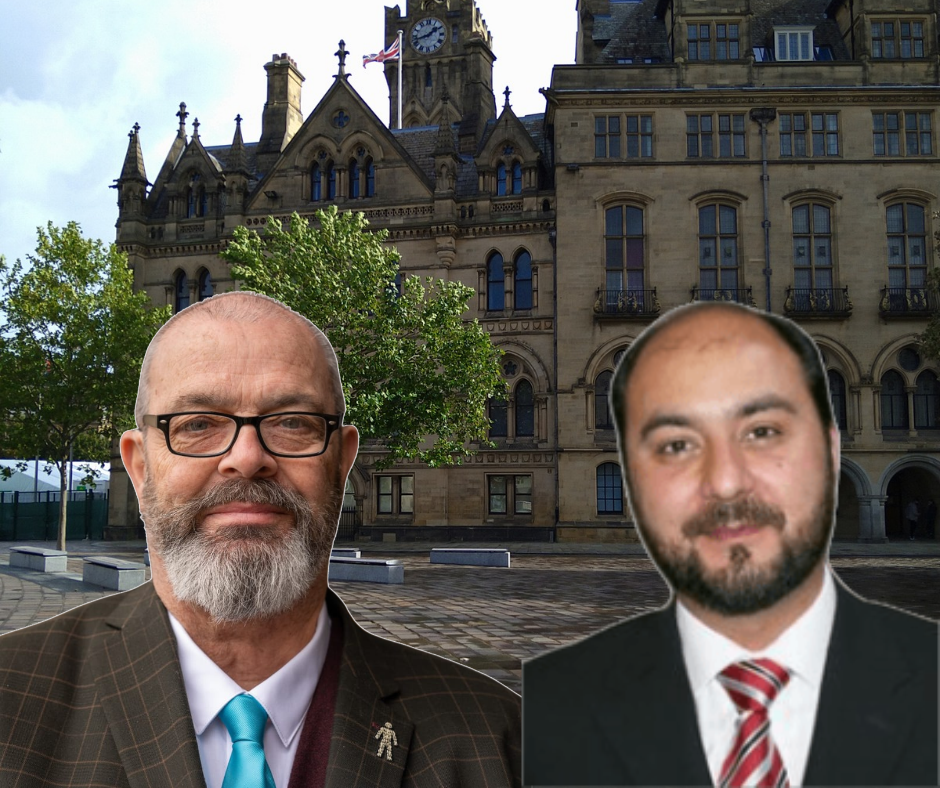
The findings come amid a political row between Bradford’s current Reform UK administration and former Labour deputy council leader Councillor Imran Khan, who has ruled out resigning and maintains that elected members acted in good faith on the advice provided by officers.
Bradford Council has identified that increased premiums imposed between April 2019 and March 2024 were not authorised through the statutory decision-making process and are therefore considered to have been unlawfully charged.
The estimated cost of correcting the error stands at £10.1 million.
What the original documents reveal
Asian Standard has examined the original officer report, Executive agenda and minutes of the meeting held at Bradford City Hall on 4 December 2018.
The report, submitted by the then Strategic Director of Place, Steve Hartley, outlined proposals to increase Council Tax premiums on long-term empty homes following changes to national legislation.
The policy was designed to encourage property owners to bring vacant homes back into use, increase housing supply, improve neighbourhoods and generate additional income for the authority.
However, neither the report’s recommendations nor its sections covering legal appraisal and risk management and governance explicitly stated that the proposed increases required approval by full Council.
Instead, the report recommended that the Executive approve the option to introduce the higher premiums.
The official minutes show that Executive members followed that recommendation, with responsibility for subsequent action recorded against the role of Strategic Director of Place.
Perhaps most significantly, the report itself referred to an earlier decision in November 2012 to introduce additional Council Tax premiums.
It stated: “The Executive determined to exercise that discretion to charge the additional premium on eligible long term empty properties at its meeting on November 6th 2012. This decision was subsequently endorsed by Full Council.”
Why the same approval process was not followed in 2018 is a question that remains unanswered.
The documents support aspects of Councillor Khan’s account of the written advice provided to members, although they do not establish whether separate legal or verbal advice was given or determine where ultimate responsibility for the failure lies.
Khan refuses to resign
Bradford Council leader Stephen Place has called for Councillor Khan to resign over what he describes as his personal role in the matter.
Councillor Place said: “It is wholly unforgivable on Labour’s part.
“Owing to his personal role in this calamity whilst he served as Susan Hinchcliffe’s Deputy, I am calling on Councillor Khan to do the decent thing and resign.”
However, Councillor Khan has made clear that he will not be stepping down and has instead questioned the advice provided by senior council officers at the time.
In a statement provided to Asian Standard through his team, he said: “Our policy was the right one to get more empty properties back into use while generating more funds for local services. We led a range of work in which we successfully brought empty properties back into use across the district.
“So I am obviously extremely displeased to say the least that the council has now announced it made a procedural error in its implementation of our policy on empty homes premiums.”
Councillor Khan maintains that elected members were responsible for setting policy, while professional officers were responsible for ensuring its implementation followed the correct legal and democratic processes.
He added: “The council has said the officers involved at the time have since left the council, but regardless, as politicians we set the policies, and council officers are employed to implement them. We informed officers of our decision in good faith and we instructed them to implement it in the usual way. If alternative processes were required for this specific policy, they should have advised us that was the case, but they did not.”
Official minutes shed light on Reform’s ‘seized chairmanship’ claim
Reform UK’s press release issued on Monday (23 November) also claimed that Councillor Khan had “seized chairmanship of the Executive Meeting from Susan Hinchcliffe” in steering the decision to increase Council Tax premiums.
However, official minutes from the meeting, examined by Asian Standard, provide important context that was not included in Reform’s statement.
The records show that the then council leader, Councillor Susan Hinchcliffe, formally declared an interest in the matter because she owned an empty property as a result of inheritance.
The minutes explicitly state that she “left the meeting during consideration and voting on the matter.”
Speaking to Asian Standard, Councillor Khan explained that, as deputy leader, he took over the chair for that particular item following Councillor Hinchcliffe’s withdrawal, describing this as standard practice in such circumstances.
He also pointed out that the policy fell within the Regeneration, Planning and Transport portfolio, held at the time by Councillor Alex Ross-Shaw.
The original agenda confirms that the proposals were brought forward under Councillor Ross-Shaw’s portfolio, while the officer report was submitted by the Strategic Director of Place.
The official minutes record a collective decision by the Executive to approve the recommendations put forward by officers, rather than an individual decision by Councillor Khan.
The documentary evidence therefore raises questions about Reform’s characterisation of the circumstances in which Councillor Khan assumed the chair, and the basis on which he has been singled out for personal responsibility.
A housing policy with a community purpose
The original proposals were introduced against a backdrop of thousands of empty properties across the Bradford district.
Council figures from October 2018 identified 4,156 homes that had been empty for at least six months, including 1,457 that had been vacant for two years or more.
Officers highlighted the impact of empty homes on communities, including reduced housing supply, environmental deterioration, antisocial behaviour and criminal activity.
The policy introduced additional Council Tax premiums of 100 per cent, rising to 200 per cent and subsequently 300 per cent for properties that had remained empty for longer periods.
These premiums were payable in addition to the standard Council Tax charge.
The latest council report acknowledges that the policy “has contributed to limiting growth in very long-term empty properties across the district.”
The authority is now proposing to reintroduce the premiums following the necessary statutory approval process.
How was the error discovered?
Councillor Khan has also challenged Reform’s handling of the announcement, claiming that the procedural error was identified by council officers following tribunal appeal cases elsewhere in the country.
He said: “The council has confirmed that officers became aware of the error because of tribunal appeal cases taking place elsewhere in the country. So it’s cheap politics from Reform to pretend otherwise, as they have contradicted the council statement and pretended that they discovered this technicality.”
He also maintains that governance arrangements were strengthened during Labour’s subsequent years in administration.
His account raises further questions about when the error was first identified, what prompted officers to review Bradford’s historic charging arrangements and why the missing approval remained undetected for several years.
A £10.1 million bill, but who will bear the cost?
According to the latest council report, the estimated financial consequences comprise:
- Approximately £7 million in refunds to affected taxpayers.
- £2.9 million in Council Tax account adjustments.
- Approximately £200,000 in administration costs.
Affected property owners will be contacted by the Council, with refunds issued or outstanding liabilities adjusted where appropriate.
However, beyond the political dispute, questions remain about how the authority will absorb the financial consequences and whether there will be any implications for residents and frontline services.
The discovery also raises wider questions about the relationship between elected representatives and the professional officers responsible for advising them, implementing decisions and ensuring compliance with statutory requirements.
Establishing where responsibility lies, why the error remained undetected and what safeguards are now in place will be essential to restoring public confidence in the Council’s decision-making processes.
The report is due to be considered by Bradford Council’s Executive next week.


