

Over the years, Britain has witnessed many immigration rallies. But it was the ‘Unite the Kingdom’ rally led by Tommy Robinson in 2025 that took the internet by storm. Why? Because a video showing rally protesters eating Indian food from stalls was widely circulated.
When the incident occurred, people forgot the reason for the protest. By then, the debate had shifted from the political narrative and became widely discussed for the irony it appeared to show anti-immigration sentiment alongside the enjoyment of Indian and Afghan food.
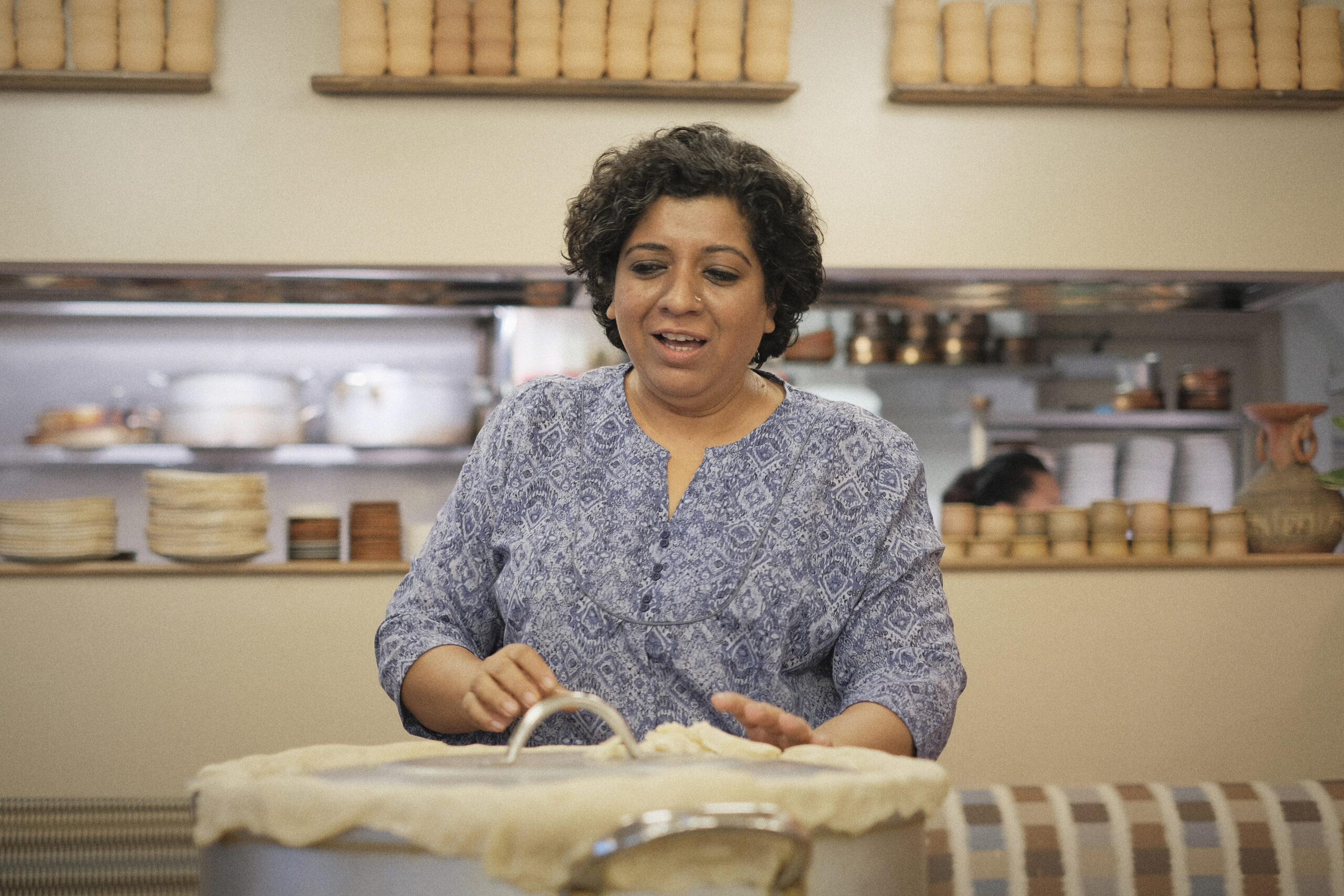
Now, another video circulating on social media has reignited the debate, as renowned chef and restaurateur Asma Khan shared her strong views on food, people and the culture behind it.
Speaking at journalist Barkha Dutt’s We The Women conference in London, Khan reflected on the growing popularity of South Asian cuisine in Britain but questioned whether the same level of acceptance is extended to South Asian communities. “If you take my food, you gotta take the rest of me,” she added, highlighting how acceptance goes beyond the dining table.
Food is political
“Food is deeply political,” she says. “Why are our famous chefs afraid to link the two? Food means who eats and who doesn’t. Where has the water come from? Who owns the land?” Asma Khan once said in an interview with The Guardian.
There is something about this statement that resonates when discussing the UK’s social and cultural landscape.
The shelves of the UK are filled with foods and spices that owe much to the people who travelled across oceans to call this country home. Over time, this influence has become so embedded that the contribution of South Asians is widely reflected in Britain’s culinary history.
From curry to chutneys, many popular dishes originate from South Asia. However, the contradiction of celebrating the food of South Asian communities while failing to fully accept the people, languages and cultures behind it is what Asma Khan speaks about.
“If you can’t accept us, then don’t eat our food,” she added.
Khan also said food is often the easiest thing people take from another culture, but argued that problems arise when it is stripped of its identity. Speaking at the event, she pointed to examples such as a “biryani wrap” being sold despite containing none of the ingredients that traditionally define a biryani. Therefore, the real problem, she argues, lies in not recognising the culture it comes from.
Not everyone agreed with Khan’s comments. In responses shared on social media, some users argued that food, like language, naturally evolves as different cultures meet and influence one another. Others suggested that cultural exchange has always been part of human history, and that the focus should be on respecting people as much as celebrating the cultures behind the food they create.
Khan’s comment has now prompted a wider conversation about how multiculturalism looks in practice in the UK. While the debate may have started with food, for Khan the issue appears to go beyond what is served on a plate. It touches on questions of recognition, belonging and respect for the cultures behind the dishes people enjoy. Others may view food simply as a way of bringing communities together and sharing traditions across cultures. But the discussion highlights how the same meal, ingredient or recipe can carry very different meanings depending on who is telling the story.


