

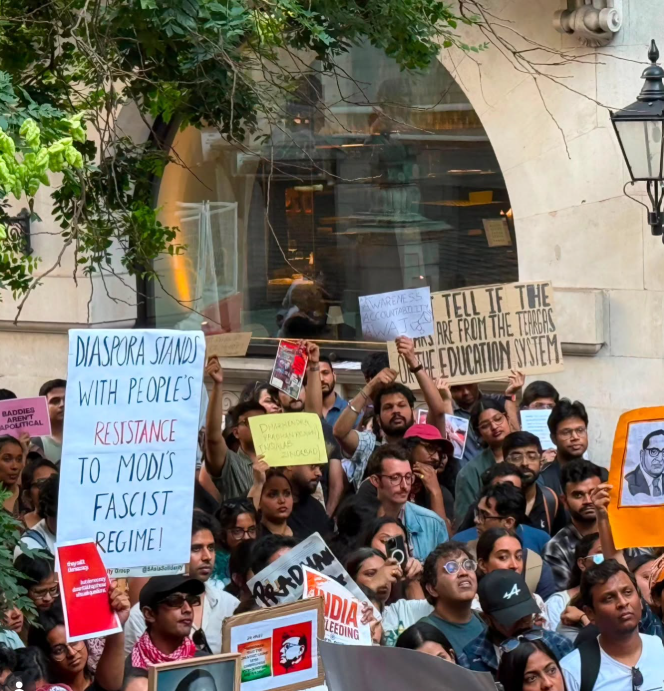
On 20 July, hundreds of young people from the Indian diaspora gathered across the UK in solidarity with protesters in India.
Demonstrations were held in Manchester, Leeds and outside the Indian High Commission in central London, led by the Student Federation of India UK (SFI UK).
The gatherings marked the international spread of a protest movement that began in India but has since gained support among young people overseas. Similar demonstrations were also reported in Glasgow and Edinburgh.
Protesters are calling for accountability over alleged examination paper leaks and demanding the resignation of India’s Education Minister.
The UK demonstrations came as thousands of people in India took part in the “Chalo Sansad” (“Let’s Go to Parliament”) march on 20 July. Clashes broke out during the protest, with reports of police using batons and tear gas. Both protesters and police personnel were injured.
But how did the movement begin?
How the protests started
The protests were organised by the Cockroach Janta Party (CJP), a satirical political movement that emerged following allegations of a leak in the NEET (National Eligibility cum Entrance Test) examination.
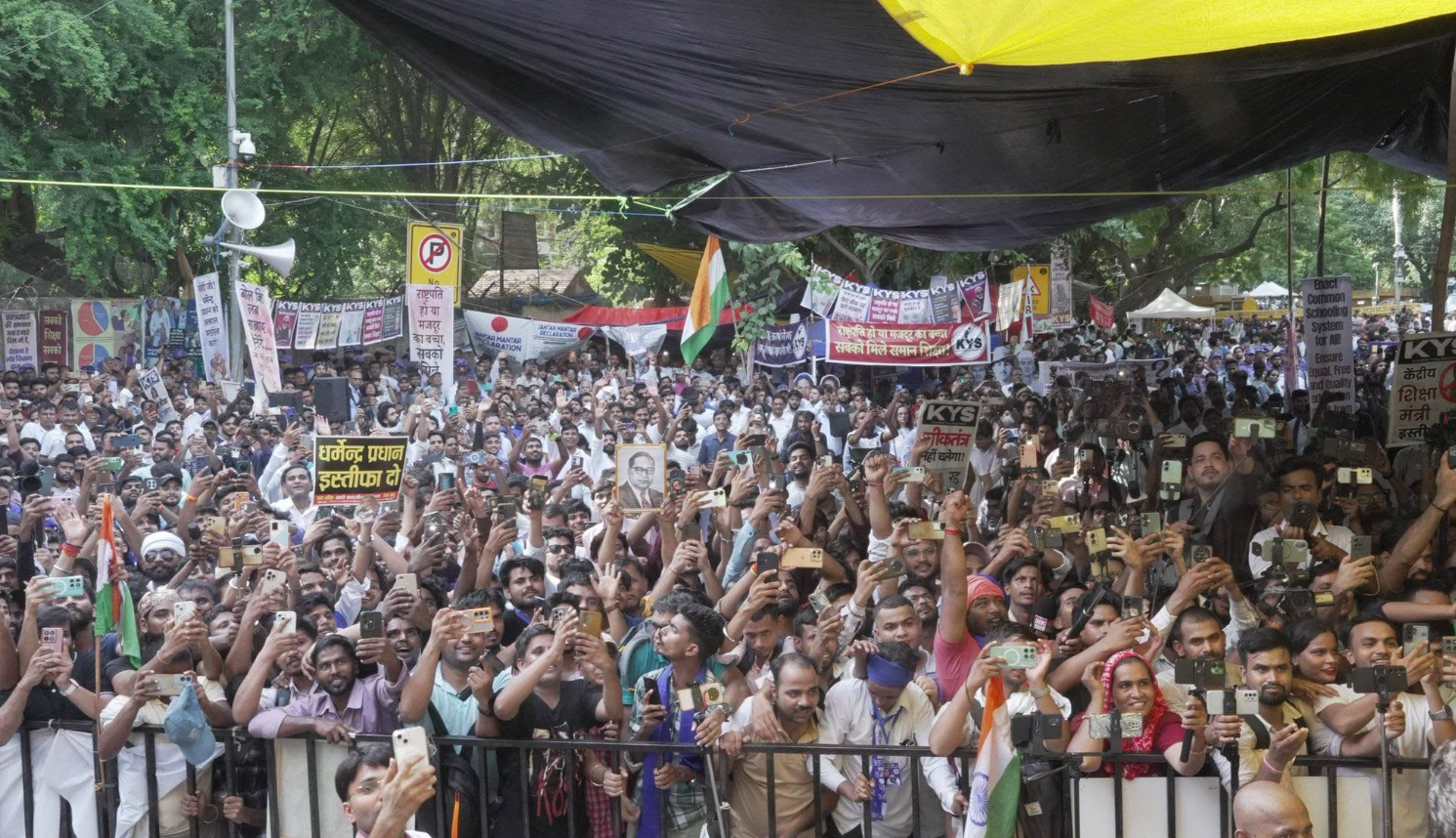
NEET is India’s national entrance examination for medical and dental courses, with millions of students sitting the test each year.
The 2026 exam was held on 3 May. However, on 12 May, allegations emerged that a “guess paper” circulated before the exam closely matched the actual question paper. Several arrests followed, and the government announced that a re-examination would take place.
For many students, the decision created further anxiety after years of preparation.
By the time the government announced 21 June as the date for the re-examination, reports claimed that 12 NEET aspirants had died by suicide during the 37-day gap between the two exams.
In response, CJP organised a protest at Jantar Mantar in Delhi on 9 July, a site traditionally used for demonstrations.
A new phase of the movement
The protests gained further momentum when education reform campaigner and climate
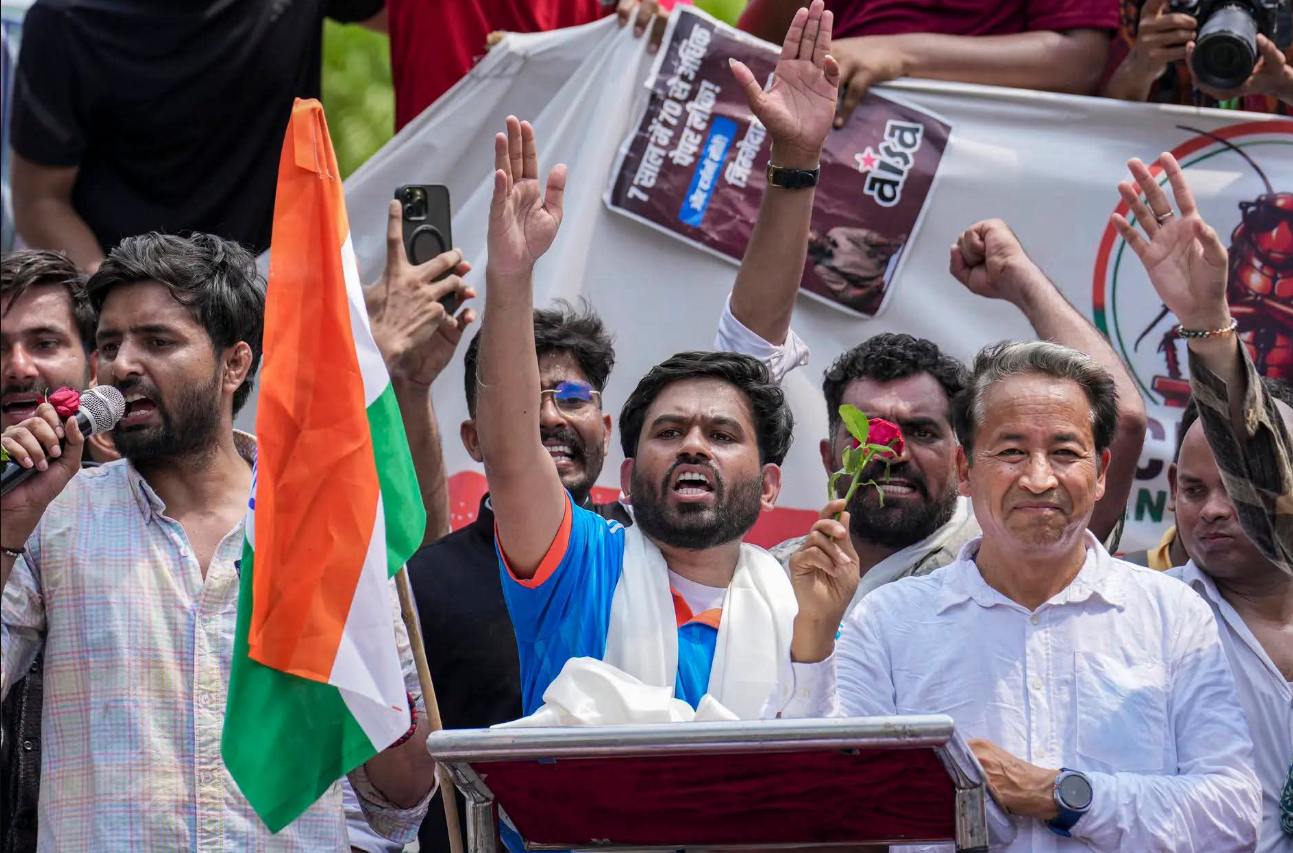
activist Sonam Wangchuk joined the movement.
Wangchuk, who is internationally known for developing the “Ice Stupa” project to improve water availability in cold desert regions, had been on a hunger strike for 20 days before being forcibly moved to hospital by authorities.
The move sparked widespread criticism and further increased support for the protests.
Since then, demonstrations have been reported across India, including in Mumbai and Nagpur, with the movement growing into one of the country’s largest youth-led protests in recent years.
The anger is not solely focused on the 2026 NEET controversy.
Students argue that examination irregularities have become a recurring issue. Protesters and opposition groups have alleged that more than 150 examinations have been affected by leaks or irregularities during the current government’s tenure within 10 years.
Why is it called the Cockroach Janta Party?
The movement takes its name from comments made by India’s Chief Justice Surya Kant, who reportedly referred to unemployed young people active on social media and in activism as “cockroaches” and “parasites”.
The Chief Justice later clarified that he was referring to people holding fake or fraudulent degrees.
However, by then the remarks had triggered widespread backlash.
Political communications strategist Abhijeet Dipke, a 30-year-old graduate of Boston University, launched the Cockroach Janta Party in response. The movement quickly gained attention online before evolving into a nationwide protest campaign.
The name is also satirical wordplay of Prime Minister Narendra Modi’s ruling part name Bharitya Janata Party (BJP).
What are protesters demanding?
As the movement grew, Union Health Minister J.P. Nadda invited representatives of the CJP
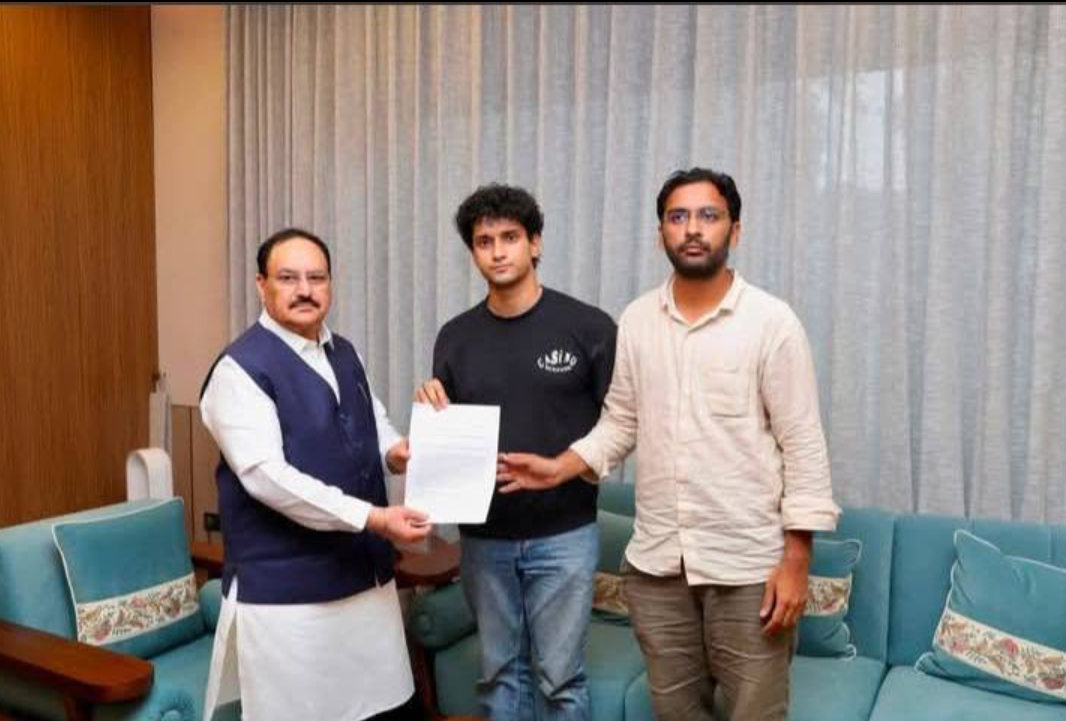
for discussions.
According to organisers, the group presented three key demands.
- The first is the resignation of Education Minister Dharmendra Pradhan over alleged examination irregularities.
- The second is the release of Sonam Wangchuk.
- The third is compensation of ₹1 crore for the families of NEET aspirants who are alleged to have died by suicide following the examination controversy.
Despite the clashes during Monday’s demonstration, protesters have continued their sit-in and say they will remain until their demands are addressed.
Why is UK protesting?
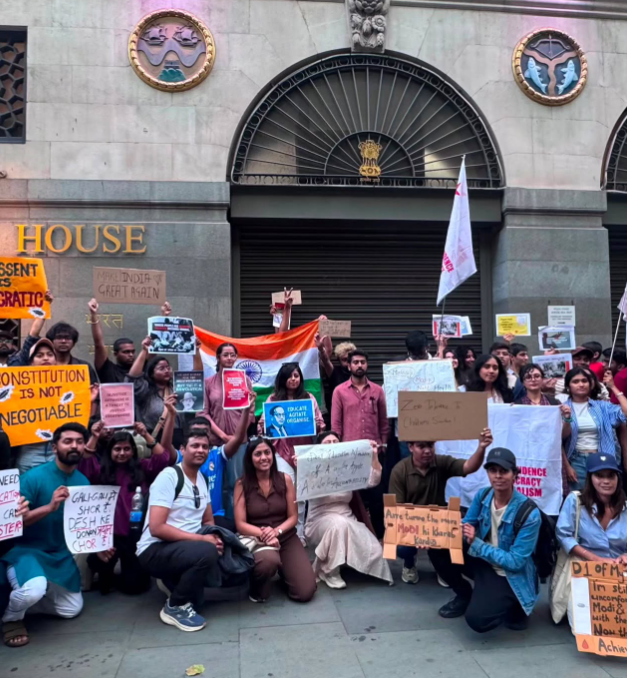
Organisers said the demonstrations were not simply acts of solidarity from abroad but were rooted in concerns about the future of public education in India.
Speaking at the Leeds gathering, organisers from the Student Federation of India (SFI) UK said students in Britain felt compelled to join the movement because many had personally benefited from student activism and believed access to education was under threat
With support now emerging from cities across the UK, the movement shows little sign of losing momentum.
One organiser said: “For us, it must be the question of why here in Leeds, thousands of miles away, should we take this protest to the streets? Why should we raise our voice?
“We are people who have come on the backs of the student movement which has fought for an accessible and affordable public education system. Today, that is something that is under attack.”
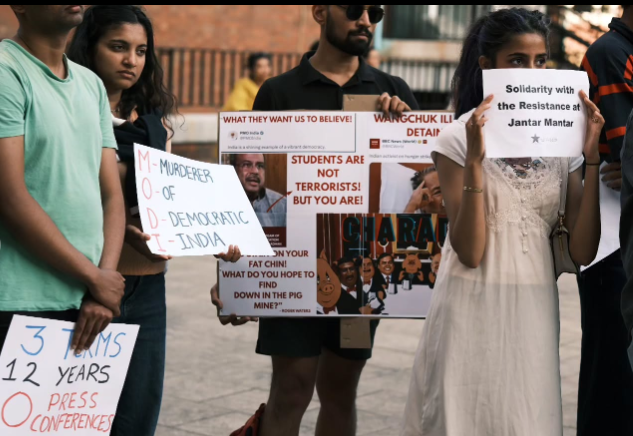
Referring to climate activist and education reform advocate Sonam Wangchuk, who has become a prominent face of the movement, another organiser said: “Nobody is still having a dialogue. Nobody from the government is coming to have any sort of communication with him and this is not the first time it is happening. In the past, this is a repetitive pattern.”
Similar sentiments were echoed by demonstrators in Edinburgh, where one of the protestors said: “It is our responsibility to amplify their voices. International solidarity reminds those struggling back home that they are not alone.”
Adding to it, other said: “This is not a struggle that stops in Delhi. This is not a struggle that stops in India. This is not a struggle that stops just in our educational institutions.”
Organisers said the campaign would continue, with further demonstrations planned on 26 July in Leeds as they seek to keep international attention focused on the movement.
The protests have also drawn mixed reactions from politicians and celebrities.
BJP MPs and actors Hema Malini and Kangana Ranaut criticised the demonstrations. Hema Malini said “if there is any problem, there should be discussion” and argued that the government had already done significant work for education and youth. Kangana Ranaut said: “We were scared of mob attack. I appreciate Delhi people for shielding and not letting people harm.”
In contrast, actor Shabana Azmi backed the movement, saying she and Javed Akhtar had written to Prime Minister Narendra Modi but received no response, prompting her to join the protest at Jantar Mantar.
Meanwhile, Diljit Dosanjh, Sonakshi Sinha and Huma Qureshi have also voiced support for the protesters, saying their concerns should be heard while condemning the recent police crackdown.
What began as anger over an alleged exam paper leak has now evolved into an international movement, linking students and young people across continents in a shared call for transparency, educational reform and justice.
With fresh protests planned in Leeds on 26 July and solidarity actions continuing across the UK, campaigners insist they will keep raising their voices until meaningful dialogue takes place and their demands are addressed.


