


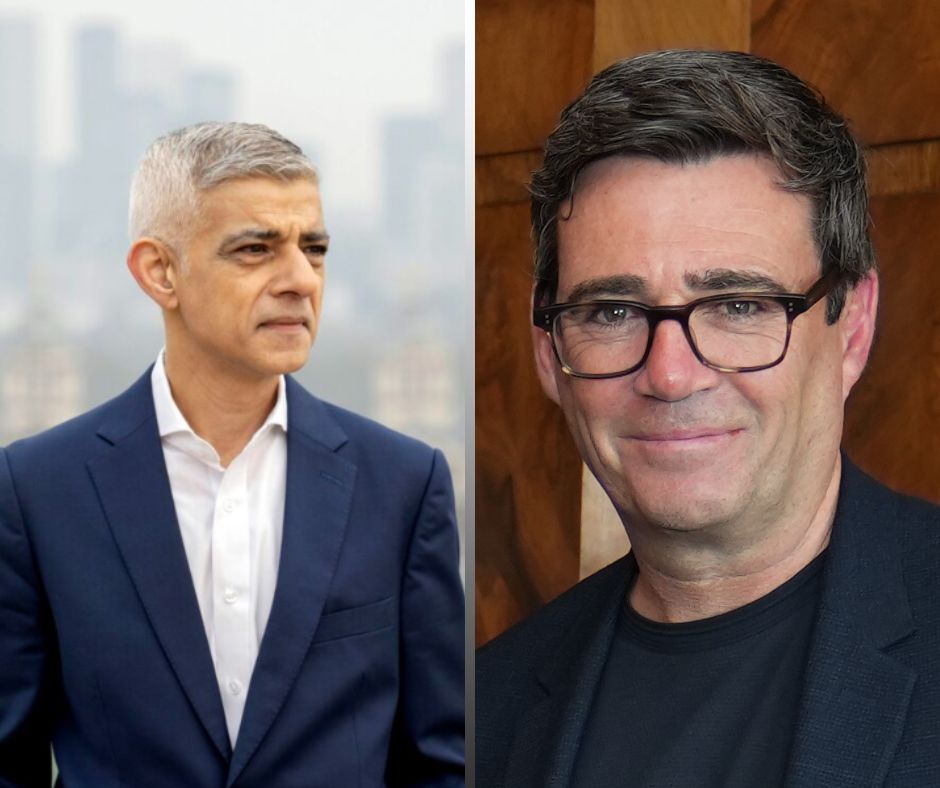
Mayor of London Sir Sadiq Khan has welcomed Prime Minister Andy Burnham’s plans to hand greater fiscal powers to England’s metro mayors, saying the reforms should “encourage” Londoners and help unlock more investment across the capital.
Mr Burnham is expected to unveil a major package of devolution reforms this week, including proposals allowing regional and metro mayors to retain a share of locally generated income tax revenues rather than relying on funding distributed by the Treasury.
The plans are also expected to give local leaders greater freedom over transport, housing and employment, with Downing Street describing the reforms as a significant shift in power away from Whitehall.
Speaking to the Local Democracy Reporting Service (LDRS), Sir Sadiq said he had been “really impressed” by the Prime Minister’s first few days in office, praising his early focus on transport, energy bills and economic growth. I’ve been really impressed with Andy’s first few days as prime minister.”
“He’s walking the walk when it comes to being a changed prime minister. I’ve been really impressed by the conversations I’ve had with him and his team shortly before he became leader and I saw him most recently on Friday.”
“I think Londoners can be encouraged by what Andy Burnham’s going to say on Friday.”
The Mayor has repeatedly argued that London should retain a greater share of the taxes generated in the capital.
A City Hall report published in 2019 found that London keeps just 6% of the taxes paid by residents and businesses, compared with around 50% in New York and 70% in Tokyo.
At present, London contributes around £4 in every £10 raised in UK tax revenue, while only around 5% of taxes collected across England remain under the control of local authorities and metro mayors, with the rest flowing directly to Whitehall.
Earlier this month, Sir Sadiq said greater fiscal devolution would allow London to accelerate housebuilding, deliver more council homes and support economic growth across both the capital and the wider country.
Business leaders have also welcomed the proposals. John Dickie, Chief Executive of BusinessLDN, said ending what he described as the “begging bowl relationship” between city regions and the Treasury would give local leaders greater ability to invest in infrastructure that drives economic growth.
He said retaining more tax revenue would allow mayors to invest in projects such as transport links that make new developments more attractive for businesses and residents. However, he added that much would depend on the detail of the reforms, including how much tax revenue would ultimately be retained locally and how the additional powers would be used.
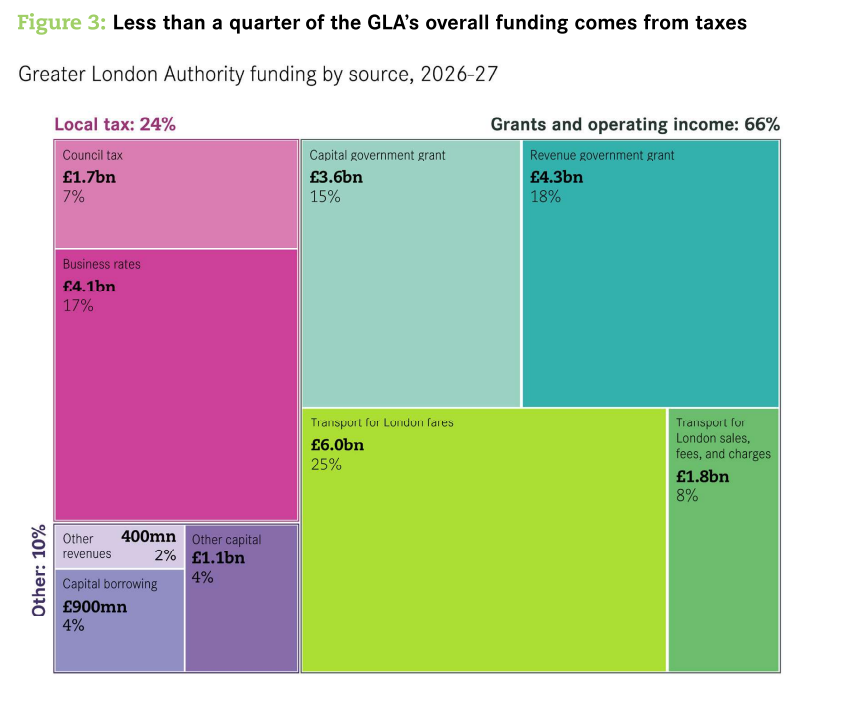
The renewed calls for greater devolution come after recent analysis by the Centre for Cities think tank found that London’s devolved government has fewer financial powers than comparable global cities including New York, Tokyo, Paris, Berlin and Toronto.
The report showed that less than a quarter of the Greater London Authority’s £23.9 billion budget comes from business rates and the mayoral share of council tax, with the remainder largely dependent on central government funding.
Sir Sadiq said additional powers would allow City Hall to do even more to improve services and support growth. “We could do even more with more powers and resources devolved to London,” he said.
“We should keep a higher percentage of what we raise, but also look at how we can raise more investment for the country. We recognise that as a capital city, we’ve got a responsibility to other parts of the country. The country does well when London succeeds, but London does well when the rest of the country succeeds as well. It’s not a zero sum game.”
While Mr Burnham’s reforms are expected to allow mayors to retain a greater share of existing tax revenues, it is understood they will not include new tax-raising powers.
Sir Sadiq is still awaiting the outcome of consultations over proposals that would allow London to introduce an overnight accommodation levy on visitors.


