


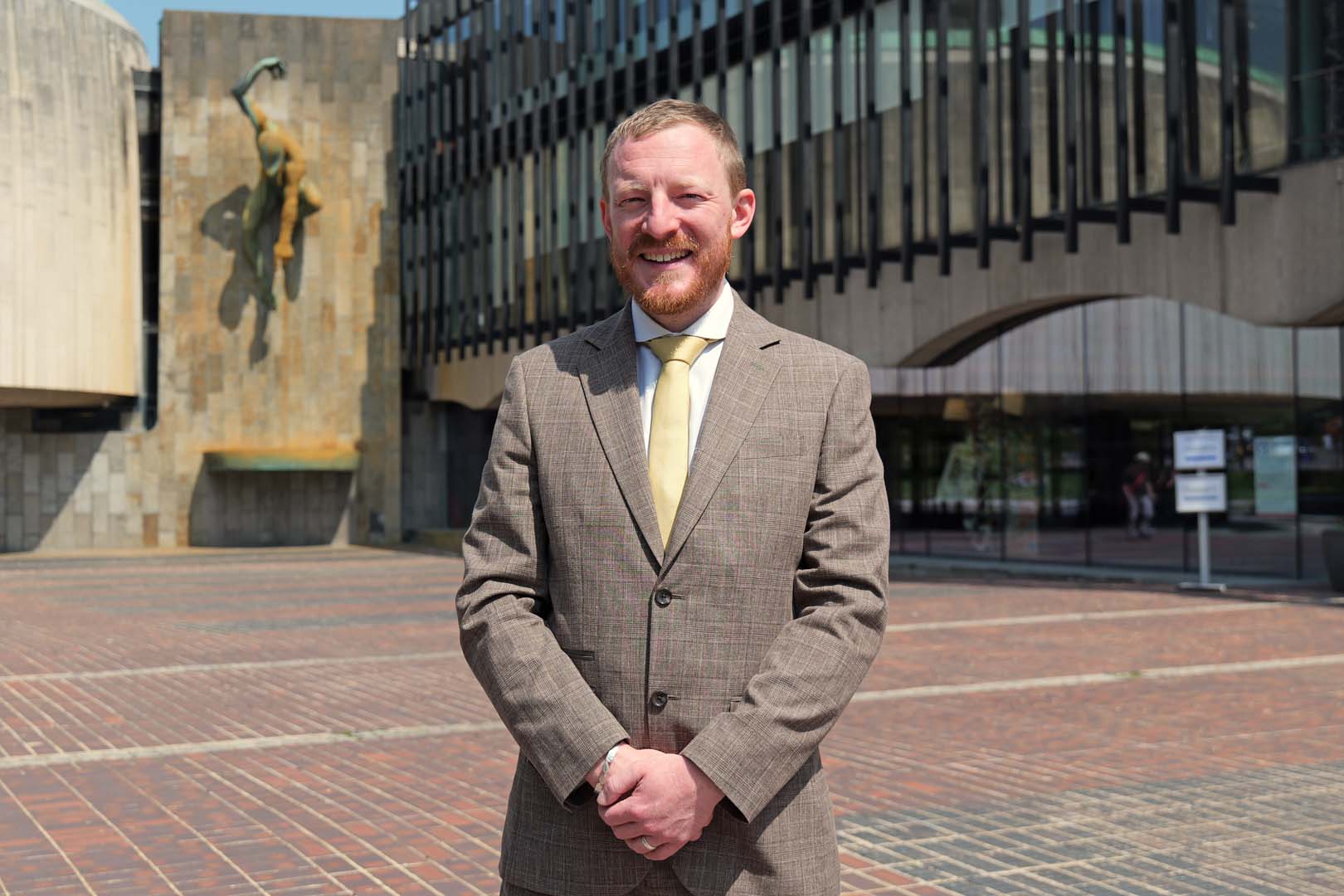
Council leader Colin Ferguson has set out an ambitious vision to turbocharge Tyneside’s economy and make Newcastle a standard bearer for growth outside London over the next decade.
The Liberal Democrat, whose party took power as a minority administration following May’s local elections, believes Newcastle has fallen behind some of its major northern rivals and now needs the confidence to compete with them again.
Cllr Ferguson told the Local Democracy Reporting Service: “We have seen some of the success in Greater Manchester and in particular Manchester city at the core of it.
“There was a time when Newcastle aspired to go toe-to-toe with the Manchesters and Liverpools of the country, and actually you would say in the early 2000s that quite often Liverpool and Manchester were coming to us to ask about how to do things.”
But he believes the balance has since shifted.
He added: “We have lost pace a little bit and I think we have let them overtake us.
“Newcastle has a lot of strengths, a lot of potential, and we need to have the boldness of ambition in that space.
“Stating pretty clearly that we want to be the most successful regional capital is, I think, the natural consequence of that intent.”
The Gosforth councillor wants Newcastle to “really turbocharge” its economy, identifying life sciences, sport, culture and the space sector as areas with significant growth potential.
He highlighted the £50 million North East Space Skills and Technology Centre (NESST), currently being built at Northumbria University, as an example of the type of investment that could help drive the city’s ambitions.
But Cllr Ferguson’s vision is not simply about economic statistics or reshaping Newcastle’s skyline.
Housing is also central to the plan amid a wider North East housing crisis, with a recent report finding 43,000 households across the region are either homeless or living in unsuitable accommodation.
Newcastle has been selected as one of only three councils to become a Strategic Partner in Homes England’s new Social and Affordable Homes Programme, securing £141.4 million of Government funding to deliver 966 new council homes.
Cllr Ferguson said the announcement left him “absolutely buzzing”.
Newcastle versus Manchester
Manchester’s transformation has become one of the most prominent examples of regional economic growth in England.
According to the Centre for Cities thinktank, Manchester’s economic output increased by 34% between 2013 and 2023, adding around £25 billion to its economy.
That growth was driven in large part by an expansion of knowledge-intensive business services jobs in the city centre, which grew at almost three times the national average.
Liverpool, Leeds and Sheffield are also reported to have grown at faster rates than Newcastle.
But Manchester’s success has not been without criticism.
Critics of the so-called “Manchesterism” model, built around devolution, economic growth and greater local control over public services – have questioned whether the benefits of Manchester’s booming city centre have been shared equally by communities further out.
And that is one area where Newcastle’s leader believes his city can do things differently.
Cllr Ferguson said he did not want Newcastle to replicate Manchester’s rapid development of “big towers of metal and glass”, arguing that economic growth must deliver tangible improvements for communities across the city.
He said: “Yes, I think Newcastle needs to grow, adapt, and develop. But we are not just talking about building the city centre really, really high and hoping that all of that economic benefit flows out.
“This has to be human-scale and human-centred in the way we do it.
“We have to see development in all our communities because I think that is where the weakness of the Manchester model comes through, that the city centre scheme inspires but it has not necessarily spread out to all the communities in the Greater Manchester area.
“That is the bit I think we can get right, where our natural scale and our community spirit in Newcastle and the wider North East can come into its own.”
Cllr Ferguson added: “Andy Burnham has talked about growth in every postcode and I want to see ambition for every postcode in Newcastle.”
His vision forms part of a new Council Plan that will be presented to the authority’s cabinet next week.
Alongside economic growth and housing, it includes commitments to invest more in youth services, reduce anti-social behaviour and strengthen support for small businesses.
The previous Labour administration failed to secure enough support for its Council Plan in summer 2025 because it did not command a majority in the council chamber.
Cllr Ferguson’s minority Liberal Democrat administration currently operates with Green support and he said he was not expecting significant opposition to the new proposals.
But the bigger test will come over the next decade: whether Newcastle can turn its ambition into growth – and once again go “toe-to-toe” with Manchester and England’s other major regional cities.


