


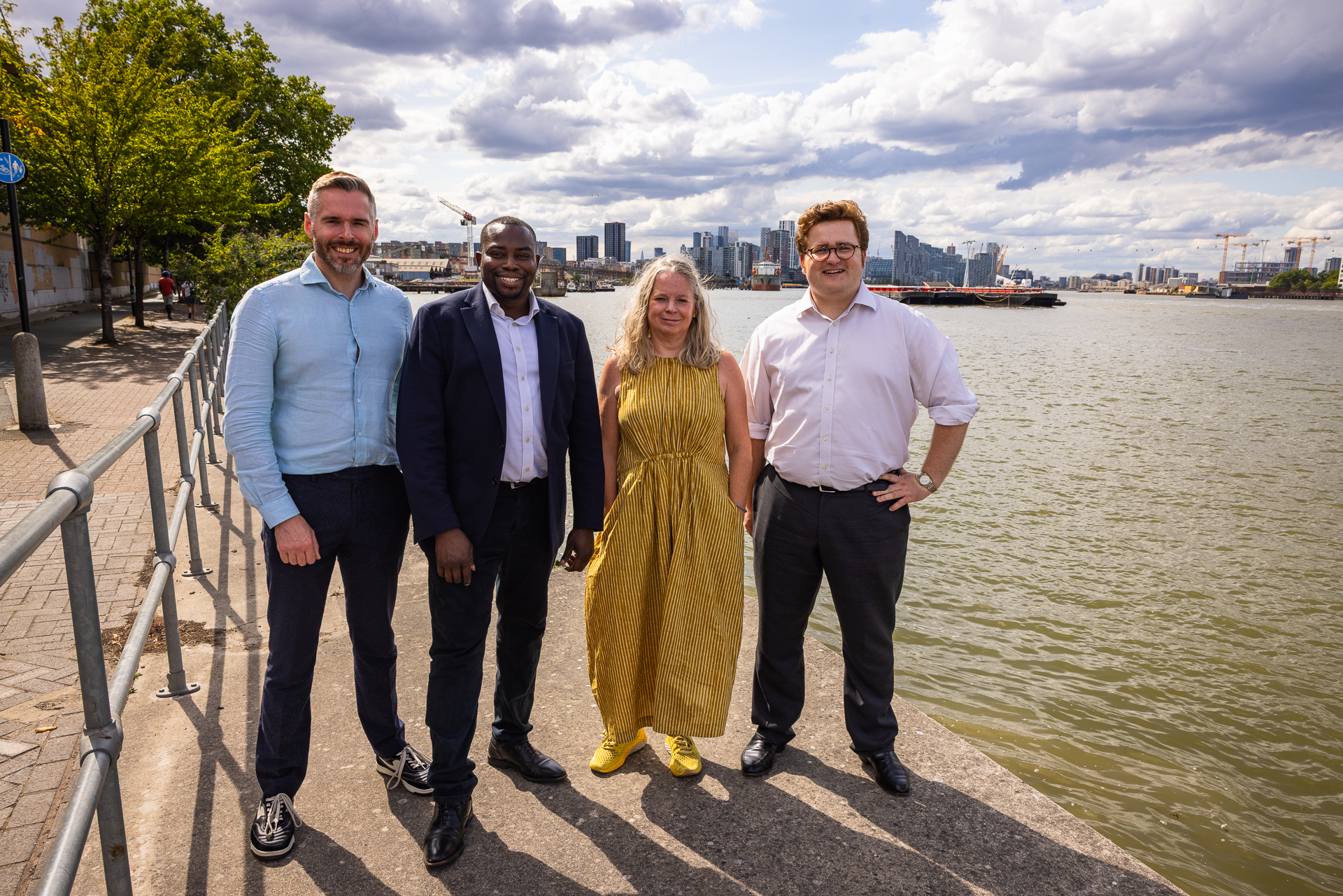
A major regeneration partnership has been launched to transform Charlton Riverside into a new South London neighbourhood, with plans to deliver around 8,000 homes and 1,000 jobs over the next two decades.
Greenwich Council, the Greater London Authority (GLA) and Transport for London (TfL) announced the agreement on 3 August, saying they will work together to unlock investment, improve transport links and guide the long-term redevelopment of the largely industrial riverside area.
Located between Greenwich Peninsula and Woolwich, Charlton Riverside is currently dominated by industrial land. Council leaders believe it represents one of London’s biggest regeneration opportunities.
The three public bodies plan to develop a shared strategy aimed at attracting investment and coordinating future development across the site.
Greenwich Council leader Anthony Okereke described the agreement as a significant milestone after years of planning. He said the partnership would help unlock “one of London’s most significant regeneration opportunities”, adding that Charlton Riverside deserved “good growth, good jobs and better transport”.
Cllr Okereke also said the public sector should take the lead in driving regeneration rather than waiting for private investment, with proposals being developed for a public sector-led landowners’ partnership.
Greenwich Council is one of the largest landowners in the area and hopes working alongside City Hall and TfL will help shape not only its own sites but the wider vision for Charlton Riverside. The council’s ambitions for the area are also outlined in its Draft Local Plan, which is currently out for consultation.
Deputy Mayor of London for Housing and Residential Development Tom Copley said the partnership marked an important step towards creating a new riverside community. He said the plans could deliver thousands of homes alongside new employment opportunities, helping meet London’s growing housing needs while creating a “vibrant new neighbourhood”.
TfL Director of Spatial Planning Lucinda Turner added that transport infrastructure would play a central role in unlocking future growth. She said bringing together planning, transport and regeneration would help create a neighbourhood that is “better connected, better designed and built for the future”.
While the vision has now been set out, no details have yet been released on how the large-scale regeneration programme will be funded.
If delivered, the project would reshape one of the capital’s last major industrial riverside sites over the next 20 years.


