


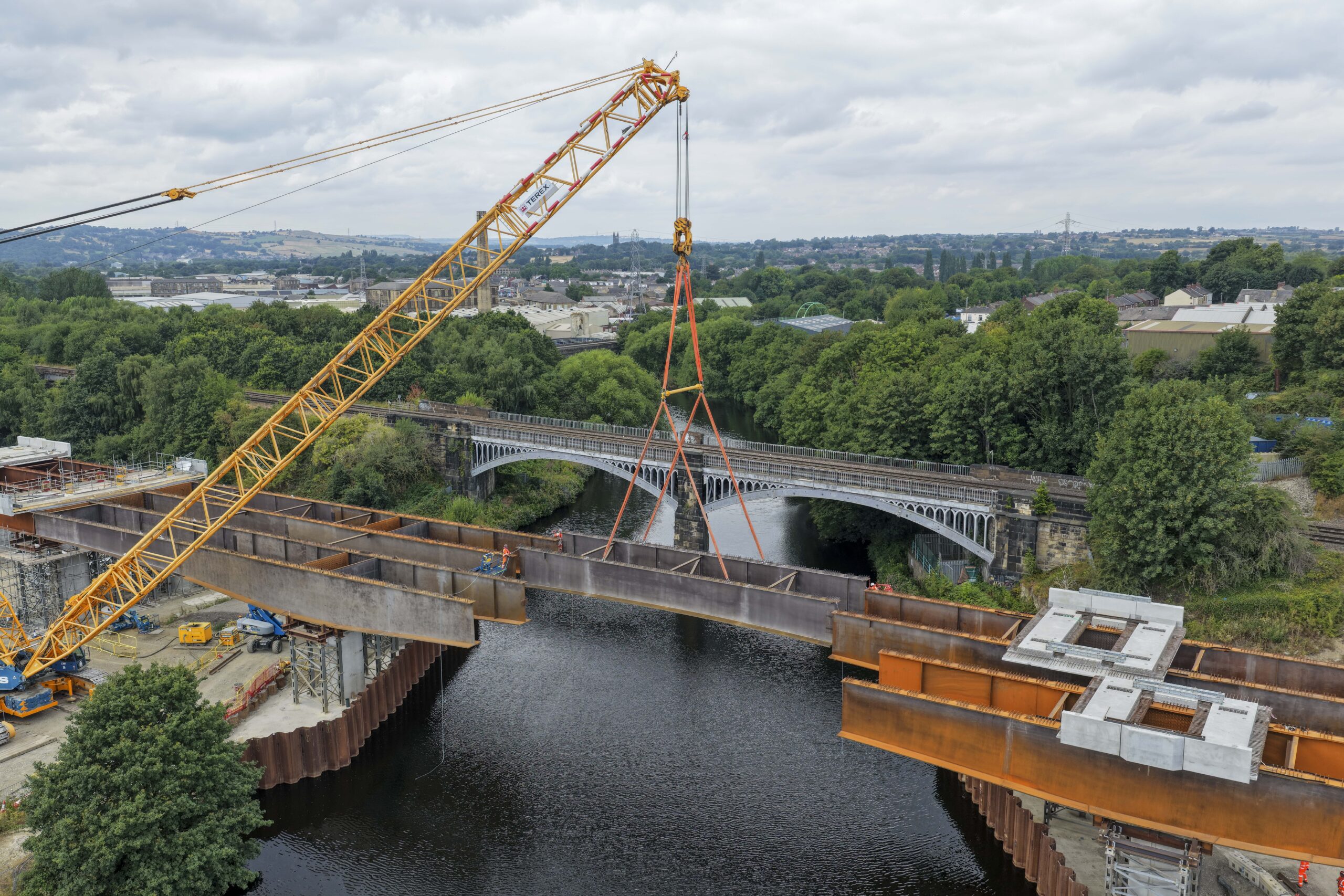
The Transpennine Route Upgrade (TRU) has reached another major milestone after the new Baker Viaduct successfully spanned the River Calder.
Engineers installed the penultimate pair of steel beams on 29 July, connecting the structure across the river and bringing the 350-metre-long viaduct closer to completion.
The 2,400-tonne viaduct had already crossed the historic Calder & Ribble Navigation Canal last year. It now stretches across both waterways as part of one of the UK’s largest civil engineering projects at Ravensthorpe.
The new structure will eventually connect to a grade-separated flyover that will support four railway tracks. The additional capacity will allow faster trains to overtake stopping services, helping reduce journey times and improve reliability across the Transpennine route.
Mark Bunce, TRU Senior Project Manager, described the installation as a significant step for the programme. “It is one big step towards completing this one element,” he said.
“Of course, it’s only one piece in the wider Transpennine Route Upgrade puzzle.”
TRU spokesperson Henry Hughes said the project remained on schedule and within budget. “You can really start to see the upgrades taking shape,” he said.
“Today is a really big milestone for us.”
Work around Ravensthorpe has also included the construction of large embankments and retaining walls. Around 130,000 cubic metres of material was placed during 2025, with a similar volume expected to be used throughout 2026.
Alongside the viaduct, a brand-new Ravensthorpe railway station is also under construction around 200 metres west of the current site. The new station will provide access to services towards both Leeds and Wakefield and is expected to reopen in 2028. It will feature step-free access with lifts, longer island platforms, a new forecourt, drop-off facilities and infrastructure capable of accommodating longer trains.
Adam Bunce, Senior Project Manager for TRU, said the viaduct represented a major engineering achievement. “When completed, Baker Viaduct will unlock faster, more reliable services for customers in the North,” he said.
He added that overhead electric lines would also be installed throughout the area to support greener, electrified rail services.


