

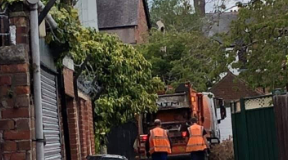
Middlesbrough has been crowned with the unwanted honour of having the highest levels of recycling rejected in the North East.
Ranking as the fifth worst hit authority nationally, more than a quarter of the recycling collected in Middlesbrough as part of waste collections never actually goes on to be recycled, with more than 4,000 tonnes rejected. Redcar and Cleveland ranked second regionally, with just shy of a fifth (19.2%) of its recycling being rejected.
Data was analysed to uncover the regions where the most and least recycling is actually recycled. Data from DEFRA and DAERA was used to calculate the recycling rejection rates for local authorities across England and Northern Ireland.
As has been reported, Middlesbrough’s recycling rate more generally leaves much to be desired, with a 2024 scrutiny report detailing that while national recycling targets were 50% in 2020, an average of 29.3% of Middlesbrough’s household waste was sent for reuse, recycling or composting between the years 2018 and 2023, according to WasteDataFlow. The regional average was 32.3%.
At the relevant scrutiny panel in October 2024, one councillor said the town “does not do a very good job” at recycling. There was also a lot of discussion about contaminated waste and what could be done about it, with the region’s recycling rejection rate emphasising just how bad the contamination problem is.
Middlesbrough tops the list in the North East as the council area with the most rejected recycling at 26.87%. This means out of all recycling collected, over a quarter never actually goes on to be recycled. Residents in the area sent 14,990 tonnes of waste for recycling, of which 4,028 tonnes were rejected. BusinessWaste.co.uk explained that this waste will likely either be sent to Energy-from-Waste (EfW) plants or, in the worst case scenario, go to landfill.
Nationally, the worst ranked council is Barrow-in-Furness, which sees a whooping 44% of the recycling collected rejected, according to BusinessWaste.co.uk, while at the other end of the spectrum, Tendring District Council in Essex only sees 0.01% of attempted recycling waste rejected.
Other councils, such as Bradford and Nottingham, see a higher absolute figure when it comes to the tonnage of attempted recycling that goes on to be rejected. However, these councils collect much more recycling than somewhere like Middlesbrough, so their rejection rates are lower.
Locally, Hartlepool and Darlington fare a lot better, with just shy of 8% and 7% of their recycling rejected. Stockton was the only authority out of the 12 in the North East to not see its figures listed – it was omitted due the data being unsuitable for direct comparison with other councils.
Graham Matthews, Middlesbrough waste management expert at BusinessWaste.co.uk, said: “There is a certain onus on households to ensure they are recycling correctly to reduce contamination. However, we’d encourage local councils to dedicate resources to educating the public on how best they can avoid recycling rejection with guidance on what can and can’t be recycled, alongside tips for cleaning materials. Local councils could also consider imposing fines more frequently for those who regularly disregard recycling rules as a deterrent.”
A Middlesbrough Council spokesman said: “Our waste and recycling service work hard to try and help residents understand how to properly recycle and reduce the amount of waste which needs to go to landfill.
“We run regular public roadshows which offer clear advice on which items can and can’t be recycled and we reinforce that message by sharing the information online and sending it directly to residents in leaflets or by email.
“Our crews also check blue-lidded recycling bins for obvious contamination during their collection rounds – but sometimes non-recyclable items can only be spotted once the waste is later sorted.”


