

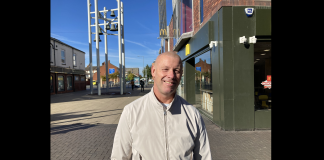
The people of Middlesborough have shared their views on government plans to introduce digital IDs. Locals on Linthorpe Road had contrasting reactions, with some ardently against the plans which are set to be mandatory in the coming years, while others were more blasé, and a minority of people who spoke to the Local Democracy Reporting Service (LDRS) were in favour of the proposals.
The Labour government has set out its ambition to see digital IDs rolled out across the country before the next general election, which must be held by summer 2029. The government argues that the measures will help curb illegal immigration. It will be compulsory for people to have a digital ID if they want to work in the country, but the plans will be optional for students and pensioners.
By their digital nature, these IDs won’t be carried around, but rather take the form of an app, like the NHS app. The change means that employers will no longer be able to rely on a National Insurance number. Various opposition parties in Westminster have spoken against the plans, with civil liberties groups also voicing concerns.
In Middlesbrough town centre, Vernon Ferguson, 55, was strongly opposed to the proposals, arguing that those who don’t go along with the plans won’t be able to go to the bank, won’t be able to get any type of credit, won’t be able to get anything, adding: “Hopefully, the whole country will go against it.” Mr Ferguson, who previously worked off shore for 18 years, said that the kids of today won’t realise what liberties and rights they’ve lost.
Meanwhile, 66 year old retired truck driver Ian Sheavills thought the government plans were a “good idea”, saying he’d had a digital ID for 22 years during his time in the army, adding: “If you’ve got nothing to hide, what’s the problem?”
Further down Linthorpe Road, Maria, 58, who works as a cleaner, said: “I don’t see why I should have to get an ID, when I’m British anyway and I’ve worked all my life.” Meanwhile, her sister, 63 year old Wendy, doesn’t work due to bad health, but said she’d heard all about the plans on the telly. Neither of them were convinced by the government’s argument that it would help reduce illegal immigration.
When 24 year old Jamie was asked for his thoughts on the government’s plans, he said: “Idiots. They’re just trying to lock everyone down.” He was worried it would be like Covid all over, highlighting how everyone wore a mask when they were told, adding: “It’s like puppets to them aren’t we?” When challenged on the potential of not being able to get a job without a digital ID, he said he still wouldn’t comply.

Image: Daniel Hodgson.
Milly, 19, and Amy, 20, are both students studying psychology at Teesside University. Neither of them were particularly familiar with the plans and Milly asked what would happen if someone didn’t have a digital ID – a challenge that has been put to government ministers.
Amy, who is from Hartlepool, said: “I suppose it doesn’t really matter for us like young people, because we’ve got access to phones, but if it was someone older, that’s where it would be a problem.”
Milly, who is from County Durham, works part-time alongside her studies, as does Amy. This means even as students, the digital ID would be compulsory for them, but both agreed that they weren’t strongly in favour of or against the plans, as it wouldn’t affect them too much.
Construction worker Peter Winkworth thought that the digital ID plans were a good idea and when asked why he was in favour, he said: “Why not?” When it comes to civil liberty concerns, he said: “What civil liberties are they going to take from us… it’s not going to stop you going to the pub or doing anything you want!”
As for curbing illegal immigration, the 64 year old thought that digital ID could play its part, as the system would be keeping track of people who aren’t supposed to be in the country. Meanwhile, a 76 year old, who didn’t wish to give his name, said he had immigrated to the UK in the 1960s and worked all his life for British Steel, and was “all for” the digital ID plans.


