


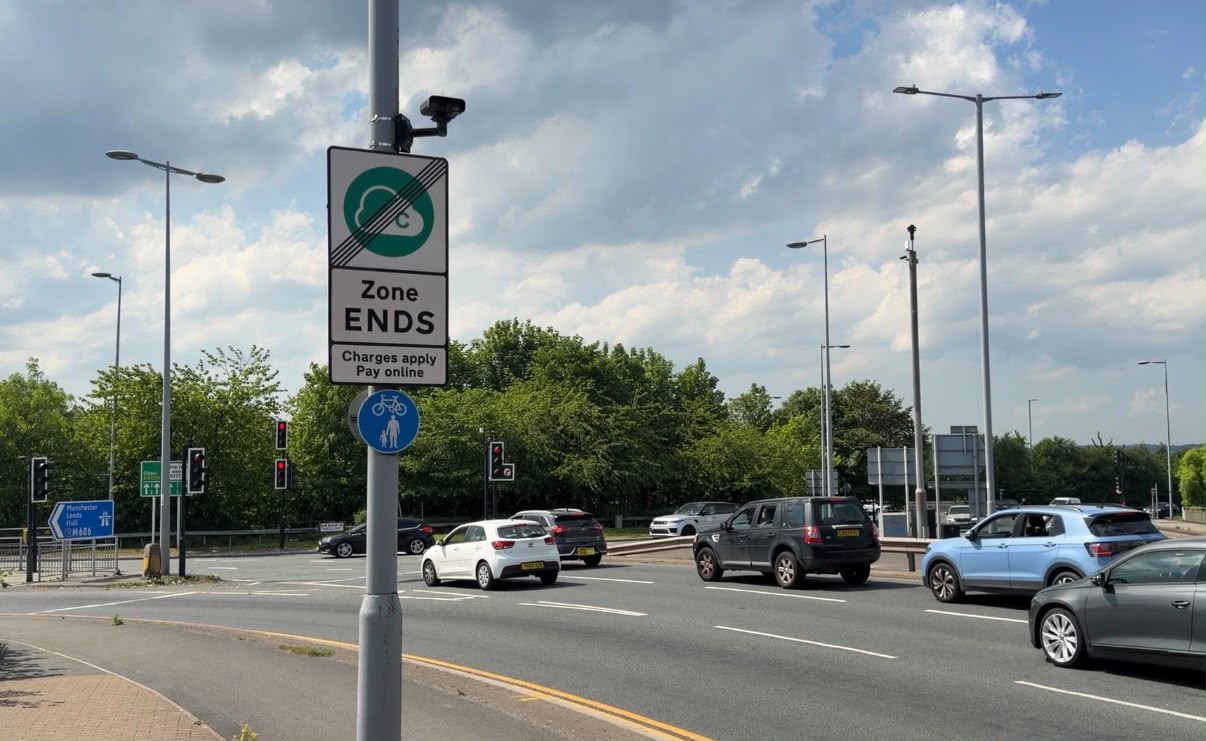
In a lively debate, Bradford Council, now led by the Reform Party, is reassessing its Clean Air Zone (CAZ) policy, sparking a range of opinions.
A local MP recently took a stand in Parliament, warning that scrapping the CAZ would be “a mistake future generations would pay for.” Meanwhile, a passionate local campaigner has initiated a petition urging the Council to abandon the initiative altogether.
Earlier this month, new Council leader Councillor Stephen Place confirmed that a “high-level review” of the CAZ, implemented in September 2022, is underway.
This move followed a directive from the previous Conservative government that mandated Bradford to tackle its illegal pollution levels.
The CAZ charges the most polluting commercial vehicles entering the area, which encompasses the city centre, parts of Shipley, and the key routes connecting them.
The government allows the Council to lift the CAZ once pollution levels drop to legal limits and remain there for at least two years. Last week, Councillor Place stated: “We are now undertaking a high-level review of the Clean Air Zone to evaluate the scheme and explore the best way forward for securing the earliest removal of the zone. Our aim is to make informed decisions that benefit the people of Bradford and the wider district.”
Shipley MP Anna Dixon (Labour) responded firmly, declaring: “Eliminating Bradford’s Clean Air Zone would be a serious mistake that future generations would pay for.” At a recent parliamentary session focused on clean air policies, she highlighted key achievements of the CAZ, noting a drop in Nitrogen dioxide breaches from 35 to just three sites, a reduction of 600 monthly GP appointments for respiratory issues, and an estimated monthly saving of £30,000 for the NHS due to fewer hospitalisations and inhaler prescriptions.
Dixon expressed concern for local children, especially those from disadvantaged backgrounds living near busy roads. “Bradford has long struggled with alarmingly high levels of respiratory illness.
The clean air zone was implemented to combat this crisis. We had violations at 35 sites, and it is vital that we continue this progress,” she emphasised, attributing the reduction to incentives that encourage upgrading to cleaner vehicle options. In support of the initiative, Simon Lightwood MP, a Parliamentary Under-Secretary of State for Transport, cautioned, “Scrapping a clean air zone before there’s solid evidence of improved air quality would be premature and reckless.
These zones were created to meet legally binding air quality standards, and authorities must keep them until compliance is achieved and maintained.” Community group Clean Air Bradford has expressed its concerns about the potential dismantling of the CAZ.
Spokesperson Darren Parkinson asserted, “The Clean Air Zone is fundamentally a public health measure. It not only decreases harmful pollution but also improves health outcomes and reduces strain on local health services. Research linked to the Born in Bradford initiative suggests cleaner air correlates with hundreds fewer doctor visits for heart and lung conditions each month.”
Parkinson continued, “Pollution levels are decreasing, older vehicles are being replaced, and the air in Bradford is becoming cleaner. These advancements should be safeguarded, not jeopardised.” Dave Robison from Clean Air Bradford echoed this sentiment, saying, “The CAZ is achieving its goals and should remain until we can ensure the job is done.
If it’s removed too soon, we risk reversing the health benefits we’ve begun to see.” On the opposing side, Amir Hussain has campaigned against the CAZ, arguing it imposes an unfair burden on local businesses whose vehicles don’t meet its standards. He has launched a petition calling for a review of the CAZ, which has garnered 283 signatures.
The petition argues that while charges exist, they do not physically prevent polluting air from entering Bradford. Hussain emphasises the need for urgent deliberation on the CAZ, as its implications are felt deeply in the community.


