

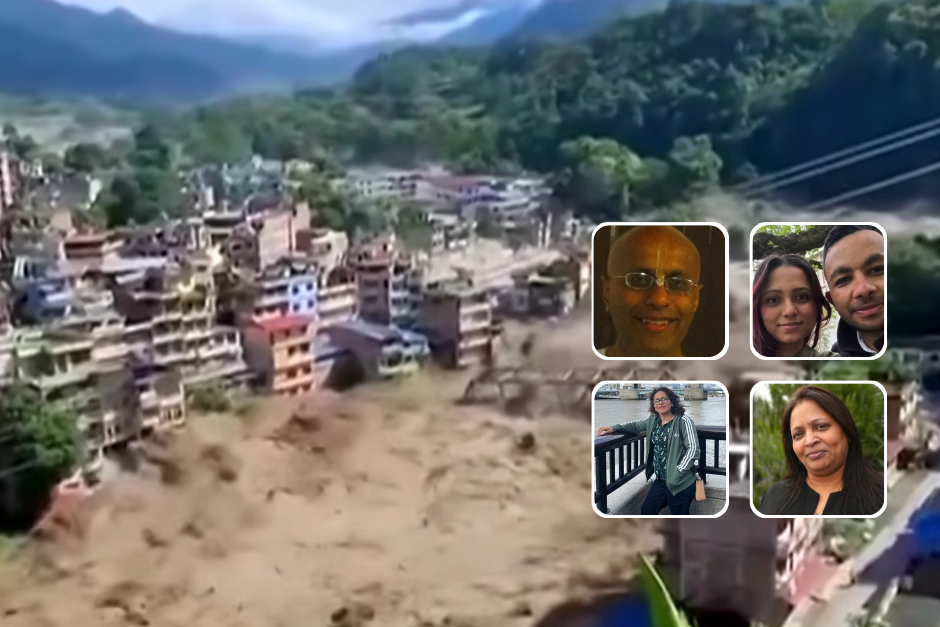
Among those unaccounted for are 33 British nationals, including children, pilgrims and tourists who had travelled through Nepal towards the sacred Mount Kailash region.
The disaster struck Nepal’s Rasuwa district and the border with China’s Tibet region on Wednesday, 26 August, after a glacier collapse triggered a devastating torrent of water, rock, mud and debris through the Himalayan valleys.
The scale of the catastrophe is still emerging and casualty figures have changed repeatedly as rescue teams reach previously inaccessible areas.
Nepal’s Ministry of Foreign Affairs reported on Thursday night that 359 bodies had been recovered and 596 foreign nationals from 33 countries remained missing. By Friday, subsequent reports indicated the overall death toll had risen substantially, while hundreds of people remained unaccounted for.
Authorities have stressed that figures remain subject to verification as rescue and recovery operations continue.
For families thousands of miles away in Britain, however, the statistics represent something much more personal: a wife who has stopped answering her phone, a parent desperately trying to locate a child, or relatives boarding flights to Nepal because they can no longer bear to wait at home.
‘I keep trying to call her’
Among the missing is Hema Amin, 63, who was travelling on a pilgrimage from Nepal towards Tibet with tour operator Alpine Eco Trek.
Her husband, Sunil Amin, from Croydon, described desperately attempting to contact her after communications were lost.
“I keep trying to call her. I’ve been trying, trying, trying,” he told the Daily Mail.
“It just rings out or doesn’t get through. I’m devastated.”
An unnamed family of four from Surrey, including a 13-year-old schoolgirl, was also reported missing from the same tour.
Another British family has gone considerably further than waiting beside a telephone.
Pramod Poudel, who runs a Nepalese street-food business in Sussex, travelled to Nepal in an attempt to find members of his family.
His wife Sumitra, mother Tulisa, brother Pradip and uncle Madav were reported missing, although his father Purusottam was found alive.
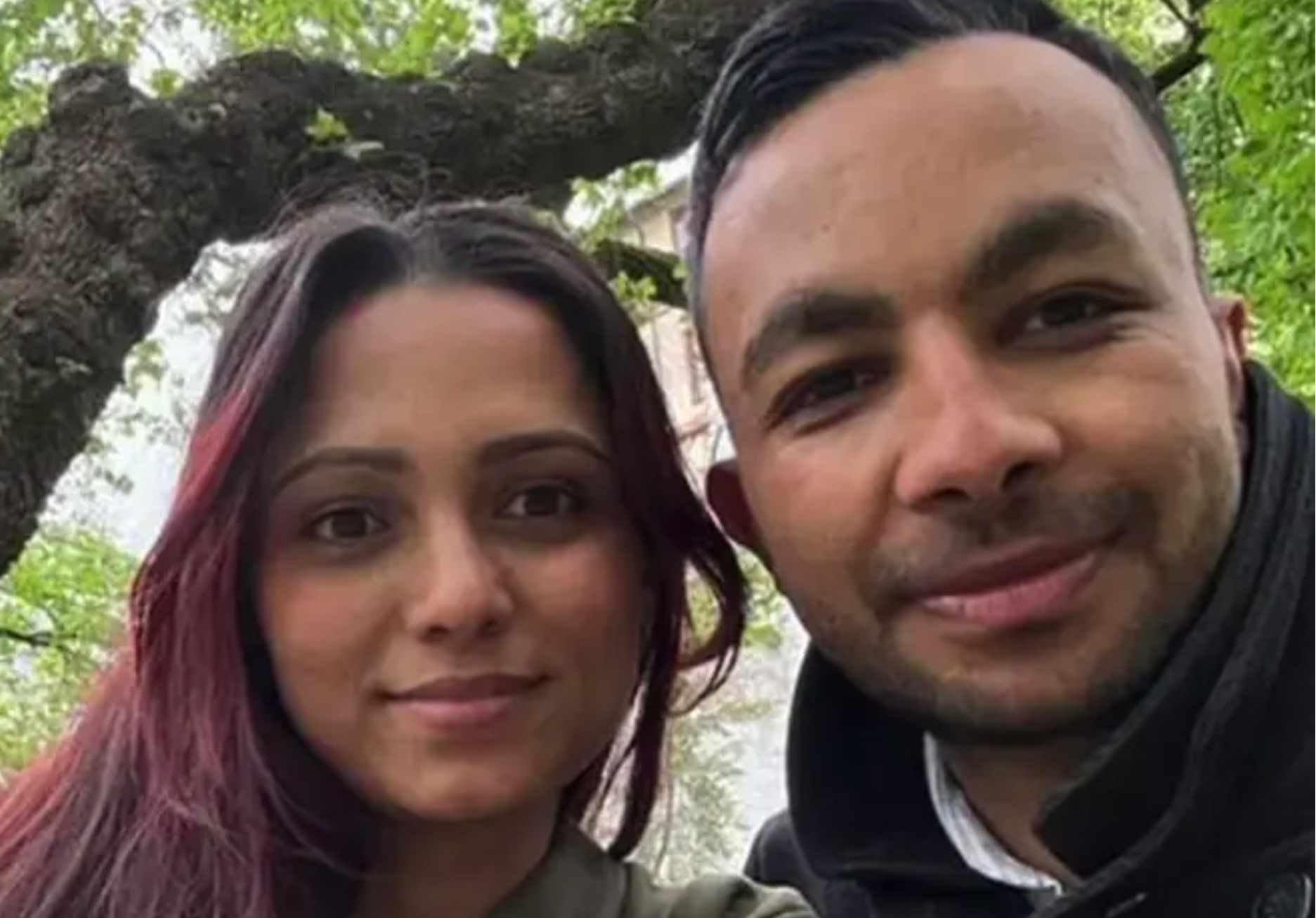
Mr Poudel told the BBC that damaged infrastructure and the collapse of communications had made contacting his family almost impossible.
“There is no proper communication so I can’t communicate with them,” he said.
“I guess there is no power so they can’t charge their phones – so to be honest, it’s a very hard and difficult time at the moment.”
But perhaps most devastating has been seeing images of the place he once called home.
“I have seen pictures of where my hometown used to be… and there is nothing there now,” he said.
“Where my family used to live – my mum, my dad, my wife, where everyone used to live – there’s nothing there.”
British pilgrims among missing
Several of the Britons feared missing had travelled to the region as pilgrims heading towards Mount Kailash, one of Hinduism’s most sacred sites and also a holy place for Buddhists, Jains and followers of the Bon tradition.

Among those reported missing is Sarada Simkhada, a senior nurse at Darent Valley Hospital in Dartford, Kent, who had been travelling on a pilgrimage to Mount Kailash.
Leena Bector, 53, from Slough, has also been reported unaccounted for.
Her husband, Bhupesh Bector, told The Times that he had been repeatedly checking the location of her iPhone, but it had not moved for hours.
He subsequently flew towards Nepal.
“I know that she’s in Nepal for sure, so even if they find her today or tomorrow, I need to be there,” he said.
Another missing Briton has been named by family members as Nabhi Das, from Streatham in south London.
Tour companies have also reported losing contact with entire groups.
Alpine Eco Trek said it lost contact with 12 British clients and four Nepalese guides who were travelling towards Mount Kailash.
Manager Kumar Adhikari told the BBC that he last heard from his guides shortly before they were expected to reach immigration facilities near the Tibet border.
Efforts to charter a helicopter were initially frustrated by dangerous weather conditions.
“We were hoping that inside it was safe,” he said, but footage subsequently emerging from the Chinese side showed the scale of destruction there too.
“I feel so sad. We are just thinking about what to do next… We are in pain at the moment, deep pain.”
Other trekking companies have also reported groups of clients and staff missing.
Hundreds of foreign visitors caught in disaster
The tragedy has reached families across the world.
An official update from Nepal’s Ministry of Foreign Affairs on Thursday evening listed 596 foreign nationals from 33 countries as still missing, although authorities warned the numbers were continuing to be verified.
The list included 167 Indian nationals, 66 Americans, 53 Ukrainians, 51 Malaysians, 35 Australians, 25 Canadians and 33 people from the United Kingdom.
Pilgrims appear to make up a significant proportion of those caught in the disaster because of the importance of the Nepal-Tibet route for people travelling towards Mount Kailash and Lake Mansarovar.
Indian spiritual leader Sadhguru said members of pilgrimage groups were among those unaccounted for after people were caught near the Nepal-China border immigration area.
The disaster therefore stretches far beyond Nepal’s borders, leaving families across Britain, India, Australia, North America and elsewhere waiting for information.
‘A tsunami from the sky’
The sheer force of the disaster has been difficult to comprehend.
Bishal Nath Upreti, president of the Nepal Centre for Disaster Management, described what struck communities along the river as a “tsunami from the sky”.
“It’s such a huge debris, and everything on the way was completely washed out,” he said.
“Villages and villages along the almost 40 to 50 kilometres were completely wiped out.”
Footage shared from the region has shown enormous torrents of muddy water and debris racing through valleys, destroying bridges and sweeping through settlements.
The United States Geological Survey said a magnitude 5.2 seismic event occurred near the Nepal-China border on Wednesday morning and reported that a “glacial collapse and debris flow” subsequently caused catastrophic impacts downstream.
Roads, bridges, homes, hydropower facilities and communications infrastructure have been destroyed or badly damaged, making the already difficult search for survivors even harder.
There are also fears the danger has not passed.
A lake created after debris blocked the river began overflowing on Friday, prompting fears of further flooding. Rescue operations were temporarily suspended in parts of the disaster zone and people were urged to move towards higher ground.
UK Government pledges support
The UK Government says it is working with Nepalese authorities to establish the whereabouts of British nationals.

Prime Minister Andy Burnham said the scenes emerging from the Nepal-China border were “devastating”.
“My thoughts are with all those affected, including the families and loved ones of British nationals missing in this tragedy,” he said.
“We will do everything we can to support British nationals impacted in the region and are in touch with the relevant authorities to offer support.”
He urged British nationals remaining in the area to follow instructions from local authorities and UK travel advice.
The Foreign, Commonwealth and Development Office has warned that buildings, roads, transport links and communications infrastructure have been severely damaged and that the situation could change rapidly because of the continuing risk of flooding.
King Charles and Queen Camilla have also expressed their sadness over the disaster, while the Prince and Princess of Wales said their thoughts were particularly with families enduring an “unbearable wait for news”.
Rescue teams race against time
Nepalese security forces, disaster-management agencies, health services and local authorities have been deployed in a vast search-and-rescue operation.
But reaching those still missing remains extraordinarily difficult.
Bridges have disappeared, roads have been buried or destroyed and thick mud and debris cover communities that only days ago were home to families, businesses and tourists.
Helicopters have become crucial for reaching some isolated areas, while unstable slopes, damaged communications and the possibility of further flooding continue to put rescuers themselves at risk.
Nepal’s Ministry of Foreign Affairs has established an emergency response operation to co-ordinate information about foreign nationals and has urged families and the public not to circulate unverified information.
For families in Britain and across the world, that uncertainty is perhaps the cruellest part of the disaster.
Hundreds of names remain on lists marked simply “missing”.
Behind each one is a family refreshing messages, ringing phones that may no longer have power and waiting for the call that tells them their loved one has been found.
And as rescuers continue searching the devastated Himalayan valleys, those families are still hoping that call will come.


