

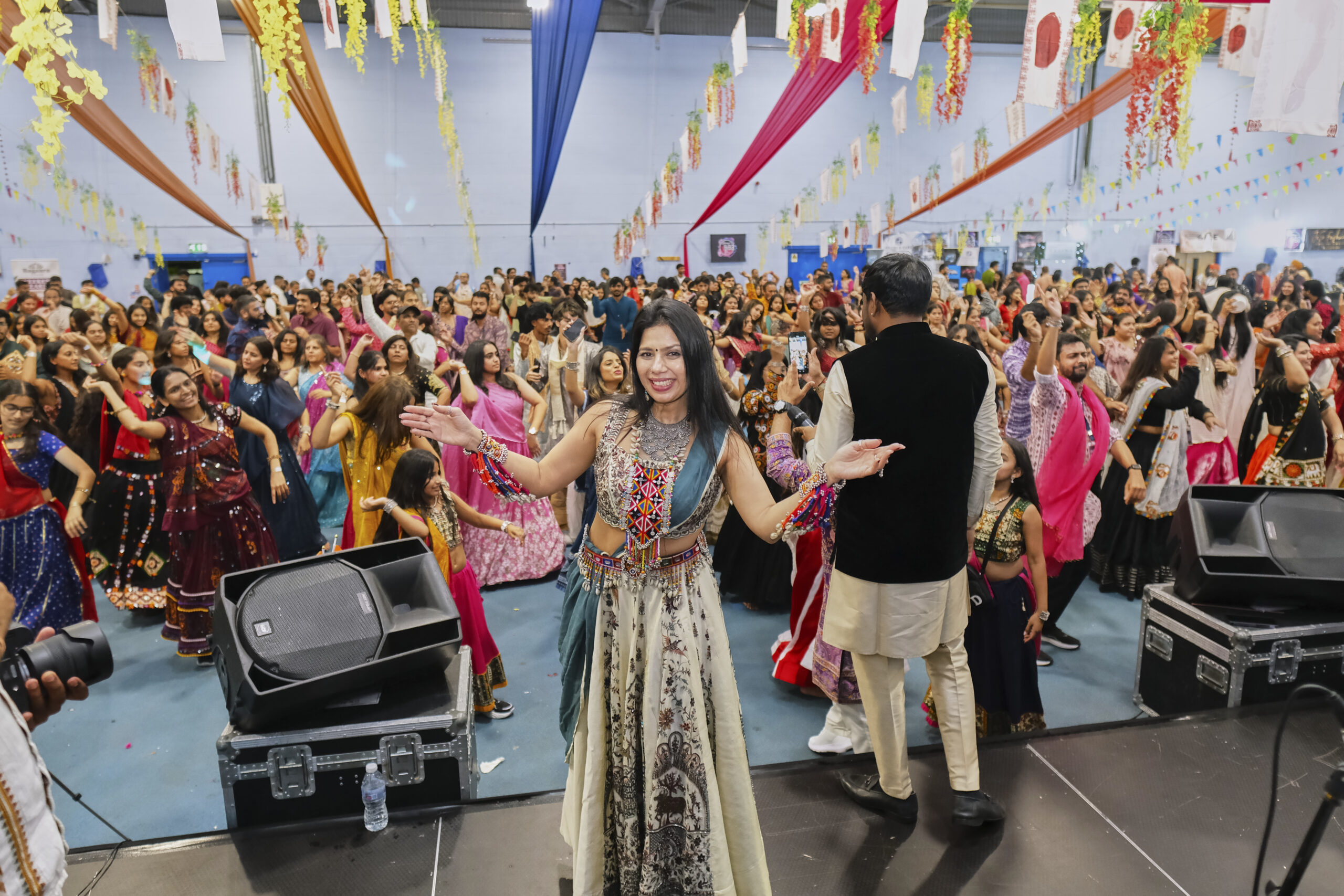
A series of five Garba nights in Leeds is bringing the dance traditions of the Hindu festival of Navratri to Yorkshire, continuing an event programme its organiser has run for three decades.
Chiragi’s BiBa, British Indian Bollywood Arts, has scheduled the celebrations at Aria Suite in Woodhouse for 10, 11, 16, 17 and 18 October, from 7pm until late. The programme includes music from DJs with Soul Asia Road Show and stalls serving food from different regions of India.
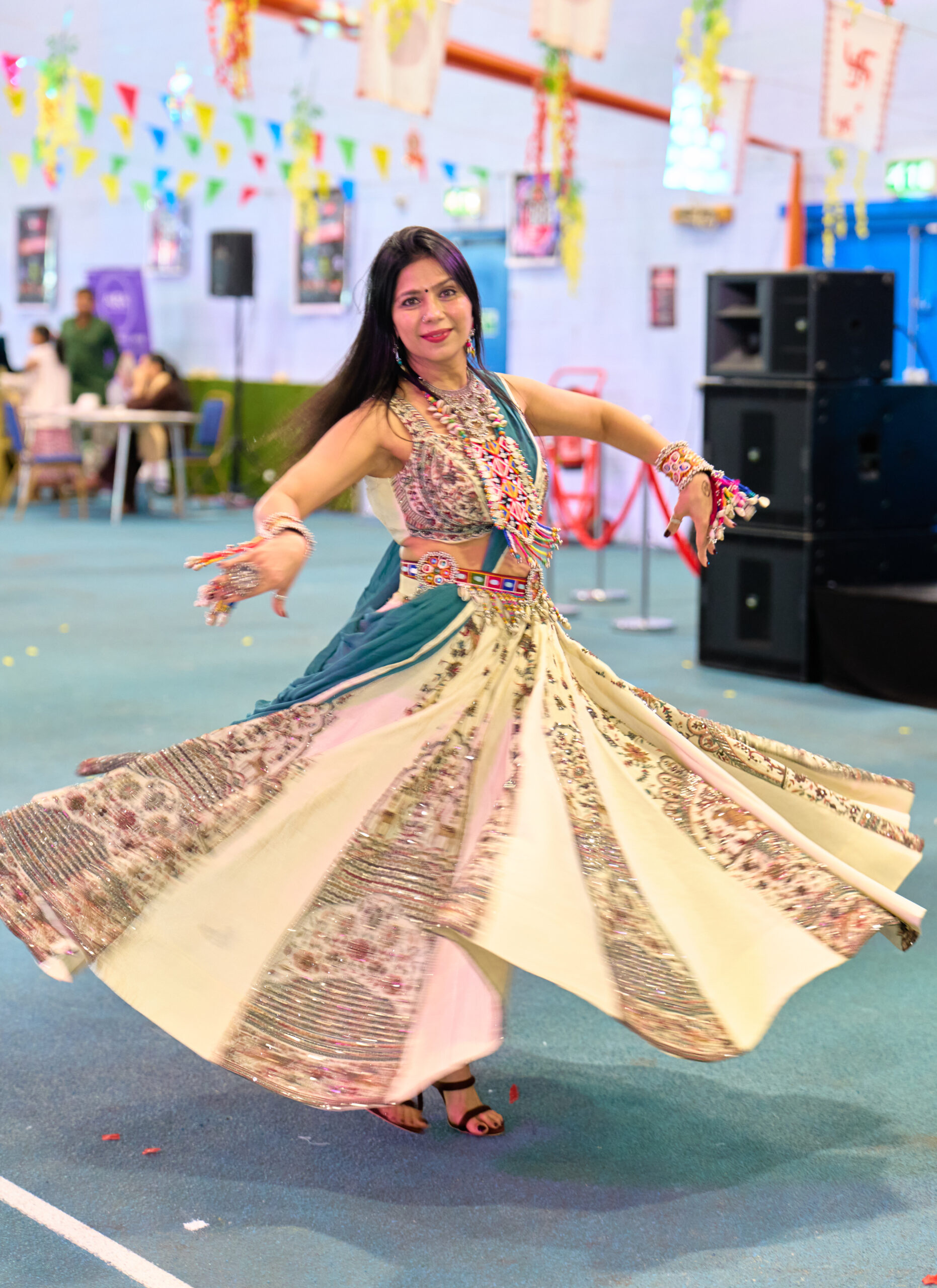
Organisers say more than 1,000 people attended September’s pre-Navratri gathering at South Leeds Stadium. They expect at least 500 people at each of the October events.
Behind the programme is Bollywood dance teacher Chiragi Solanki, who says she has been organising Garba gatherings across Yorkshire for 30 years, attracting participants from different communities.
“It all started after I attended a small charity garba,” she said.
Garba is a traditional folk and devotional dance originating in Gujarat, western India. Closely associated with Navratri, it honours the divine feminine energy, known as Shakti. Participants dance in circles, traditionally around a lit lamp or an image of the goddess.
In 2023, Garba of Gujarat was added to UNESCO’s Representative List of the Intangible Cultural Heritage of Humanity. UNESCO recognises its role in bringing people together and strengthening social ties through collective participation.
Navratri, meaning “nine nights”, is a Hindu festival dedicated to the divine feminine, or Devi, and associated with the triumph of good over evil. Its observance includes prayer, music, dancing and, for some devotees, fasting.
Traditions vary across India. In Gujarat, nightly gatherings feature Garba and Dandiya Raas, a dance performed with decorated wooden sticks. In eastern India, celebrations include Durga Puja, while some southern Indian communities arrange displays of dolls and figurines known as Golu.
For communities celebrating away from India, these gatherings offer a way to maintain cultural traditions and share them with younger generations and neighbours.
Around one million people in England and Wales identified as Hindu in the 2021 census, according to the Office for National Statistics.
Solanki began teaching dance at 15 and now runs a Bollywood dance school in northern England. Alongside the dancing, she sees shared food as part of the gatherings’ community purpose.
“Food brings people together,” she said.


