


It’s free to find out if you need planning permission from Middlesbrough Council.
That’s the message from one of the town’s planning officers, who sat down with the Local Democracy Reporting Service to talk through the planning rules and regulations that affect residents and developers who want to build new properties, convert garages or undertake any other potential building work.
While pre-application advice costs money, it doesn’t cost a penny to find out if works that you want to undertake count as “permitted development” or not. If proposed work is classed as permitted development, then no application is needed. If it’s not a permitted development, there are forms to fill out and a typical timeline to wait for approval or refusal.
Free advice vs pre-application advice
Andy Glossop, who is development control and building control manager at Middlesbrough Council, explained that many smaller projects would be classed as permitted development, meaning planning permission is not needed.
Mr Glossop said: “We deal with pre-application advice, this council didn’t used to charge for pre-app advice, like a lot of councils and we’ve left it and left it and left it, because we were keen to give good advice… and ensure people engage with us, so that they don’t just go ahead and build stuff and then we end up with problems through enforcement. We’ve had to start charging for it because, like most councils, we’re having to be a bit keener than we have been in the past.”
He added that free advice is still given if someone is asking if they need planning permission or not. So if someone is asking about a conservatory and whether it is a requirement to seek planning permission, that would be free. However, if someone asks if a project is likely to be granted planning permission, then that would incur a charge. He said: “It’s very difficult to interpret the permitted development allowances, and builders often think they can and so do members of the public.”
The council also deals with enforcement, if it is “expedient” to do so. “We don’t have to take enforcement action just because someone hasn’t got planning permission, we can only reasonably take action where they haven’t got permission and they would be unlikely to get it, i.e. bad development or something along those lines.”
He added: “It’s not the case that if 50 people object to something, it doesn’t mean that it’s going to get refused, because if they are unreasonable objections, then it could still be approved. Likewise, we’ve had instances in the past where people have got their neighbours to write in and say they support a development, but because it’s been so big of a scheme, it’s clearly an unacceptable level of impact on that neighbouring property and planning permission goes with the property, not the people in it.”
On the bigger planning picture, Mr Glossop explained that the law essentially means that all planning applications have to be determined in line with what the development plan says, unless there are clear material planning considerations to indicate otherwise, which could include issues such as the Local Plan being out of date.
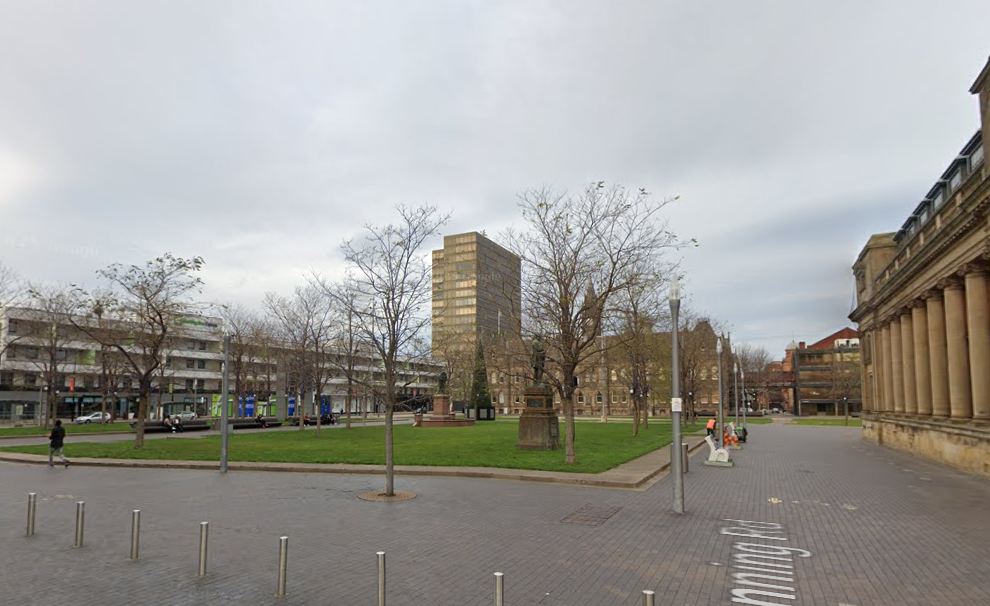
Middlesbrough. Image: Google Maps
He explained that Middlesbrough Council still has some policies from the 1999 Local Plan that are relevant, but typically 15 years is the life of a local plan (with reviews every five years). Middlesbrough Council is currently going through the motions of creating a new local plan that will affect the town until 2041.
At a national level, the Government sets the National Planning Policy Framework (NPPF) guidance. Meanwhile the relevant Secretary of State (which, at this time, is Angela Rayner) deals with appeals and has the power to call in applications, such as if a statutory consultee like Sport England is ignored.
Areas of Middlesbrough are entitled to have their own local neighbourhood plans, although these have to be made in relation to the Local Plan. The Local Plan designates land for specific purposes, such as housing land, industrial land and so on, and there is a period of public consultation as part of the process. Voted through by full council in March, the new Local Plan will be submitted for independent examination in the next couple of months.
The Government has expectations on how fast the council determines planning applications – it’s a target, and the council are monitored on it. This target date is missed “quite regularly” because amendments are needed or not all the correct information has been acquired from developers.
Planning application life cycle
Mr Glossop went on to discuss the life cycle of a planning application. People submit plans, council officers check that it has all the relevant documents, “we get a range of quality of submissions”, with proposals sometimes held up in validation for quite some time. There is then a 21 day consultation period, this can include neighbours receiving notice. A site visit is also part of the process, and amendments may be required, which will be discussed with the agent/applicant.

“When you look at government guidance, it all talks about high quality development, it’s not saying average development”, but the town will often get developers who say: “‘Well, it’s Middlesbrough, or it’s whatever ward’, but nationally and locally, high quality is high quality and you therefore need to be putting more effort in, because this isn’t up to standard.”
The target date for making a decision (officer or committee) is eight weeks for minor projects and 13 for major ones. There is a scheme of delegation, which sees officers deal with all planning applications, other than in instances where there are reasons for them to go to committee where cllrs will decide an application’s fate.
Earlier this year, cllrs from numerous political groupings complained about the lack of applications coming to committee, with only one out of the scheduled four meetings taking place between December and March, with a council spokesperson saying that the proportion of cases that appeared in front of the planning committee was roughly in line with the national average.
Mr Glossop explained the circumstances when applications can go in front of the planning committee, including cases that are “extraordinary when you look at the established policy guidelines, you know a wind farm might be out of the ordinary”. In addition, schemes where the council is applying to itself for permission where the floorspace is greater than 500 square metres would typically go in front of the committee.
Additionally, if the officer recommendation is for approval, but such an approval would mean a departure from the development plan, it would need to go in front of cllrs. “That gives a sense check that officers aren’t doing things that suit them, they’re doing things in line with the development plan.”
Where there are three or more letters of objection, with separate content, and instances which are contrary to established policy would also see the planning committee have the opportunity to decide. In addition to this, the chair and vice chair of the planning committee have the opportunity to ask for an application to be taken to the committee if they believe members should make the decision.
Material planning considerations
Decisions have to be taken based on material planning considerations. While there is no defined list, consultation letters list some considerations as examples. Courts and appeal decisions have defined the rules over the years.

Material planning considerations include national guidance and NPPF, local supplementary planning guidance, previous appeal decisions, relevant case law. This translates into individual issues such as impact on the area/character, layout, density, design, visual appearance, all of which are material considerations. Additionally, highways issues such as traffic generation and vehicular access and highway safety are all valid considerations.
On top of this, noise, hours of operation and smells/fumes are all taken into consideration, as is loss of privacy, loss of sunlight, landscaping and this is by no means an exhaustive list. “Ultimately, it can be all sorts of things,” Mr Glossop explained, “but what it can’t be is things controlled by other legislation” such as land disputes between neighbours or building regulation concerns.
He explained that there are ways of wording issues in order to turn something that wouldn’t be a material planning consideration into one. For example, loss of property value is not a consideration, neither is loss of an individual view. However, describing a project as “overbearing” would be a material planning consideration. Mr Glossop said: “If someone says it’s overbearing, we would take that into account, but if someone says it’s affecting my property value and says nothing else, we can’t take that into account.”
He did clarify that even if no one objects, “we still consider every material planning consideration” adding: “Some developers, usually on small scale stuff, say ‘why are you refusing it? No one objected to it.’” Mr Glossop said even without any objections, a project could still be deemed unacceptable.


