

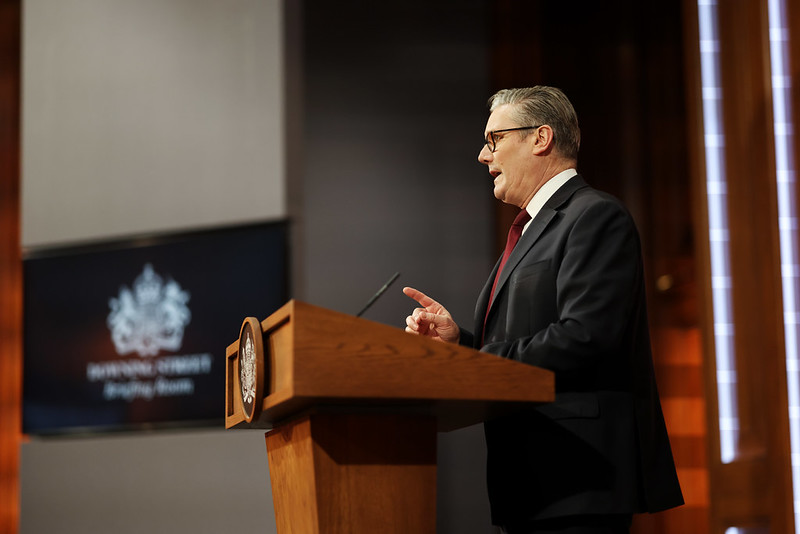
Keir Starmer has outlined Britain’s response to the escalating conflict involving Iran, while announcing a package of measures aimed at shielding households from rising living costs linked to the crisis.
Speaking at a Downing Street press conference, the Prime Minister said the government’s approach to the war in the Middle East is guided by three key objectives: protecting British citizens in the region, defending UK interests and allies without being drawn into a wider war, and pushing for a diplomatic resolution to restore stability.
The conflict, now entering its third week, has heightened fears about global energy supplies and rising prices at home. Starmer warned that the longer the war continues, the greater the economic impact on British households.
Starmer confirmed the UK has deployed military assets to protect British interests and support allies across the region.
Thousands of British troops are currently based in Cyprus and other locations in the Middle East, with three squadrons of fighter jets and counter-drone teams working to intercept Iranian attacks and protect UK bases.
More than 92,000 British nationals have already returned to the UK on commercial and government-chartered flights since the crisis began, with further support continuing for citizens still in the region.
However, the Prime Minister defended his decision not to commit British forces to offensive military action, insisting the UK would not be drawn into a broader war.
He also said Britain is working with international partners on a collective plan to secure shipping through the Strait of Hormuz, a crucial global energy route that has been disrupted during the conflict.
The Prime Minister warned that instability in the Gulf is already affecting global supplies of oil, gas and fertiliser, pushing prices higher worldwide.
Starmer said the UK and other countries have released emergency oil reserves in an attempt to stabilise markets, but reopening the Strait of Hormuz remains key to restoring confidence in energy supplies.
He added that any long-term settlement will require negotiations to limit Iran’s ability to rebuild its nuclear programme, expand its ballistic missile capabilities and arm proxy militias.
Alongside the security update, the Prime Minister announced a series of measures aimed at helping households cope with rising bills.
Among the key policies:
Energy bills capped until the end of June, saving the average household £117
Warm Home Discount of £150 maintained for vulnerable households
Introduction of a “cheap fuel finder” tool forcing petrol stations to publish live prices
£53 million support package for households reliant on heating oil, particularly in rural areas
Government action to tackle suppliers accused of cancelling deliveries and raising prices
Starmer also warned energy companies they would be prevented from making excessive profits during the crisis, pointing to the government’s windfall tax on oil and gas firms.
The Prime Minister said the conflict highlighted the importance of reducing Britain’s dependence on global fossil fuel markets.
He said the government has already secured £90 billion of investment in clean energy projects, alongside plans to accelerate new nuclear power stations.
Starmer argued that expanding renewable energy would strengthen Britain’s energy security and protect households from global price shocks.
Addressing concerns about rising costs, Starmer said his priority was to protect working families during the crisis.
Recalling his own working-class upbringing, he said he understood the anxiety many households feel when bills rise.
“My first instinct, my first priority, is to help working people with the cost of living throughout this crisis,” he said.
While further support may be considered if the conflict drags on, the Prime Minister stressed that the fastest way to reduce pressure on household bills is a de-escalation of the war.


