


Transport for London plays a massive part in the lives of millions of Londoners, visitors and tourists who use buses, trains, trams, bicycles and ferries to get around the capital.
The organisation’s multi-billion pound budget is mostly spent on maintaining services to help keep London moving with minimal disruption.
However, as the population of the city grows and the demand on the transport network increases – along with the Mayor’s aim to help people give up private cars and use public transport where possible – upgrades are sorely needed, whether it be speed, capacity, frequency or user experience.
The Local Democracy Reporting Service (LDRS) has rounded up the improvements that Londoners can expect to see in 2026, along with TfL’s other ambitions.
What’s confirmed?
Upgraded Piccadilly Line trains
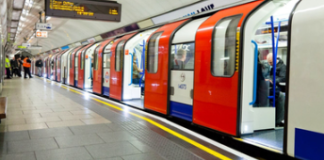
Commuters will hope that the new but already-delayed Piccadilly Line trains won’t face a further hold up. TfL has invested £2.9billion in 94 walk-through models with air-conditioning and CCTV that are expected to eventually replace the current 1973 stock.
Officials say the first trains should enter service during the second half of 2026.
Step-free stations
TfL has faced growing calls to make all of its network accessible for those with mobility needs.
Currently 94 Tube stations – just over a third of them – more than 60 London Overground stations, which is over half, and all 41 Elizabeth Line stations have step-free access. All DLR stations and tram stops are step-free.
The transport authority has sought to go further, and in October published a list of 17 shortlisted stations that will now undergo detailed feasibility studies. However other stations missed out, prompting criticism and disappointment in some quarters.
In 2026, work on Northolt will be completed, after Colindale became the latest to be made step-free earlier this week.
District Line signalling upgrade
The Circle, District, Hammersmith & City and Metropolitan lines are all undergoing a modernisation project called the Four Lines Modernisation – or 4LM project.
This includes the installation of a new signalling and control system which, in theory, should allow more services to run more reliably. The District Line sections of the 4LM project are expected to be completed during 2026, but the rest of the programme will not be ready for some years yet.
Mobile coverage across the Tube
The days of cutting short an unwanted phone call early or ignoring an email from the boss by blaming a lack of signal on the Underground could be coming to an end.
Uninterrupted 4G and 5G mobile coverage is being rolled out to all Underground station ticket halls, platforms and tunnels on the Tube, as well as the DLR, Elizabeth Line and Windrush Line between Highbury & Islington and New Cross Gate.
Coverage is currently limited to central zones on some Tube lines, but this is expected to dramatically expand in 2026.
Superloop expansion
Away from the Underground, TfL is also attempting to ensure commuters can get around London quickly and reliably on buses.
The network is expanding its Superloop routes – express bus routes which connect outer London – to ensure cheap travel for Londoners.
In 2026, the next routes – SL11, which will run between Abbey Wood and North Greenwich, and SL12, between Gants Hill and Rainham – will go live.
There are also consultations on three more new routes:
- Route SL13 – Ealing Broadway to Hendon
- Route SL14 – Stratford bus station to Chingford Hatch
- Route SL15 – Clapham Junction to Eltham station
What else does TfL want?
Start on DLR extension
After support for the scheme was announced in the Government’s budget last month, TfL will be pushing ahead to apply for powers to build the DLR extension to Thamesmead in 2026.
Subject to timely approval, this would allow construction to start as early as 2027 and the scheme to open to customers in the early 2030s, officials say. This will likely be funded primarily by TfL and City Hall with limited support from the Treasury.
Appeals to government to fund WLO and Bakerloo Extension
Two schemes that failed to make the grade in terms of a funding commitment in the Budget were the West London Orbital railway line and the Bakerloo Line Tube extension.
TfL says it will continue to lobby ministers for support for the proposals.
What has TfL said about its 2026 plans?
A TfL spokesperson told the LDRS: “Investing in public transport is key to London’s economic growth and we are pleased that the Government earlier this year agreed both a much-needed multi-year capital funding agreement and backed our proposed Docklands Light Railway extension to Thamesmead via Beckton Riverside.
“This settlement will ensure that London’s transport network can continues to support new homes and jobs, while driving economic growth in both the capital and across the UK.
“It enables us to deliver a programme of long-term, sustainable investment – completing the introduction of new trains on the Piccadilly Line and DLR, upgrading signalling on 40 per cent of the Tube, procuring a new tram fleet, progressing discussions on new Bakerloo Line trains and renewing some of London’s critical roads, tunnels and flyovers.
“Our supply chain supports growth and opportunities nationwide, with around two-thirds of our suppliers based outside London, and nearly a third of our overall spend and resulting economic benefit felt outside of our city.
“Together with our suppliers, we are pleased we can now move on from the short-term and stop-start nature of funding over recent years and continue making London work for everyone.”


