

The premiere of The Odyssey was always going to be one of the cultural highlights of the year. Why wouldn’t it be? Few Indians could have anticipated that Christopher Nolan would choose Mumbai to premiere his film for the first time.
For many South Asians, the excitement came from seeing Indian cinema’s growing influence on the global stage and the conversations surrounding the film itself. But beyond the cameras, screenings and celebrity appearances, the premiere also became a significant moment for British Asian fashion.
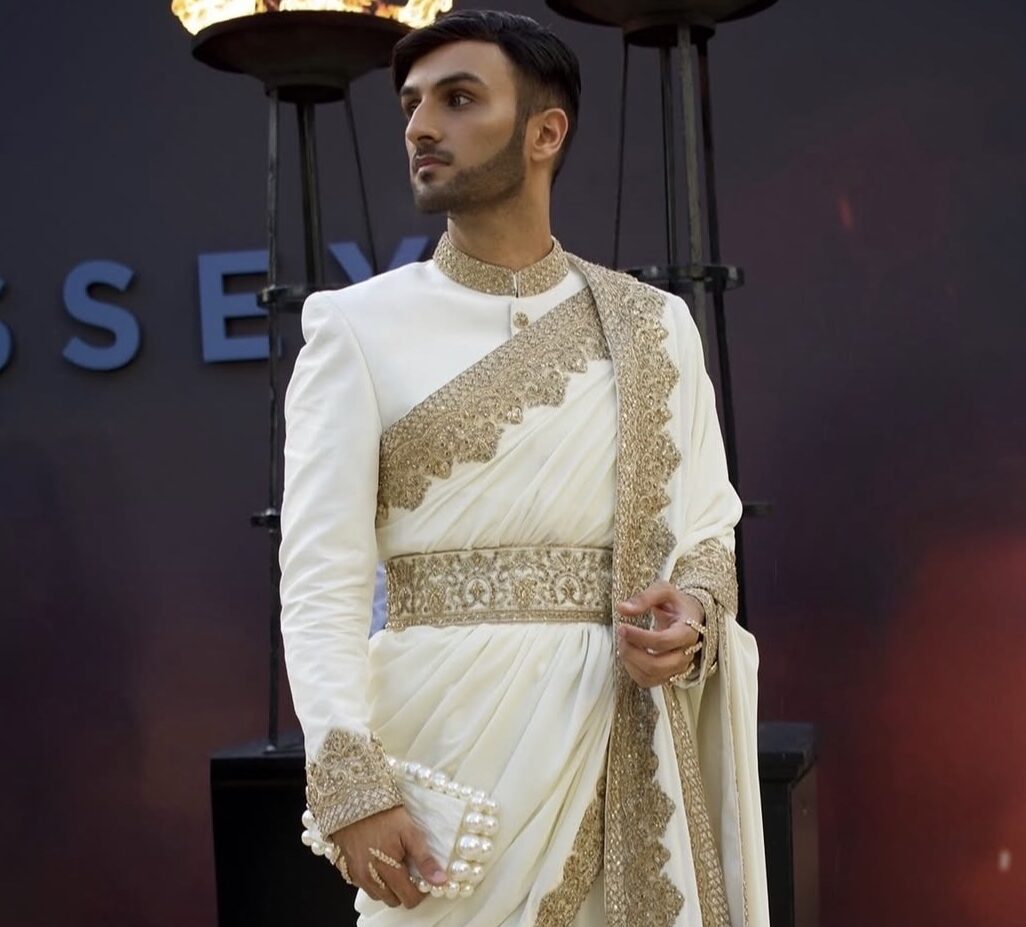
Walking the red carpet was influencer Shabaz Ali, better known as Shabz Says, a former teacher turned digital creator. A comedian, author and viral content creator, Shabaz has built a loyal audience through his blend of humour, lifestyle content and commentary. As significant as it was for him to be part of the premiere, what truly caught attention was what he wore.
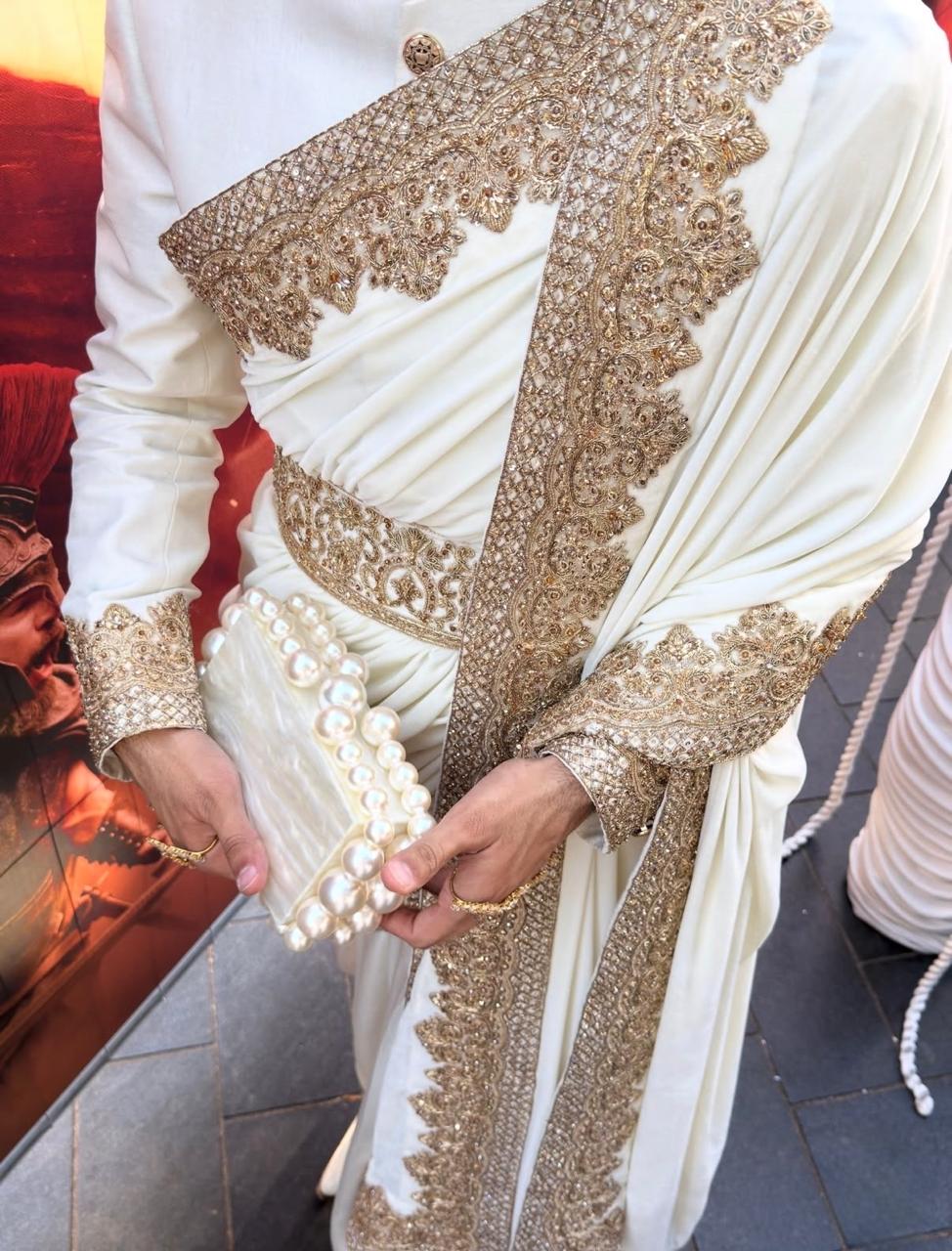
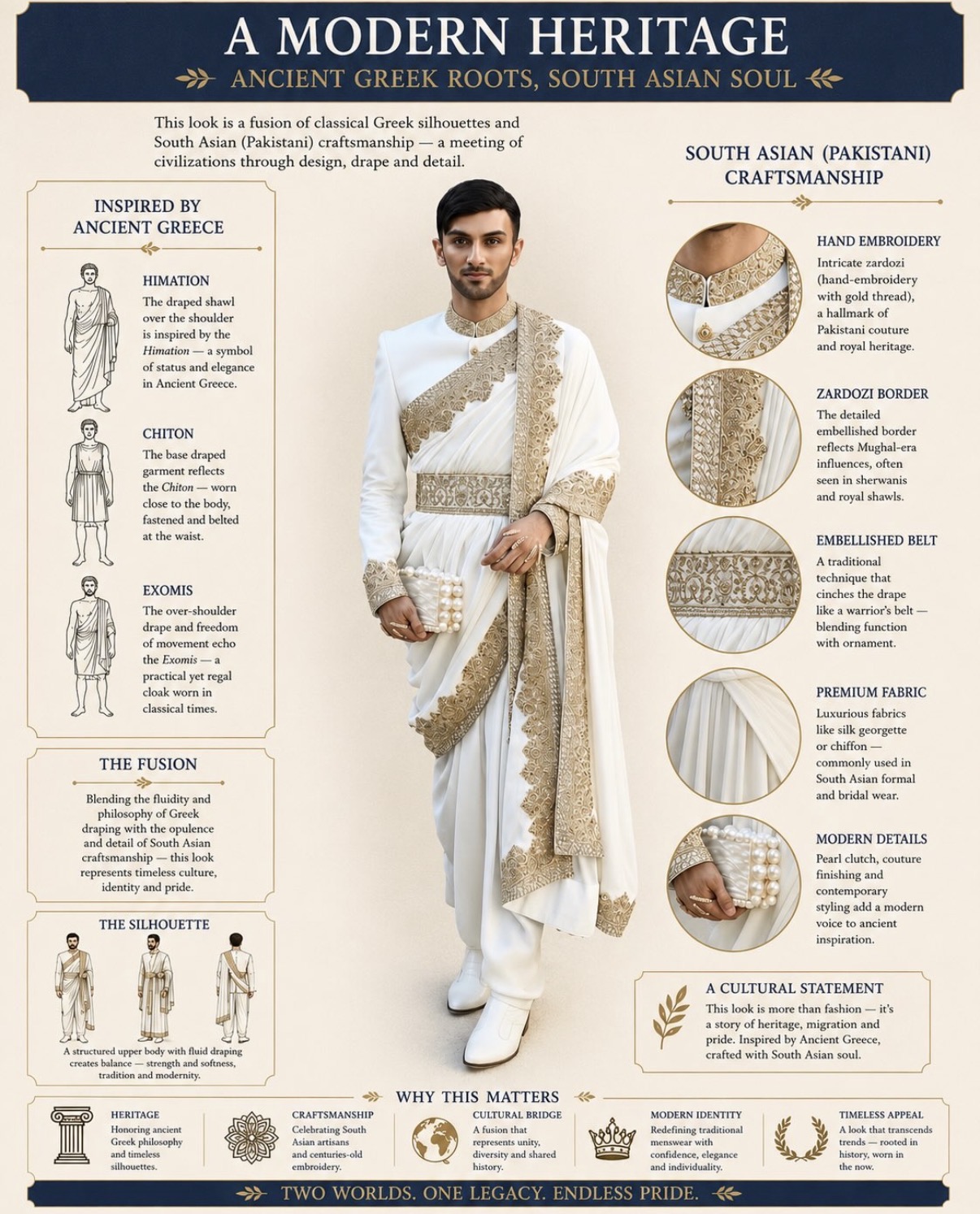
His outfit, designed by Bradford-based fashion designer Huma Hummad, offered a striking interpretation of the film’s ancient Greek inspirations while remaining deeply rooted in South Asian craftsmanship. The look combined the flowing silhouette of a toga with detailed embroidery and embellishment more commonly associated with Eastern design traditions.
While many may describe the outfit simply as a modern toga, the design was inspired by several garments from Ancient Greece, including the himation and chiton, both known for their elegant draping and fluid silhouettes. Rather than recreating these historical pieces, Hummad reimagined them through a South Asian lens.
Intricate hand embroidery, gold-thread detailing and ornate embellishments transformed the classical silhouette into something distinctly contemporary. The result was a garment that carried the grace of ancient Greek attire while celebrating the craftsmanship that has long been a hallmark of South Asian fashion.
The fusion felt particularly fitting for the occasion. The Odyssey is a story deeply rooted in Greek mythology, yet on the red carpet its visual language was being interpreted by a British Asian designer and worn by a British Asian influencer. In many ways, the outfit became more than a fashion statement. It reflected the increasingly multicultural nature of modern Britain, where different histories and traditions can come together to create something entirely new.
More importantly, it placed a British Asian man at the centre of a fashion conversation, something that remains surprisingly
rare.
Nearly a decade ago, in 2017, actor and filmmaker Riz Ahmed used his Channel 4 Diversity Lecture to highlight the consequences of poor representation in British media. Speaking in Parliament, he argued that when people do not see themselves reflected in television, film and popular culture, it can leave them feeling excluded from society.
“People are looking for the message that they belong, that they are part of something, that they are seen and heard,” Ahmed said during the lecture.
His comments were largely focused on the lack of ethnic diversity on screen, but they also touched on a broader issue that continues to resonate today. Representation is not simply about being visible. It is about being visible in different roles, different spaces and different conversations.
Since then, progress has been made. British Asian actors, musicians, presenters and creators have become increasingly prominent in mainstream culture. Yet when it comes to fashion, particularly menswear, British Asian men are still often overlooked. Red carpet discussions tend to focus on actresses, models and female celebrities, while male fashion is frequently reduced to little more than suits and tailoring.
That is why moments such as this matter.
Shabz’s appearance at The Odyssey premiere was not just about wearing an eye-catching outfit. It demonstrated that British Asian men can occupy fashion spaces with confidence, creativity and individuality. The collaboration with Huma Hummad showed that South Asian craftsmanship is not confined to weddings, cultural celebrations or niche audiences. It can sit comfortably on major red carpets and contribute to wider conversations about style and identity.
For Bradford, it was also a reminder of the creative talent emerging from British Asian communities across the country. A local designer and a British Asian influencer transformed a film premiere into a moment of cultural visibility.
Fashion alone cannot solve questions of representation. But every time British Asian creatives are seen, celebrated and discussed on their own terms, it helps broaden the picture of who belongs in Britain’s cultural landscape.
In that sense, the outfit achieved something beyond style. It started a conversation. And for many British Asian men who rarely see themselves reflected in fashion headlines, that may be its most significant legacy.


