


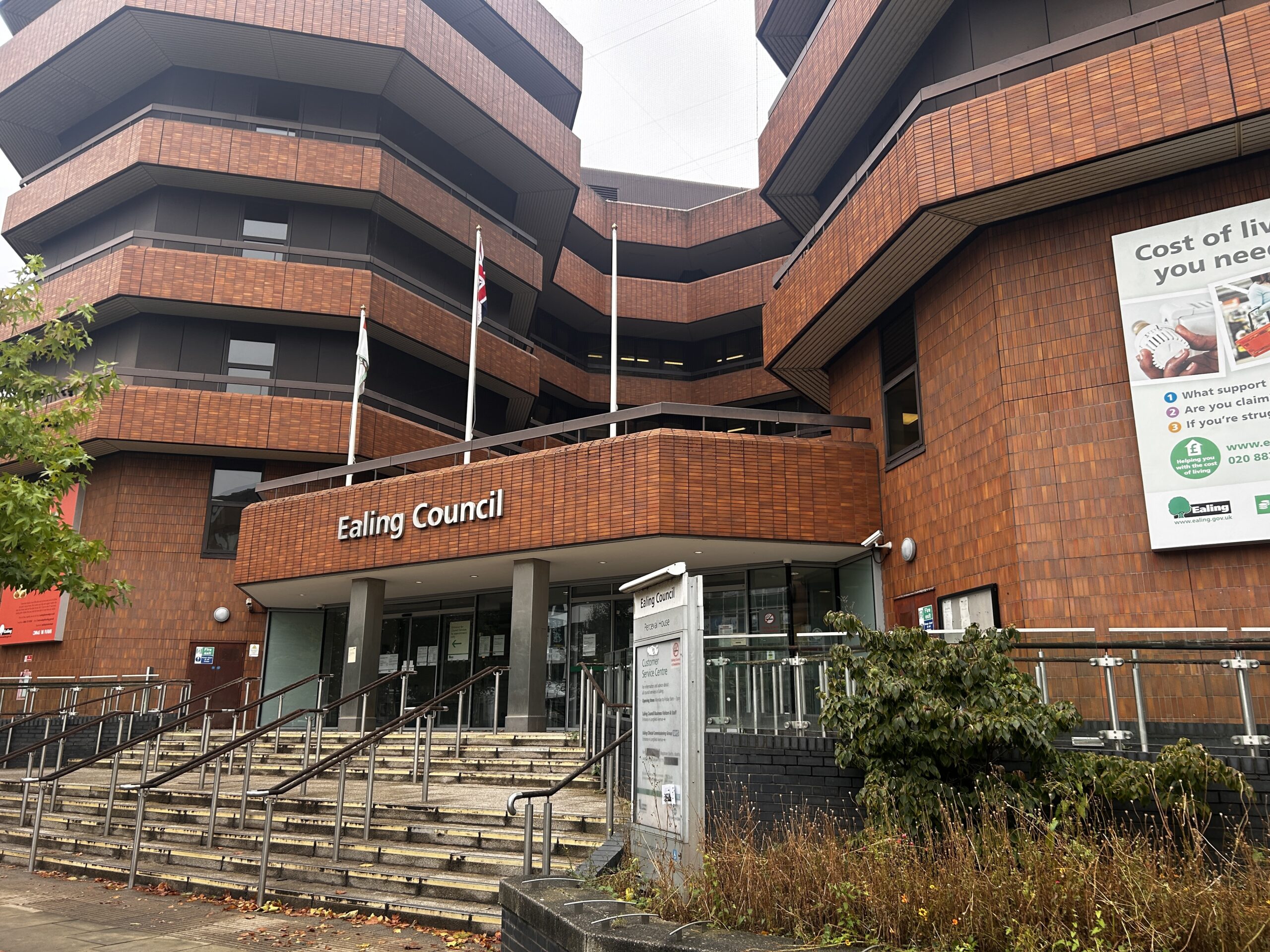
A West London borough intends to launch a strategy to limit the impacts of intense heat after studies found it was one of England’s most “socially vulnerable” to increasing temperatures from climate change.
An Ealing Council report outlines that the borough’s specific risk is driven not by geographic factors, but by social vulnerability. The areas most at risk in Ealing include Acton, Southall and Northolt.
Researchers identified a number of factors that make one area more socially vulnerable to higher temperatures. For example, areas with fewer green spaces, areas with more high-rise buildings, and poorer areas where people may struggle to afford adaptations to cope with the summer heat.
The research undertaken by the University of Manchester found that Ealing had 79 “priority neighbourhoods for adaptation”. These are neighbourhoods that are considered to be “very exposed” to small increases in the average temperature.
A draft Climate Adaptation and Resilience Strategy is intended for publication in the coming weeks so it can be consulted on. In its current form, the strategy aims to show how building climate resilience in the borough can reduce inequality.
The council is due to launch the finalised strategy in the early part of 2026. Council documents indicate some of the steps that will be taken to tackle the climate crisis.
Ealing faces a specific industrial challenge posed by data centres in the borough which currently consume 25 per cent of its entire energy supply. This creates a pressure on the grid as the borough tries to electrify its heating and transport.
To solve the problem posed by the data centre consumption of energy supply, the council aims to capture waste heat generated by data centres and use it to power district heating networks, providing low-carbon heating for homes and businesses.
New council-owned housing will be designed to ‘passivhaus’ certification standards to ensure that they remain cool in the summer and warm in the winter. It is unclear whether this plan will apply to adapting existing housing stock.
The council’s new 575-hectare regional park is mooted as a mitigation to the “environmental vulnerability” cited in the University of Manchester studies. Park plans include a community-led rewilding project including housing beavers and planting 10,000 trees – specifically targeting areas with low canopy cover.
Ealing Council is seeking to identify community leaders and interested groups to participate in a public consultation on the new strategy in the coming weeks. It is hoped their input will ensure the strategy reflects the needs of the most vulnerable to climate risks.


