


Rating out of 5: ★★★★
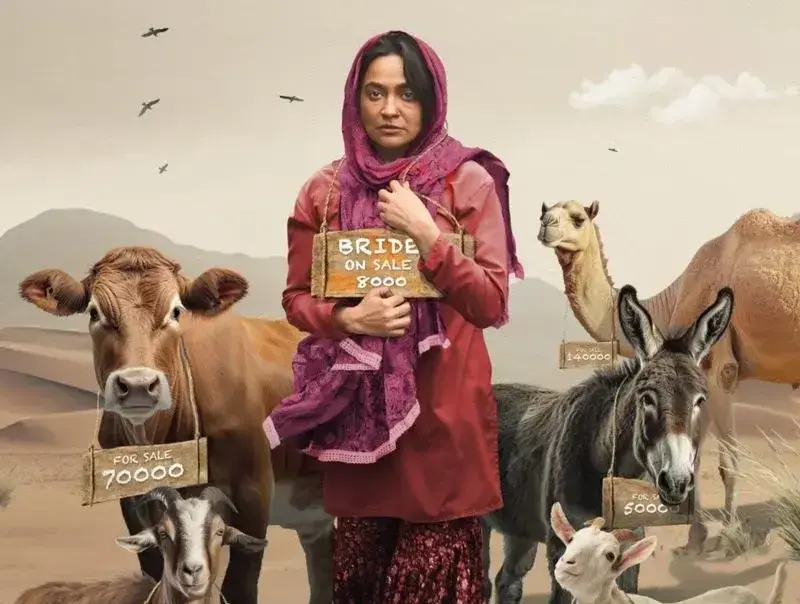
Paro: The Untold Story of Bride Slavery follows the harrowing journey of women who are trafficked and sold into forced marriages, exposing the hidden reality of bride slavery in parts of India.
From the opening scenes, it establishes a sombre tone that remains consistent throughout, making it clear that this is a story driven by social awareness rather than escapism.
The film’s greatest strength lies in its willingness to tackle a subject that is rarely explored in mainstream cinema. As the lead actress, writer and producer of the film, Trupti Bhoir said at the film’s premier in London at the Raindance film festival:
“This issue is severely underreported. I watched a documentary in 2013 about the trafficking of women in India and since then there has been little coverage about the topic.”
Accompanied by a haunting musical score that underscores the tension without overwhelming it, the introduction sets the tone for the difficult journey that follows, and signals that this is a story grounded in realism rather than spectacle.
Trupti Bhoir delivers a compelling and emotionally grounded performance in the lead role, capturing both the vulnerability and resilience of a woman trapped by exploitation. Bhoir’s extensive research and work with women who have experienced, or are experiencing, forced marriage is reflected in the authenticity and emotional depth of her performance. Taha Shah Badussha provides a strong supporting performance, bringing sincerity and emotional depth to his character while highlighting the human complexities surrounding the story.
While the film’s intentions are admirable, there are occasions where the narrative feels more focused on delivering its message than developing its characters. Some scenes move quickly between significant events, leaving little room to fully explore the emotional consequences. As a result, certain relationships and character arcs could have benefited from greater depth, giving audiences an even stronger connection to the people at the heart of the story.
That said, the film never loses sight of its purpose. It raises important questions about gender inequality, poverty and human trafficking, encouraging audiences to think beyond the screen. It serves as a reminder that cinema can be a powerful tool for highlighting social issues and inspiring meaningful conversations.
Paro: The Untold Story of Bride Slavery is undoubtedly a challenging watch, but an important one. It may not satisfy viewers looking for a fast-paced drama, but those interested in films that address real-world issues will find plenty to reflect on.
This film is a poignant reminder of cinema’s ability to amplify overlooked stories and its emotional honesty makes it a film that leaves a lasting impression.


