


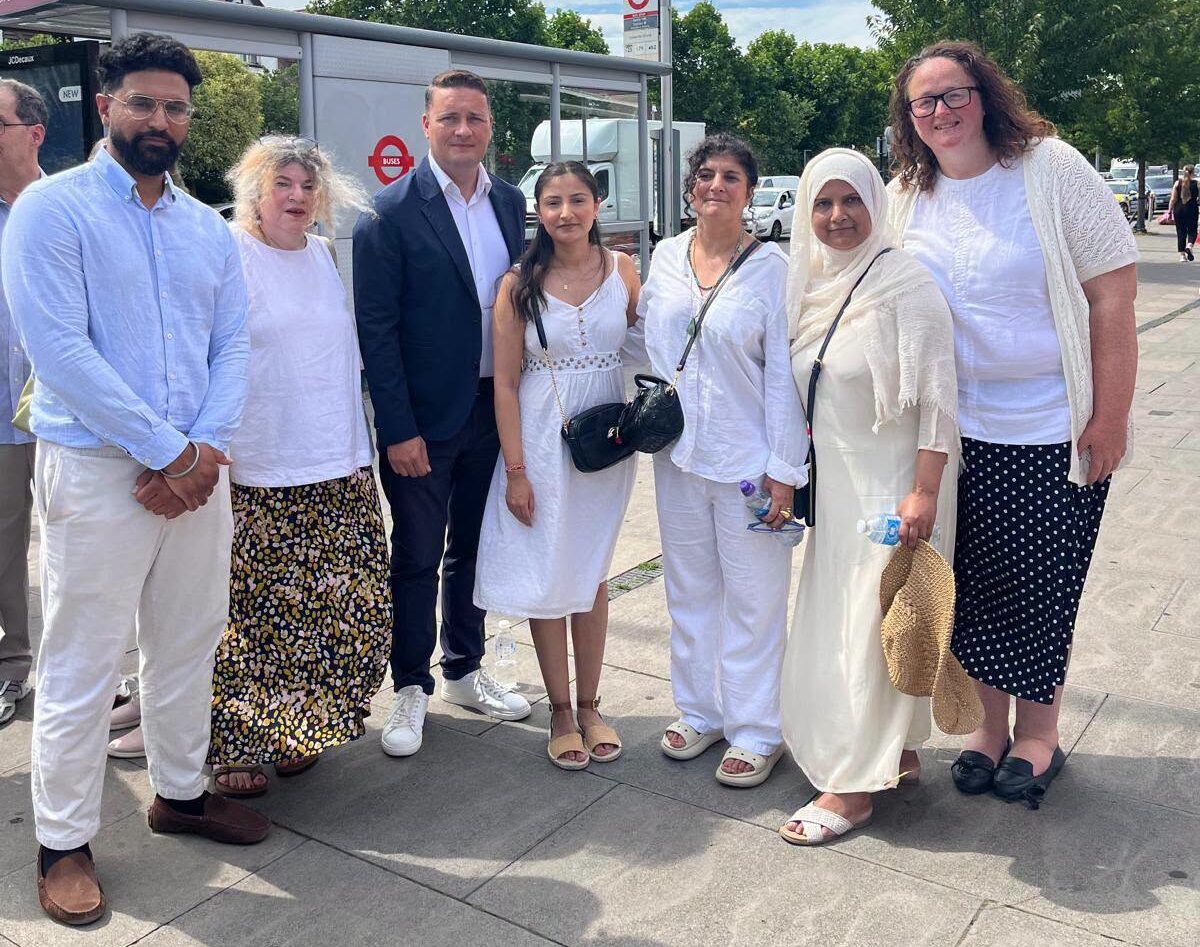
What should have been an ordinary walk home became a tragedy that still haunts Ilford. This week, residents returned to the streets where Zara Aleena was killed 4 years ago, taking part in the silent walk that honoured her memory while renewing calls to make Britain’s streets safer for women and girls.
The annual walk known as ‘Walk Zara Home’, is now an act of remembrance for Zara Aleena, who was sexually assaulted and murdered, at the age of 35, while walking home in Ilford, East London on 26 June 2022. Zara grew up in Dagenham with a single mother and was working at the Royal Courts of Justice on her way to becoming a solicitor.
She is described by her family as “warm, funny and completely authentic.”
What began as a devastating crime has, over time, become something more enduring; a collective act of remembrance and resistance from a community unwilling to let her name fade or her death become just another statistic.
The route is deliberately ordinary. It reflects the kind of journey Zara Aleena was making that night: residential streets, familiar corners, a walk home. That familiarity is part of what continues to unsettle those who take part. There is no extraordinary setting, only the reminder of how quickly safety can be taken for granted in everyday spaces.
This year’s walk brought together residents, campaigners, local representatives and members of Zara Aleena’s family. It was not marked by formal ceremony, but by presence, people walking together in silence, reflection, and conversation. Their presence reflected a wider shift towards community-led remembrance, where public space becomes a place not only of mourning but of visibility and shared responsibility.
Zara’s family wrote on her website:
“Since Zara’s murder, we have held four Walk Zara Home vigils. We have supported other bereaved families and stood alongside people who have found themselves in a club none of us ever wished to join. We have worked with schools, local authorities and community organisations. Through programmes such as Step In, we have supported conversations about bystander action, respect, responsibility and the prevention of violence against women and girls.”
For her aunt, Farah Naz, the walk has become a way of turning grief into something active. She has asked people to “march for hope”, a phrase that has come to define the annual gathering. Hope, in this context, is not about moving on from what happened, but about refusing to accept violence against women and girls as inevitable.
Helen Mullis, Labour Councillor for Hainault ward, wrote on Facebook after attending the walk on Saturday 27 June: “It was a very sobering experience but Zara’s Aunt, Farah Naz asked us to march for hope. The crime was inexplicable, inexcusable and deeply disgusting but we can’t give up hope that violence against women and girls can be eradicated when we choose to be upstanders not bystanders. Rest in Eternal Peace, Zara – your memory lives on”
Zara Aleena’s murder in 2022 continues to sit within a wider national picture of violence against women and girls in the UK. Latest data published by the Office for National Statistics estimated that around 898,000 people experienced sexual assault in the year to March 2025, equivalent to 1.9% of the population aged 16 and over. These figures highlight that sexual violence remains widespread and often underreported, with the majority of victims being women.
While high-profile cases such as Aleena’s bring public attention to the issue, they also reflect broader patterns of vulnerability in everyday spaces such as streets, transport routes and residential areas. Campaigners and policymakers continue to argue that prevention efforts, policing, and support services have not kept pace with the scale of harm.
The persistence of these statistics underscores ongoing concerns about systemic failures in safeguarding and the urgent need for more effective strategies to reduce violence and improve protection for women and girls.
For many, the walk highlights how those figures translate into everyday behaviour. It reflects the reality that for a significant number of women, walking home alone is not a neutral act, but something shaped by caution and calculation.
Wes Streeting, MP for Ilford North, also attended the walk saying that: “Every year I’ve walked with Zara’s family. Zara’s murder was a turning point for Redbridge. Since then, we’ve seen a real focus on policing, tackling harassment and educating boys on tackling sexism and misogyny. Successful police action has increased, and harassment has fallen but there is still so much more to do. We will walk again next year – in Zara’s memory, but also with hope and determination to make sure that other families don’t have to go through what Zara’s family have been through.”
For those who take part, each walk is both an act of remembrance and a call for change. They continue because the circumstances that led to Zara Aleena’s death still resonate today. Until meaningful action is taken, communities will keep walking, ensuring her name is remembered and her death serves as a catalyst for change rather than becoming another forgotten tragedy.


