


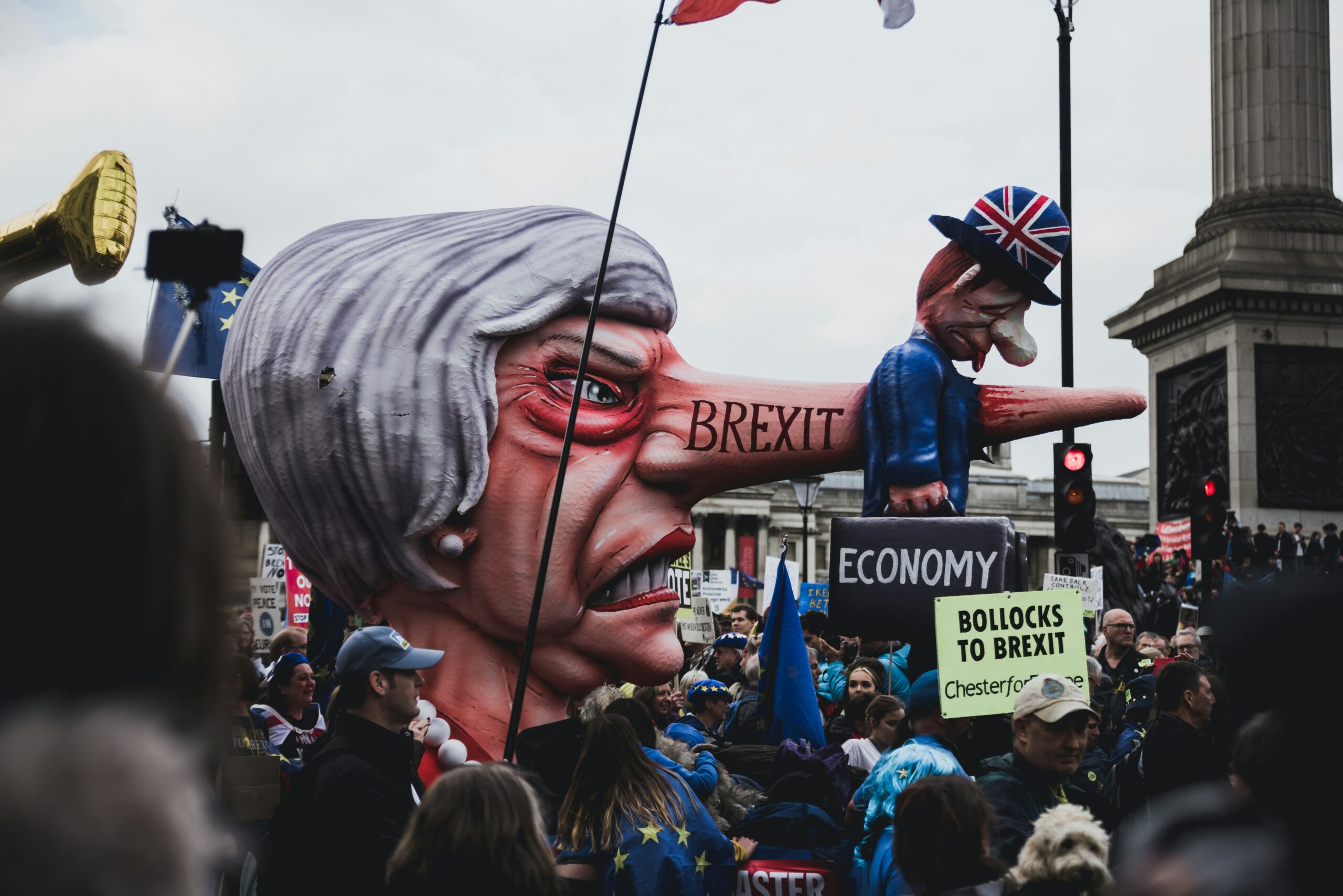
Almost ten years after the UK voted to leave the European Union, things have changed significantly. Brexit continues to divide opinion to this day. While some still stand by their decision, others now question whether the promises made during the 2016 referendum were ever fulfilled.
On 23 June 2016, 17.4 million people voted to leave the EU, while 16.1 million backed Remain. The result triggered years of political upheaval and eventually led to the UK’s formal departure from the European Union in 2020.
Nearly a decade later, the debate has now seeped into people’s daily lives. Rising living costs, travel restrictions, immigration, trade and opportunities for younger generations remain at the centre of public discussion.
Speaking in Newcastle, 27-year-old India Inskip said she was among those who never got the chance to vote. Originally from Stafford and now living in New Zealand, she said: “I just missed out on the vote, I was too young and I wouldn’t have voted the way it went. It is frustrating for people my age who missed out and it now affects us more than the people who could vote then.”
For India, one of the most noticeable consequences was the difficulty of studying abroad after Brexit. She added: “I don’t think I would be able to afford a house here now, though it’s hard to say whether that is to do with Brexit.”
For others, the impact has been felt most sharply in their finances.
Michael Douglass, 59, from Cramlington, said: “Everything has gone up in price, everything. And with the businesses they are getting crippled by the extra costs.”
His concerns highlight findings from a recent analysis of Bank of England data. The analysis suggested that Brexit has reduced the size of the UK economy by around 6%. The study pointed to weaker business growth, increased uncertainty and trade barriers introduced after the UK’s departure from the EU.
However, the research has also faced criticism from some economists, who argue that factors such as global energy shocks, the pandemic and changing international investment patterns make it difficult to isolate Brexit’s impact entirely.
William Watson, 80, from Felling, believes political leaders failed to deliver the version of Brexit many voters expected. “They didn’t back it, did they? That’s what caused all the problems. Conservative and Labour are part of the reason,” he said.
Among those who still support the principle of leaving the EU, immigration remains a key issue.
The issue remains politically charged. Government figures show that 9,852 people crossed the English Channel in small boats during the first part of this year. When asked, ministers defended their efforts to tackle the problem by underlining a £662 million agreement with France aimed at reducing crossings. However, voters still have doubts.
Brian Scott, 66, from Inverness, said he would think differently if asked to vote again today. “I don’t think I would [vote Leave now] just for going abroad and the queues and the price of everything has gone up. Everything is a fortune now,” he said.
For Gateshead resident John Kelly, 77, the disappointment lies in what he sees as unfulfilled promises. “We never got what we were told we would, we never got the benefits we should have done,” he said.
As the tenth anniversary of the referendum approaches, Brexit remains a subject that stirs strong emotions. For some, it represents a missed opportunity, and for others, a project that was never properly delivered.
What is clear is that, nearly a decade on, the question of Brexit is far from settled in the minds of many Britons. The arguments may have changed, but the debate continues to shape how people view the country’s economy, politics and future.


