


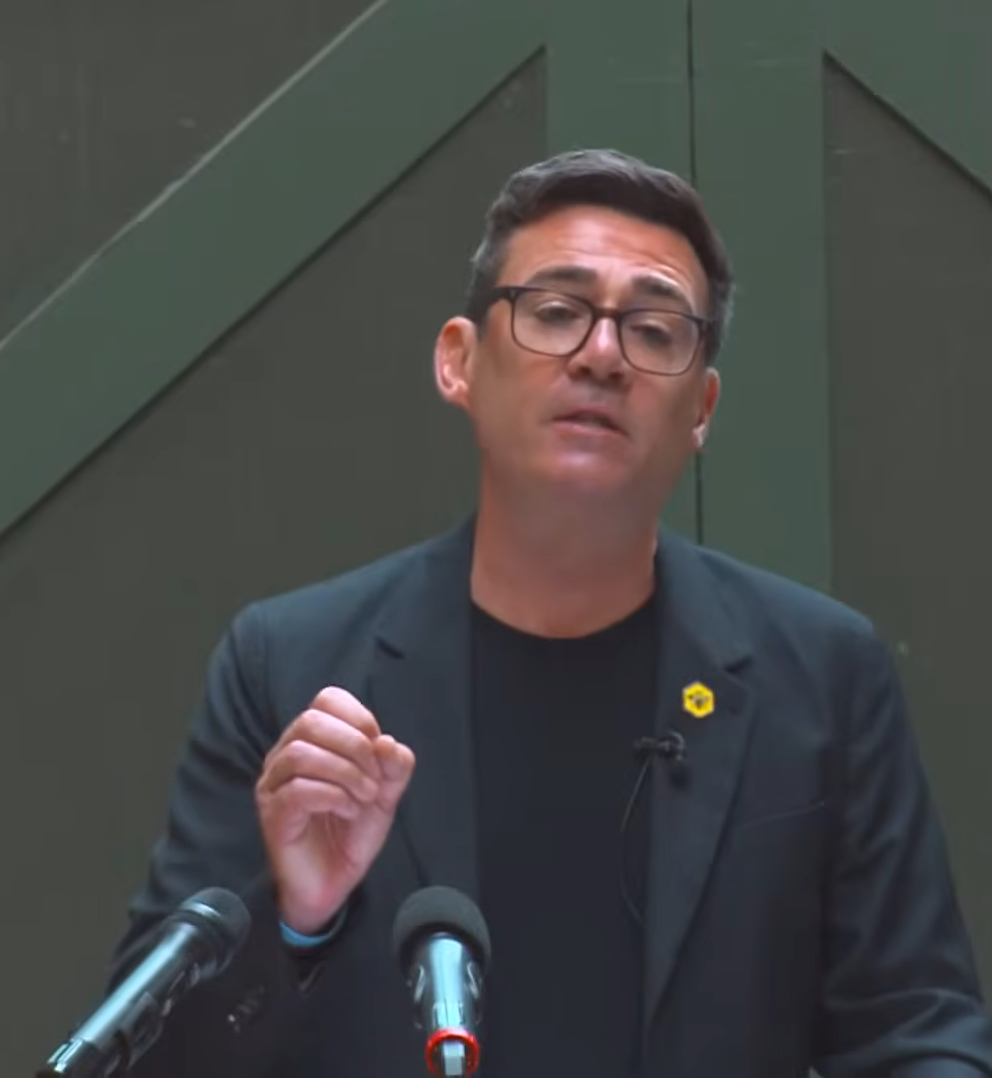
A radical shift in power has been promised as Andy Burnham delivered his major speech as a bid to place himself as Prime Minister on 29 June.
He describes this as the “biggest transfer of power out of Whitehall in modern times,” with the North East set to receive greater control over jobs, housing and local decision-making if he becomes Prime Minister.
In a major speech delivered in Manchester, the Makerfield MP outlined plans to “rewire” the country by handing more powers to mayors and local leaders, arguing that decisions affecting communities should no longer be controlled from Westminster.
A key part of the proposals includes creating a “No 10 North” , similarly like 10 Downing street, an operation in Manchester and devolving greater responsibility over employment support, housing and economic development to regional authorities.
According to Government figures, the North East currently has the highest rate in England of 16 to 24-year-olds who are not in employment, education or training (NEET), with more than 64,000 young people affected in 2025.
The plans have been welcomed by North East Mayor Kim McGuinness, who recently called for more powers and funding to tackle youth unemployment in the region.
Speaking after Andy Burnham’s announcement, Ms McGuinness said: “This is what take back control looks like. We don’t want London taking all our decisions for us. The people in the North East know what is best for the North East.” She added that additional powers would help create more opportunities for young people and strengthen pathways into sectors such as construction and retrofitting.
Andy Burnham said he would “answer the call” from regional leaders by devolving employment support and creating a clearer route into work for young people through reforms aimed at giving equal status to technical and academic education.
“Let me say this very directly: the days of Whitehall fighting the devolution of power into the regions and nations are over for good,” Andy Burnham said.
“I have had 10 years of fighting the Whitehall machine, blocking this place’s progress, the progress of people here and I am simply not prepared to accept the same for any area coming after Greater Manchester.”
Think tanks and local government organisations broadly welcomed the proposals but warned that additional powers would need to be matched by increased funding. The Local Government Information Unit described the speech as one of the most ambitious statements on devolution from a senior politician in a generation, while stressing that councils would require significant resources to deliver on the promises.
Meanwhile, Mirte Boot, principal research fellow and interim head at north of England think tank IPPR North, said it was clear that “the status quo isn’t working”.
She added: “For two decades, IPPR North has seen successive governments promise change, transport spending, and regional growth in the North. But to drive real change, we must turn the system on its head, and power must be handed down to people and places.
“Mayors must be given the powers and capital to build local infrastructure like transport and housing, and we must see a push against Whitehall orthodoxy, so local leaders are given control over revenue and borrowing.
Not everyone is convinced with the devolution plans though. Conservative leader Kemi Badenoch criticised the plans, arguing Andy “doesn’t have a plan beyond telling mayors to go and sort it out”. The Tory leader also criticised and said that this plan will create more layers of government and reduce accountability.
The debate over devolution is expected to become a central issue in the coming weeks, with regional leaders across England continuing to push for greater control over local services, investment and economic growth.


