

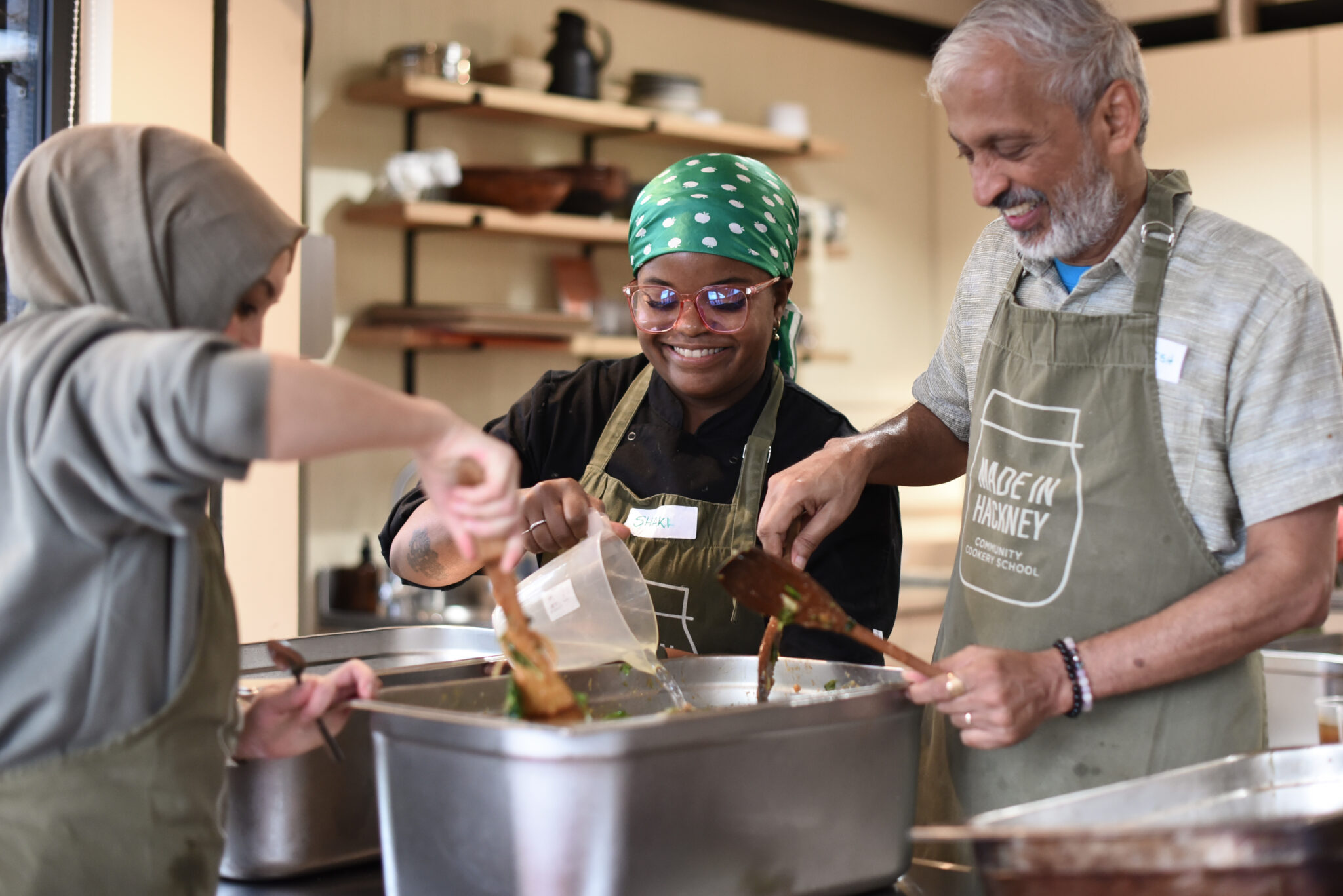
Community kitchens are doing far more than teaching people how to cook. From church halls and gurdwaras to community centres and charity-run kitchens, volunteers are helping preserve family recipes, reduce loneliness and bring people of all ages together through food.
Whether it’s showing someone how to knead dough, prepare seasonal dishes or recreate recipes that have been passed down through generations, organisers say these sessions are becoming an increasingly important part of community life.
Many community organisations using food as a way to strengthen relationships, encourage cultural exchange and give older generations an opportunity to share skills that might otherwise be lost.
“These recipes have been passed down through generations. If we don’t teach younger people now, some of them could disappear, it’s a good way to connect people and learn from each other.” said Sonia Ahmed, a home cooking teacher in Stoke Newington who runs free classes from her home.
Unlike cookbooks or online tutorials, the workshops focus on practical skills that are often learnt through experience rather than written instructions.
Participants are shown how dough should feel, how ingredients should be prepared and how recipes often evolve from one household to another. Many volunteers say these are the techniques they learnt from parents, grandparents or relatives while growing up.
“My mother never measured anything. Everything was by eye, by smell and by experience. I want to help people learn how to cook and enjoy it.” said volunteer cook at London community kitchen Rohan Patel.
For younger Londoners, the sessions offer the chance to learn recipes they may not have had time to pick up at home. Some join to reconnect with family traditions, while others simply enjoy learning new cooking skills in a welcoming environment.
“I am incredibly grateful for the skills acquisition training at Idia’s Community Kitchen. The program has transformed my life by equipping me with essential skills and boosting my confidence. Thanks to the supportive environment and expert guidance, I now have the tools to my passion and create a better future for myself and my family.” Said Lisa Driver, who trained at Idia’s community kitchen, which operates in several locations across East London.
Organisers say the benefits extend well beyond the kitchen. Many older volunteers see the sessions as an opportunity to remain socially active while sharing knowledge built up over decades. Shared meals after each class encourage conversation, helping participants form friendships and strengthen community ties.
Several organisations have reported growing demand since the pandemic, as more people seek opportunities to connect with others in their local area.
Despite their popularity, many community kitchens continue to operate on limited budgets, relying on volunteers, donations and grants to keep sessions running. Rising food prices, venue costs and recruiting volunteers remain ongoing challenges.
Community kitchens also reflect London’s rich diversity.
Sessions may feature recipes from South Asian, Caribbean, African, Middle Eastern, Eastern European or British traditions, depending on the communities involved. Alongside cooking techniques, volunteers often share the stories behind the dishes, explaining when they are prepared, how recipes have changed over time and the memories they hold.
Many programmes welcome participants from all backgrounds, using food as a way to encourage cultural exchange and understanding. As community organisations continue to expand their cooking programmes, organisers hope they will receive greater support to meet growing demand.
For many participants, the sessions are about much more than learning a new recipe. They provide opportunities to build confidence, make new friends and preserve traditions that might otherwise be forgotten.
In a city as diverse as London, community kitchens are proving that food has the power to connect people across generations and cultures. By sharing recipes, stories and skills, volunteers are helping ensure that culinary traditions continue to thrive while strengthening the communities they serve.


