

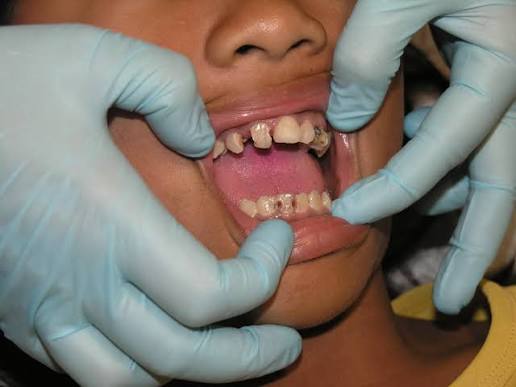
Almost 45 per cent of five-year-old children in Bradford West have experienced tooth decay, twice the national average, prompting concerns over children’s dental health and a shortage of dentists in the area.
Figures discussed at a Bradford Council committee meeting show that 44.8 per cent of five-year-olds in the Bradford West constituency had experienced dental decay, compared with 22.4 per cent across England and 37.1 per cent across Bradford as a whole.
The average number of decayed teeth among children examined in Bradford West in 2024 was 2.4.
The figures were discussed at a meeting of Bradford Council’s Bradford West Area Committee last month, where members received an annual update on public health programmes in the constituency.
Public health officer Mikhail Foster told councillors that high levels of deprivation were a major factor behind the figures. However, he also highlighted inadequate dental provision across the city as a significant concern.
A report presented to members stated: “Dental decay remains a significant issue for children in Bradford West.
“Despite ongoing preventative programmes, oral health inequalities persist, highlighting the need for continued investment in prevention, early intervention and support for families and schools.”
During the meeting, councillors raised concerns about the impact of poor dental health on children’s wellbeing, education and quality of life.
Cllr Melanie Milnes (Reform, Thornton and Allerton) said the figures appeared to be getting worse, warning that dental problems could lead to future health issues and leave children in pain while at school.
She added that some children were becoming depressed because of the condition of their teeth and asked whether more could be done to increase the availability of dentists in Bradford.
Mr Foster explained that responsibility for dental provision rested with the NHS rather than Bradford Council.
Cllr Mohammed Ali Islam (Manningham, Bradford Independents) described the situation as a “dental pandemic”, highlighting the significant gap between Bradford West and the national average.
He said: “The dental issue is a massive issue.
“There is a dental pandemic out there – it is a real issue that is being overlooked.
“44.8 per cent of five years olds in Bradford West have dental decay. The England average is 22.4 per cent. How can we explain that two-fold disparity?”
Responding to the concerns, Mr Foster said several factors contributed to poor dental health, including children’s diets and the quality of food available to families.
He explained that household income and deprivation could influence the food parents could afford, adding that there was a clear link between growing up in a deprived family and an increased likelihood of poor dental health.
However, he also highlighted the shortage of dental services as a major issue.
He said: “We can’t shy away from the elephant in the room, which is the poor level of dental service to fully meet the needs of the Bradford population.”
Mr Foster said Bradford Council could not force dentists to open practices in particular areas but confirmed he would discuss the issue with NHS partners.
Bradford Council is supporting several preventative programmes aimed at improving children’s oral health, particularly among those most at risk.
One initiative involves supervised toothbrushing sessions in schools and nurseries, with 31 providers in Bradford West taking part.
The programme aims to encourage good oral hygiene habits from an early age, helping prevent tooth decay and improve children’s long-term health.
An ongoing fluoride varnish programme is also being delivered through 44 schools and early years settings.
According to the report, the initiative provides evidence-based preventative support to children, particularly those at greater risk of poor oral health, and aims to reduce inequalities in dental health.
The committee also heard about Bradford Council’s efforts to discourage young people from taking up vaping.
These include the Catch Your Breath campaign, which aims to tackle the rise of youth vaping across the district.
The Ditch the Vape campaign focuses on the impact of vaping on young people’s mental wellbeing and how it can interfere with their school lives.


