


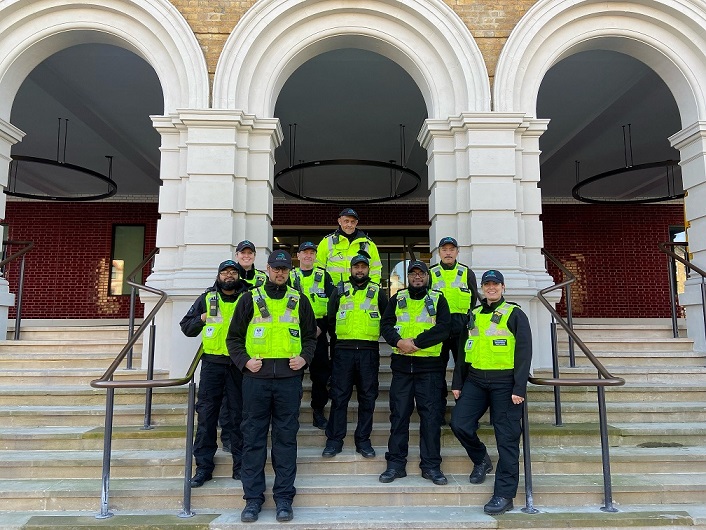
The Mayor of Tower Hamlets has called for tougher enforcement against anti-social behaviour after council officers issued fewer warnings and protection notices than expected in the first three months of the year.
Lutfur Rahman said enforcement officers should take stronger action by issuing more formal warnings and fines, arguing that penalties would act as a deterrent while also generating income for the council.
Council-employed Tower Hamlets Enforcement Officers (Theos) issued 48 anti-social behaviour warnings, community protection warnings and community protection notices between January and March this year. The council’s quarterly target is 50.
The figure was also down from the previous quarter, when officers issued 58 warnings and notices between October and December.
Council managers insisted the drop did not reflect weaker performance.
In a report presented to cabinet members, they said officers had successfully resolved many incidents through early intervention, engagement and problem-solving before formal enforcement became necessary.
The report stated that 160 anti-social behaviour cases had been resolved without the need to issue statutory warnings or notices.
It said: “This demonstrates a balanced approach, ensuring enforcement is used where appropriate while maintaining a strong focus on prevention and sustainable resolution.”
However, speaking at a cabinet meeting on July 29, Rahman questioned whether the council was seeing the results of the £8 million it has invested in enforcement since 2022. He said: “This light touch business, although I’m in favour of it, that’s not why we invested money. We invested money in order to see the borough is performing when it comes to safety, security, when it comes to disturbances, ASBs.”
Rahman also argued that enforcement action should contribute financially to the council.
He said: “Of course, there are some cases where TLC is sufficient, but it’s also about deterrence, isn’t it?
“And it’s also about balancing our books as a council.”
Tower Hamlets Chief Executive Stephen Halsey also suggested the council’s tougher enforcement strategy had not been fully implemented.
He said that when the Theos service was first introduced, it focused more heavily on community engagement, but that approach had been revised around 18 months ago.
Halsey said: “We changed the emphasis because there was a degree of enforcement that wasn’t happening, and that has serious financial impacts for the council as well.
“It’s clear that hasn’t been adopted.”
The discussion highlights an ongoing debate over whether anti-social behaviour is best tackled through early intervention and engagement or through stronger enforcement and financial penalties.


